


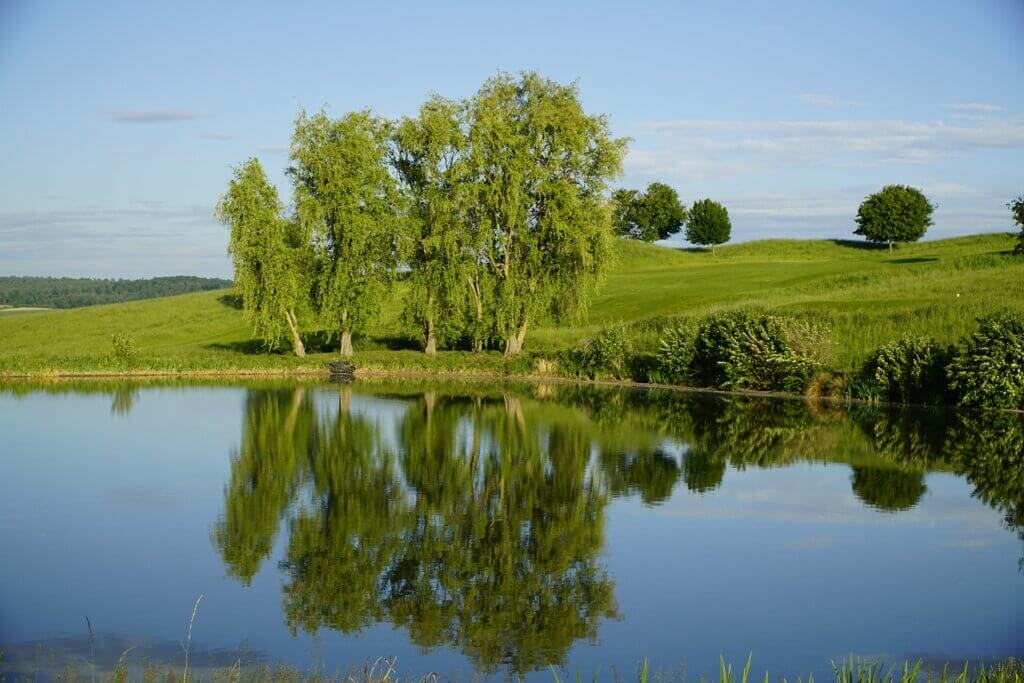
Voyageurs National Park is one of those national parks that can be surprisingly difficult to understand until you realize one important thing: this is not really a traditional drive-up-and-hike national park. It is a water-based national park.
Located in northern Minnesota along the Canadian border, Voyageurs covers about 218,000 acres of lakes, forests, and streams. It was established in 1975 and takes its name from the French-Canadian voyageurs who traveled these interconnected waterways during the fur-trade era.
What makes Voyageurs unusual is that some of the most interesting places in the park aren’t accessible by road. You may drive to a visitor center, launch a boat, and then spend hours traveling across enormous lakes surrounded by forests, rocky shorelines, and islands.
That changes the entire experience.
Voyageurs isn’t simply a place where you “visit a national park.” It is a place where you explore a landscape.
Where Voyageurs National Park Is
Voyageurs is in northern Minnesota, immediately south of the Canadian border and around the International Falls area.
The principal gateway communities and access areas include International Falls, Kabetogama, Ash River, Crane Lake, and Orr/Pelican Lake. The park can be approached from multiple directions rather than through one main entrance.
It is approximately:
- 5 hours north of Minneapolis–St. Paul
- 3 hours north of Duluth
- 4 hours south of Winnipeg, Manitoba
There is an airport at International Falls, although most visitors arrive by automobile. There is no public bus or passenger train service directly to the park.
One of the first things people discover is that “where is the entrance?” isn’t really the right question.
Voyageurs has multiple access points because the park is built around a network of enormous lakes.
The Most Important Thing to Understand About Voyageurs
If you remember only one thing about visiting Voyageurs, remember this:
The water is the road.
The park’s major waterways include:
- Rainy Lake
- Kabetogama Lake
- Namakan Lake
- Sand Point Lake
- Crane Lake
- Ash River and connecting waterways
You can drive to visitor centers and some trailheads, but much of the park is best experienced from a boat. Most developed campsites require boat access.
This is why Voyageurs can feel completely different from places such as Yellowstone, Shenandoah, or the Great Smoky Mountains.
At many national parks, you park your vehicle and start walking.
At Voyageurs, you may:
Drive → park → launch a boat → navigate across a lake → land at an island → hike → return to the boat → explore another shoreline.
That is the Voyageurs experience.
Why It Is Called Voyageurs
The name comes from the French word voyageur, meaning traveler.
For more than 250 years, French-Canadian fur traders traveled the interconnected waterways of this region. Canoes were essentially the transportation network of the Northwoods.
These waterways connected enormous portions of what became the Great Northwest.
Imagine traveling through this landscape before highways, automobiles, GPS, cell phones, or modern maps.
The lakes weren’t obstacles.
They were highways.
That is an important piece of Voyageurs’ identity.
The Native American History Goes Back Much Further
One of the things that can get lost when people focus on the voyageurs is that human history here goes back more than 10,000 years.
Voyageurs contains evidence of Native American use of the landscape long before European fur traders arrived. Later came the fur trade, homesteading, logging, mining, and commercial fishing.
So Voyageurs isn’t simply a “French-Canadian fur-trade park.”
It represents thousands of years of people interacting with these lakes and forests.
That makes the cultural history considerably deeper than the park’s name might initially suggest.
The Best Thing to Do: Get Out on the Water
If you visit Voyageurs and never get on the water, you will probably miss the essence of the park.
Boating is arguably the defining activity.
You can bring your own boat, rent watercraft in the surrounding communities, take a guided tour, or use a water taxi. Commercial operators also offer fishing trips and other services.
Canoes and kayaks are particularly appealing because they allow you to experience the quieter side of the park.
Motorboats, meanwhile, allow you to cover enormous distances.
And that matters because Voyageurs is big.
You can spend a day exploring only a fraction of one lake.
Take a Guided Boat Tour
If you’re visiting for the first time, a guided boat tour can be one of the smartest choices you can make.
You don’t have to learn the complicated lake system yourself.
A guide can explain:
- The history of the voyageurs
- Native American history
- Wildlife
- Geology
- Old resorts
- Mining history
- Logging
- Historic structures
- Local stories
- Navigation
- Interesting islands and shorelines
The park’s commercial operators can provide water transportation and guided experiences.
For someone unfamiliar with Voyageurs, a tour can provide context that you simply won’t get by driving around the gateway communities.
Rent a Boat or Bring Your Own
Another option is to explore independently.
This provides something a guided tour cannot:
freedom.
You can stop when you want.
Fish when you want.
Photograph wildlife.
Explore an island.
Eat lunch beside the lake.
Paddle into a quiet bay.
Wait for sunset.
But there’s a catch.
Voyageurs has extensive interconnected waterways, islands, submerged rocks, narrow passages, and changing weather. The National Park Service specifically warns that navigating the lakes can be tricky and that storms, winds, and waves can quickly change conditions.
Don’t underestimate the lakes simply because they are inland.
Some of them are enormous.
Houseboating Is One of the Most Unique Experiences
This is one of the things many people don’t realize is possible.
You can vacation on a houseboat inside Voyageurs National Park.
Houseboating combines camping with a floating cabin.
You can sleep, cook, and live aboard the boat while moving around the park’s waterways. The National Park Service describes it as a way to reach more remote areas while retaining many of the comforts of home.
Houseboats are commercially rented by companies outside the park.
For the right person, this could be the ultimate Voyageurs experience.
You wake up on the lake.
Have breakfast on the boat.
Go fishing.
Explore an island.
Watch wildlife.
Move to another location.
Then watch the sunset from the water.
It is difficult to get much more “Voyageurs” than that.
Kettle Falls Is One of the Must-See Places
Kettle Falls is one of Voyageurs’ most famous destinations.
It has a fascinating combination of natural scenery and human history.
The historic Kettle Falls Hotel dates to the early twentieth century and became an important stopping place for travelers moving through the region.
The historic district is one of the park’s nationally significant cultural properties. Voyageurs manages 16 historic properties that are listed or eligible for the National Register of Historic Places, including Kettle Falls.
Getting there is part of the adventure.
You don’t simply drive up to Kettle Falls from a highway parking lot.
You travel by water.
That makes visiting it feel more like an expedition.
Ellsworth Rock Gardens Is Another Fascinating Destination
Ellsworth Rock Gardens is one of the strangest and most interesting cultural sites in the park.
It was created by Jack Ellsworth beginning in the mid-1940s.
The site contains enormous stone sculptures and arrangements overlooking Kabetogama Lake.
The National Park Service notes that the gardens have been known as the “Showplace of Lake Kabetogama” since the 1940s.
This is one of those places where the line between nature and human creativity becomes interesting.
You are surrounded by wilderness, yet someone deliberately transformed the rocks into an enormous outdoor sculpture garden.
Explore the Hiking Trails
Voyageurs isn’t exclusively about boating.
There are hiking opportunities ranging from short walks to longer trails.
Some trails take you through boreal forest, over rocky terrain and along shorelines.
But here’s another thing people sometimes don’t understand:
Voyageurs isn’t primarily a hiking park.
If your dream national park vacation involves hiking 15 miles every day, other parks may provide more opportunities.
Voyageurs is better suited to combining:
boating + hiking + wildlife + fishing + history + camping.
That’s what makes it special.
The Kab-Ash Trail
The Kab-Ash Trail is particularly interesting because it provides a more traditional backcountry hiking experience.
It crosses portions of the Kabetogama Peninsula and gives visitors an opportunity to experience the interior forest rather than simply seeing the landscape from the lake.
Primitive campsites are associated with the trail, providing a much more remote experience than the developed visitor areas.
Fishing Is a Huge Part of Voyageurs
For anglers, Voyageurs is a completely different kind of national park.
You’re surrounded by enormous freshwater lakes and fish habitat.
Popular species include:
- Walleye
- Northern pike
- Smallmouth bass
- Yellow perch
- Lake trout
- Muskellunge in some waters
But fishing regulations are particularly important here.
For example, Kabetogama, Namakan, Sand Point and Rainy Lakes are classified as experimental waters, and anglers generally cannot possess filleted fish on those waters because fish must remain identifiable and measurable under the applicable regulations.
This is a perfect example of something that can surprise visitors.
Don’t assume Minnesota’s statewide fishing rules tell you everything you need to know about Voyageurs.
You need to check the current Minnesota regulations and park-specific requirements before fishing.
Wildlife Watching
Voyageurs is a fantastic wildlife destination.
Depending on where and when you explore, you may encounter:
- Bald eagles
- Loons
- Black bears
- White-tailed deer
- Wolves
- Beavers
- Otters
- Moose
- Foxes
- Numerous waterfowl species
The park’s extensive shoreline and relatively undeveloped islands create excellent wildlife habitat.
But wildlife viewing here requires patience.
You don’t necessarily drive down a road and see an animal.
You may sit quietly on a shoreline for 30 minutes and see nothing.
Then suddenly an eagle appears.
Or a loon calls across the lake.
Or a black bear swims between islands.
That unpredictability is part of the attraction.
Yes, Bears Actually Swim Across the Lakes
This is one of the cooler facts about Voyageurs.
Black bears are capable swimmers and visitors sometimes don’t realize that the bear they see on an island may have gotten there by swimming.
The National Park Service specifically warns visitors that black bears can swim from place to place.
That means an island campsite isn’t automatically “bear-proof.”
Food, garbage, cooking equipment, and scented items need to be stored properly.
Coolers aren’t sufficient bear protection.
The Northern Lights Are a Major Attraction
This is another reason Voyageurs can be extraordinary.
The park is a certified International Dark Sky Park, making it particularly attractive for astronomy and aurora viewing.
Imagine being on a remote lake at night with:
- Almost no artificial light
- A perfectly dark sky
- The Milky Way overhead
- Stars reflected in the lake
- Loons calling in the distance
- And potentially the aurora appearing overhead
That’s an entirely different national park experience.
And unlike many daytime attractions, nighttime is arguably when Voyageurs becomes even more impressive.
Winter Completely Changes the Park
Don’t make the mistake of thinking Voyageurs is only a summer destination.
Winter turns the park into another world.
Activities can include:
- Snowshoeing
- Cross-country skiing
- Snowmobiling
- Ice fishing
- Winter camping
- Ice-road travel
- Wildlife viewing
- Northern lights photography
The park remains open year-round and has no entrance fee.
But winter requires significantly more preparation.
Lake ice is not automatically safe simply because temperatures are cold.
Ice conditions can vary dramatically, particularly during early winter and spring.
The Four Seasons Are Very Different
Voyageurs has four distinct seasons.
Summer is the obvious choice for boating, fishing, camping, and hiking.
Fall brings spectacular foliage and cooler temperatures.
Winter brings frozen lakes and snow-covered forests.
Spring brings ice-out, changing weather and the return of wildlife.
The average ice-out date is around May 3, while measurable snowfall can occur into late April or early May.
The shoulder seasons can be beautiful but require extra caution because ice conditions can be unpredictable.
Parking: What You Need to Know
One of the biggest misconceptions about Voyageurs is expecting a gigantic central parking area where you leave your car and enter the park.
That’s not how Voyageurs works.
There are parking areas associated with visitor centers, boat launches, trailheads, and other access points.
The three primary visitor-center boat-launch locations are:
Rainy Lake Visitor Center
Located east of International Falls. It has automobile parking and boat-trailer parking and provides a public boat launch.
Kabetogama Lake Visitor Center
Located south of International Falls near the community of Kabetogama. It has automobile and boat-trailer parking along with a boat ramp.
Ash River Visitor Center
Located south of International Falls near Orr. It has automobile, RV/bus, and boat-trailer parking along with a boat ramp.
There are also other launch facilities around the park and surrounding communities.
There Is No Entrance Fee
This is one of the nice surprises.
Voyageurs National Park has no entrance fee.
The park is open 24 hours a day, year-round, although individual facilities and services operate seasonally.
However, “free park” does not mean everything associated with visiting is free.
You may have expenses for:
- Lodging
- Boat rentals
- Guided tours
- Water taxis
- Houseboat rentals
- Fishing equipment
- Camping reservations
- Food
- Fuel
- Transportation
Visitor Centers and Amenities
There are four visitor centers:
- Rainy Lake
- Kabetogama Lake
- Ash River
- Crane Lake
Amenities vary by location, but can include:
- Parking
- Boat launches
- Restrooms
- Drinking water
- Maps
- Ranger assistance
- Exhibits
- Historical information
- Picnic facilities
- Accessible facilities
- Boat docks
Rainy Lake Visitor Center also has exhibits, a bookstore, information desk, theater, and a public boat launch.
The Ash River Visitor Center is especially interesting because it occupies the historic Meadwood Lodge.
Camping Is Different Here
Voyageurs has more than 270 campsites, houseboat sites, day-use sites, and visitor destinations.
Camping options include:
- Small campsites
- Large campsites
- Group campsites
- Accessible campsites
- Backcountry campsites
- Primitive campsites
- Houseboat sites
Most overnight campsites require reservations and permits.
Primitive sites are the major exception because some are accessed from land along the Kab-Ash Trail.
This is another reason Voyageurs is different.
You aren’t necessarily carrying a backpack from a parking lot to a campsite.
You may be carrying camping equipment onto a boat.
The Rules About Campfires Matter
Campfires must be built in established metal fire rings.
You cannot simply build a fire wherever you want.
You may collect dead and downed wood, but you cannot cut living trees or standing trees for firewood. Fires must be completely extinguished before leaving.
Quiet hours are from 10 p.m. to 6 a.m.
And don’t burn trash.
Pets Are More Restricted Than You Might Expect
Pets are allowed in certain developed areas, parking areas, boat ramps, campsites and on the main lakes.
But dogs are not generally allowed on most park trails or in the backcountry, with the Rainy Lake Recreation Trail being an exception.
Pets must be leashed, with a leash no longer than six feet, and owners are responsible for waste cleanup.
This is important because someone accustomed to taking their dog hiking in other national parks could easily assume the same rules apply here.
They don’t.
Boating Safety Is Extremely Important
This may be one of the most important “things nobody talks about.”
Voyageurs can look peaceful.
That doesn’t mean the water is harmless.
Wind can rapidly create waves on the larger lakes.
There are submerged rocks.
There are narrow passages.
There are confusing intersections.
There are islands everywhere.
And cell phone coverage can be unreliable.
The National Park Service recommends carrying navigation maps and appropriate safety equipment, including life jackets, a throwable flotation device, navigation lights, whistle or horn, anchor, paddles/oars, flashlight, and first-aid supplies.
Minnesota requires a wearable U.S. Coast Guard-approved PFD for each person aboard, and children under 10 must wear a life jacket while in a recreational boat.
Don’t Assume Your Cell Phone Will Save You
This is one of the biggest differences between Voyageurs and an ordinary lake vacation.
You can get into areas where communication is difficult.
The park advises visitors to call 911 in emergencies, but cellular phones may not work throughout the park. Phones are available near visitor centers, and rangers monitor marine radio channel 16 during business hours.
So navigation and emergency planning should be taken seriously.
A paper map isn’t obsolete here.
It can be extremely useful.
There Are Invasive-Species Rules
Voyageurs has special rules concerning interior lakes and invasive species.
For certain backcountry/interior waters, privately owned watercraft are prohibited, artificial bait is required and aircraft landings aren’t allowed.
This can surprise people who think:
“I have my kayak, so I’ll just paddle wherever I want.”
Not necessarily.
Always check the current rules for the specific lake or area you intend to visit.
Hunting Is Not Allowed
Hunting is prohibited within Voyageurs National Park.
Fishing, however, is an important recreational activity subject to Minnesota and park-specific regulations.
What About Firearms?
Firearm possession is complicated enough that you shouldn’t rely on a simple “yes” or “no.”
Federal law allows people who may legally possess firearms under applicable federal, Minnesota and local law to possess them in Voyageurs, but there are significant restrictions concerning firearms in certain facilities and their use or discharge.
If this applies to you, check the current NPS rules and Minnesota law before traveling.
Don’t Take Rocks, Plants or Historic Objects
This is another rule that seems obvious but is important in a park with such a rich cultural history.
Visitors cannot collect or damage:
- Rocks
- Plants
- Flowers
- Pine cones
- Driftwood
- Artifacts
- Historic objects
- Wildlife
- Other natural or cultural resources
The park does allow visitors to harvest up to one gallon of berries for personal consumption.
That small exception is an interesting example of how specific national-park regulations can become.
The Gold Rush Nobody Remembers
Here’s one of the more fascinating stories.
Voyageurs once experienced a genuine gold rush.
In 1893, a prospector discovered a gold-bearing quartz vein near Black Bay.
The discovery became known as the Little American mine.
A settlement called Rainy Lake City developed rapidly.
At its height, it reportedly had a school, bank, general store, hotels, restaurants, newspaper, hardware store, butcher shop, and saloons.
Then came the bust.
The mines didn’t produce enough gold to make the industry profitable.
By 1898 the gold boom was essentially over.
By 1901, Rainy Lake City had become a ghost town.
That’s an incredible story because the landscape that looks like untouched wilderness today once contained a bustling mining community.
There Are Lost Gold and Hidden Treasure Stories
There is a legitimate historical basis for the area’s gold-mining stories.
There were actual mines, actual prospectors, and an actual boomtown.
But that’s different from saying there is a legendary buried fortune waiting to be discovered.
The historical record shows that the gold rush largely failed economically.
So the real mystery is more interesting than the fictional one: how quickly people could build a community around the promise of gold and how quickly that community disappeared when the promise didn’t materialize.
The Park Has a Ghost-Town Quality
This is one of the most interesting psychological aspects of Voyageurs.
You’re surrounded by wilderness, but evidence of earlier human activity is scattered throughout the landscape.
There are old cabins.
Historic resorts.
Mining sites.
Logging history.
Fishing camps.
Homesteads.
Old transportation routes.
And abandoned or transformed places.
Voyageurs therefore isn’t “untouched wilderness” in the simplistic sense.
It’s a landscape layered with human history.
The I.W. Stevens Story Is Fascinating
I.W. Stevens spent approximately 50 years living on an island in the park area.
His story is part of the cultural history that makes Voyageurs different from many national parks. The National Park Service describes him skiing to town, operating a resort, picking berries, baking cakes, and recording his life in journals.
Stories like this help you understand what life in the Northwoods actually looked like before modern tourism transformed the region.
There Are Ghost Stories
You will find local stories and folklore associated with old cabins, abandoned settlements, mines, isolated islands, and the wilderness itself.
But it’s important to separate documented history from folklore.
Voyageurs has plenty of genuine mystery because much of its landscape is remote and its history contains abandoned settlements and forgotten people.
That naturally creates ghost stories.
But there isn’t strong historical evidence for the park being some kind of officially recognized haunted location.
The reality is arguably more compelling.
Imagine spending the night on a remote island where a century ago someone lived, worked, fished, or searched for gold.
At night, the landscape can feel incredibly isolated.
That is enough to create a sense of mystery without inventing supernatural explanations.
About Monsters
Like many large northern lakes, Voyageurs has the ingredients for lake-monster folklore:
- Huge bodies of water
- Deep areas
- Remote shorelines
- Fog
- Strange sounds
- Large fish
- Limited visibility
- Stories passed down over generations
But there is no credible scientific evidence that Voyageurs contains a previously unknown lake monster.
The more reasonable explanation for many mysterious lake sightings is usually a combination of waves, logs, large fish, swimming animals, distance, and unusual lighting.
That doesn’t make the stories any less entertaining.
One of the Real Mysteries Is Beneath the Water
The underwater world is arguably one of the least visible parts of Voyageurs.
The lakes contain:
- Fish habitat
- Submerged rocks
- Historic structures and remnants
- Geological features
- Old transportation routes
- Archaeological evidence
Because the park is fundamentally a water landscape, much of its story isn’t immediately visible from land.
This is one reason boating through Voyageurs can feel like traveling through layers of history.
Why People Love Voyageurs
People tend to fall in love with Voyageurs for a quite different reason than they love more famous national parks.
It isn’t necessarily about seeing one enormous waterfall or standing beneath one famous mountain.
It’s about immersion.
You can spend an entire day surrounded by water and forest.
There may be no traffic.
No city skyline.
No major attraction every 20 minutes.
Instead, there is:
A loon calling.
Wind through pine trees.
A boat engine in the distance.
An eagle flying overhead.
Rocky islands.
A sunset over the lake.
And miles of wilderness.
That slower pace is a major part of the attraction.
The Solitude Is the Real Attraction
This may be the biggest thing nobody talks about.
Voyageurs isn’t necessarily trying to impress you every five minutes.
It rewards people who slow down.
If you constantly ask:
“What’s the next attraction?”
you may miss the point.
The attraction is often the experience of being somewhere where there isn’t a next attraction.
You might simply find a quiet bay and sit there.
That can be the highlight of the day.
Why Voyageurs Feels More Remote Than It Really Is
Technically, you’re not deep in some inaccessible wilderness.
There are roads.
Visitor centers.
Resorts.
Boat rentals.
Guides.
Communities.
Airports.
Cell phones in some areas.
Yet once you’re on a boat traveling through the park, the human landscape can disappear surprisingly quickly.
That creates a fascinating combination:
accessible enough to visit, remote enough to feel wild.
That may be Voyageurs’ greatest strength.
Things People Sometimes Get Wrong About Voyageurs
“I’ll just drive through the park.”
You can’t really do that.
There isn’t a conventional road network taking you through the heart of the park.
Much of the park is water.
“I can see everything in one day.”
Not realistically.
You can have a good one-day introduction, but Voyageurs rewards multiple days.
“It’s mainly a hiking park.”
Not really.
Boating is central to the experience.
“The lakes are just like ordinary lakes.”
They’re much larger and more complicated than many visitors expect.
“An island campsite means no bears.”
Absolutely not.
Black bears can swim between islands.
“Winter means the park is closed.”
No.
Voyageurs is open year-round.
“It’s just wilderness.”
Not quite.
The cultural landscape is enormously important.
“The park is expensive because it’s remote.”
There is actually no entrance fee.
Your costs are more likely to come from getting onto and around the water.
The Best Time to Visit
For a first visit, summer is probably the easiest season.
June through August provides excellent opportunities for:
- Boating
- Kayaking
- Canoeing
- Fishing
- Hiking
- Camping
- Wildlife viewing
- Houseboating
September and early fall can be spectacular because of changing foliage and cooler temperatures.
Winter is a completely different adventure.
If you’re interested in the northern lights, dark skies, solitude and winter landscapes, Voyageurs becomes particularly interesting outside the traditional summer season.
How Many Days Should You Spend?
For a quick introduction, two days is better than one.
For a meaningful experience, three to four days is much better.
For someone who really wants to fish, camp, photograph wildlife, explore historic sites or houseboat, a week could easily be justified.
The biggest mistake would be driving several hours to northern Minnesota, spending half a day at a visitor center, and then leaving.
Voyageurs isn’t really designed for that style of tourism.
A Great First-Time Strategy
A particularly good first visit would look something like this:
Day 1: Arrive through International Falls or another gateway community, visit a visitor center, and learn the geography and history.
Day 2: Spend most of the day on the water. Take a boat tour, rent a boat, or arrange a water taxi.
Day 3: Explore a historic destination such as Kettle Falls or Ellsworth Rock Gardens and combine it with hiking or fishing.
Night: Find a dark-sky location and watch the sky.
If you have more time, add camping, kayaking, additional fishing, or a houseboat experience.
What You Should Bring
Voyageurs rewards people who prepare.
Some particularly useful items include:
- Detailed park map
- Navigation equipment
- Life jacket/PFD
- Rain gear
- Layers of clothing
- Insect repellent
- Sunscreen
- First-aid kit
- Flashlight/headlamp
- Food and water
- Bear-safe food storage
- Waterproof bags
- Binoculars
- Camera
- Extra batteries/power bank
- Fishing equipment if fishing
- Appropriate camping equipment
And don’t forget that weather on large lakes can change quickly.
The Bugs Are Part of the Experience
Here’s another thing people sometimes underestimate.
This is northern Minnesota.
Mosquitoes, black flies, and other biting insects can be a serious nuisance during parts of the warmer season.
Don’t let photographs of peaceful lakes fool you into thinking you won’t need insect protection.
The good news is that bugs vary substantially by season and weather.
The bad news is that when conditions are right for them, you will know it.
The Weather Can Change Your Entire Day
You could begin the morning with beautiful blue skies and calm water.
A few hours later, wind can increase and waves can make the same lake substantially more challenging.
This is particularly important for small boats, canoes, and kayaks.
Check the weather before leaving.
And don’t become so committed to an itinerary that you ignore changing conditions.
At Voyageurs, the lake gets the final vote.
The International Border Adds Another Dimension
Voyageurs sits beside Canada.
Some waterways are associated with the international boundary, and visitors who cross the border need to understand applicable U.S. and Canadian customs requirements.
The park specifically advises visitors to know U.S. and Canadian customs and fishing regulations before crossing the border.
Don’t casually assume that because you’re boating on a lake you can cross into Canada without following border procedures.
Accessibility
Voyageurs is not inaccessible to people with mobility limitations.
The park has accessible campsites, visitor destinations and some trails, and several visitor centers provide accessible facilities.
However, the water-based nature of the park means accessibility can be more complicated than simply looking for an accessible trail.
If accessibility is important for your trip, it’s worth contacting the park beforehand and discussing the specific destination, dock, boat and trail you want to use.
What Makes Voyageurs Different From Almost Every Other National Park?
I would put it this way:
Most national parks are places you travel through. Voyageurs is a place you travel across.
The difference sounds subtle, but it isn’t.
At Yosemite, the valley is the destination.
At Yellowstone, the geothermal features and wildlife are destinations.
At the Grand Canyon, the canyon itself is the destination.
At Voyageurs, the journey between destinations is part of the destination.
The boat ride isn’t merely transportation.
It is the experience.
The Things Nobody Talks About Most
The biggest secrets of Voyageurs aren’t really secrets.
They’re simply things that don’t show up in a typical national-park brochure.
The park is surprisingly dependent on boats.
Navigation deserves respect.
Weather can change rapidly.
Cell service isn’t guaranteed.
Some of the best destinations require significant travel across the water.
The cultural history is much deeper than the voyageurs alone.
The gold-rush history is fascinating.
The park can be extraordinarily quiet.
Winter is almost an entirely different park.
The night sky can be as impressive as the daytime scenery.
And the most memorable moments may not happen at an official attraction at all.
They may happen while you’re sitting quietly on a rock overlooking a lake.
The Deeper Meaning of Voyageurs
There is something philosophically interesting about Voyageurs.
The park preserves a landscape where water was once the road, the wilderness was the workplace, and isolation was normal life.
The voyageurs paddled these waterways because they had to.
Later, loggers, miners, fishermen and homesteaders used the landscape for work.
Today, most of us come here voluntarily.
We come to slow down.
To fish.
To explore.
To photograph.
To camp.
To see wildlife.
To experience solitude.
In a strange way, Voyageurs allows modern visitors to temporarily experience a landscape at a pace that existed long before modern transportation.
That may be the park’s greatest attraction.
Voyageurs National Park isn’t necessarily the national park you visit if you’re looking for the biggest mountain, most famous waterfall, or an endless collection of roadside attractions.
You visit Voyageurs if you want water, wilderness, wildlife, history, fishing, boating, solitude, dark skies, and exploration.
It is one of the most unusual national parks in the United States because the park’s geography determines how you experience it.
You simply don’t walk into Voyageurs.
You enter it through the water.
And once you’re out there, surrounded by thousands of islands, forests, rocky shorelines, and enormous northern lakes, it becomes easy to understand why people become so attached to this place.
The best way to experience Voyageurs is to stop thinking of it as a park you need to “see” and start thinking of it as a landscape you need to explore.
For planning a real trip, the most authoritative place to start is the official Voyageurs National Park site, particularly its current conditions, maps, permits, regulations, and seasonal information. The National Park Service’s current information confirms that Voyageurs remains free to enter and open year-round, while services and visitor centers vary by season.
Where to Find More Information About Voyageurs National Park
If you’re going to research Voyageurs in depth, I would strongly recommend starting with the National Park Service (NPS) and then using Minnesota’s Department of Natural Resources for fishing and boating regulations. There are also some excellent historical and dark-sky resources that go considerably deeper into the subjects we discussed.
Below are the resources to bookmark.
1. Official Voyageurs National Park Website
Voyageurs National Park — National Park Service
This should be your main source of information. It covers the park’s history, geography, visitor centers, camping, boating, fishing, hiking, houseboating, winter activities, wildlife, safety, accessibility, and current planning information. The NPS describes Voyageurs as approximately 218,000 acres of lakes, forests, and streams.
The park’s Plan Your Visit section is particularly useful because it brings together maps, directions, things to do, camping, boating, fishing, hiking, houseboating, tours, winter activities, and safety information.
Plan Your Visit — Voyageurs National Park
2. Maps, Directions and Getting Around
Maps and Directions — Voyageurs National Park
This is one of the resources we would look at before planning anything else.
Voyageurs is unusual because you can’t simply drive through the park. Understanding Rainy Lake, Kabetogama Lake, Namakan Lake, Sand Point Lake, the Kabetogama Peninsula and the various visitor centers makes everything else much easier to understand.
The NPS specifically warns that the park’s interconnected waterways and widespread rock hazards can make navigation tricky, while storms, winds and waves can change conditions quickly.
3. Official Park Regulations
Voyageurs National Park Regulations — National Park Service
Bookmark this one.
It covers many of the subjects we discussed, including:
- Camping
- Campfires
- Fishing
- Filleted fish
- Backcountry and interior lakes
- Hunting
- Pets
- Firearms
- Boating
- Wildlife
- Black bears
- Quiet hours
- Emergencies
- International-border issues
For example, the park has specific rules regarding possession of filleted fish on Kabetogama, Namakan, Sand Point and Rainy Lakes, and special food-storage requirements because black bears can swim between islands.
4. Camping and Reservations
Camping and Campsites — Voyageurs National Park
This is where you can learn about the different types of camping, including:
- Tent campsites
- Houseboat campsites
- Group campsites
- Backcountry camping
- Accessible sites
- Day-use sites
- Primitive camping
One particularly important point is that tent and houseboat camping require advance reservations.
Recreation.gov — Voyageurs National Park Reservations
Recreation.gov is where you’ll want to check actual availability and make reservations.
5. Boating
Boating — Voyageurs National Park
This is probably one of the most important pages for understanding the park.
It explains boating opportunities, boat launches, safety considerations, and the unique nature of navigating Voyageurs.
The park’s regulations also provide a useful boating checklist that includes PFDs, navigation maps, navigation lights, a whistle or horn, anchor, paddles or oars, flashlight, and first-aid equipment.
6. Fishing
Fishing at Voyageurs National Park — National Park Service
For everything we discussed about fishing, start here.
Voyageurs contains 30 named lakes — four large lakes and 26 smaller interior lakes — and 54 identified fish species. Species include walleye, sauger, northern pike, smallmouth bass, yellow perch, and black crappie.
You also need a Minnesota fishing license to fish in Voyageurs.
7. Minnesota Fishing Regulations
Minnesota DNR Fishing Regulations
This is your second essential fishing resource.
The Minnesota DNR’s current 2026–27 fishing license year runs through February 28, 2027, and the site provides the current regulations, fishing seasons, lake-specific information, and licensing information.
Minnesota Fishing Regulations — Lake and Species Information
Check both the NPS fishing page and Minnesota DNR before fishing because Voyageurs has park-specific rules layered on top of Minnesota regulations.
8. Kettle Falls
Kettle Falls — Voyageurs National Park
This is the place to learn about the historic Kettle Falls Hotel, the dam, the water route, Native American history, voyageurs, prospectors, logging, commercial fishing, and tourism.
One especially interesting fact is that the historic Kettle Falls Hotel is the only lodging within Voyageurs National Park and is accessible only by water.
That makes it a particularly good example of why Voyageurs is different from conventional national parks.
9. Ellsworth Rock Gardens
Ellsworth Rock Gardens — Voyageurs National Park
This is one of the strangest and most fascinating places in the park.
Jack Ellsworth spent approximately two decades creating a massive rock garden containing 62 terraced flower beds and more than 200 rock sculptures.
It has been called the “Showplace of Lake Kabetogama” since the 1940s.
The NPS also considers it the park’s most popular day-use destination.
10. Voyageurs’ History and Cultural Resources
Voyageurs National Park History & Cultural Research
This is where to go for the deeper historical side of Voyageurs.
It covers archaeology, historic structures, cultural landscapes, museum collections, and archives.
The park manages 16 historic properties that are listed or eligible for the National Register of Historic Places, including Kettle Falls, the Gold Mine Historic District, I.W. Stevens Resort, Ellsworth Rock Gardens and several historic cabins and resorts.
This resource is particularly useful if you’re interested in the “things nobody talks about” aspect of the park.
11. The Gold-Mining and Ghost-Town History
Voyageurs National Park — History and Culture
This is where you can dig much deeper into the gold rush, logging, commercial fishing, Native American history, homesteading and the voyageurs.
The gold-mining story is particularly interesting because the region actually experienced a gold rush and developed settlements around the mines.
So when you’re looking at Voyageurs today and thinking, “This looks like untouched wilderness,” remember that people were once building businesses, resorts, mines, and communities throughout this landscape.
12. Stargazing and Northern Lights
Stargazing — Voyageurs National Park
This is an excellent resource for the nighttime side of Voyageurs.
The NPS identifies the Meadwood Road Day Use Area and the upper parking lot at the Rainy Lake Visitor Center as designated dark-sky viewing locations.
Voyageurs Dark Skies — National Park Service
This goes further into the park’s dark-sky program, night-sky programs, astronomy, and nighttime experiences.
13. International Dark Sky Association
Voyageurs National Park — DarkSky International
This is a good independent source for understanding the park’s International Dark Sky designation.
Voyageurs was designated an International Dark Sky Park in 2020.
This is especially useful if you’re interested in combining Voyageurs with an aurora-borealis or astrophotography trip.
14. Wildlife and Bears
Wildlife — Voyageurs National Park
This is the place to research the park’s wildlife more deeply.
Pay particular attention to black bears, wolves, moose, bald eagles, loons, beavers, and otters.
The park’s regulations are also worth reading because the NPS specifically warns that black bears can swim between islands and requires food, garbage, scented items, and cooking equipment to be properly secured.
15. Winter Activities
Winter Activities — Voyageurs National Park
If you want to learn about the side of Voyageurs most summer visitors never see, spend some time here.
You’ll find information about:
- Ice fishing
- Snowshoeing
- Cross-country skiing
- Snowmobiling
- Winter camping
- Frozen lakes
- Winter wildlife
- Winter travel
This is one of the best ways to understand why Voyageurs really is a four-season national park.
16. Visitor Centers, Parking and Facilities
Visitor Centers — Voyageurs National Park
This is the page to use for the practical information we discussed about:
- Rainy Lake Visitor Center
- Kabetogama Lake Visitor Center
- Ash River Visitor Center
- Crane Lake Visitor Center
- Parking
- Boat launches
- Restrooms
- Exhibits
- Visitor services
- Seasonal operating hours
Because Voyageurs has multiple access points rather than one traditional entrance, this information is particularly important.
17. Pets
Pets — Voyageurs National Park
If you’re thinking about bringing a dog, read this before your trip.
Voyageurs has substantially different pet restrictions from what some people expect at a hiking-oriented national park.
18. Accessibility
Accessibility — Voyageurs National Park
This covers accessible visitor centers, trails, campsites, and other facilities.
Because the park is so heavily water-oriented, accessibility planning can require more advance thought than simply finding an accessible hiking trail.
19. Weather
Weather — Voyageurs National Park
Definitely check this before going on the water.
Voyageurs’ large lakes can become significantly more challenging when wind and storms move through the region.
20. The Best Overall Resource: NPS “Things to Do”
Things to Do — Voyageurs National Park
If you want one page that helps you decide what you actually want to do, this is probably it.
It covers:
Boating, camping, fishing, hiking, houseboating, tours and programs, winter activities, and other experiences.
A Few Especially Good Resources to Bookmark
Official park information:
Voyageurs National Park NPS
Trip planning:
Plan Your Visit
Rules and regulations:
Park Regulations
Fishing:
Voyageurs Fishing
Minnesota fishing regulations:
Minnesota DNR Fishing Regulations
Camping:
Camping and Campsites
Boating:
Boating
History:
History & Cultural Resources
Kettle Falls:
Kettle Falls
Ellsworth Rock Gardens:
Ellsworth Rock Gardens
Night sky:
Voyageurs Dark Skies
Stargazing:
Stargazing
This article was drafted with AI assistance and reviewed by our editors before publication.