





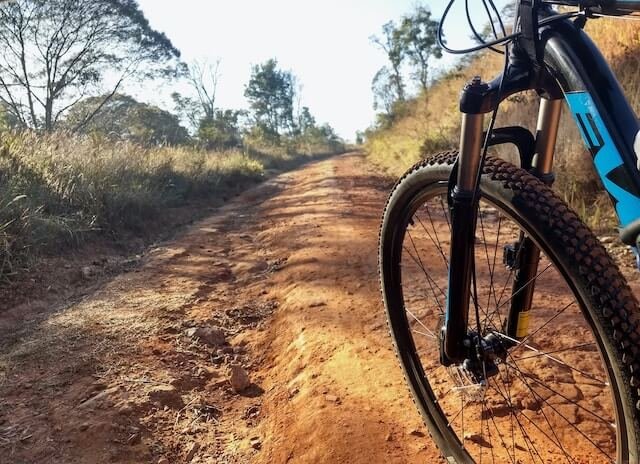
Mountain biking is a form of cycling that takes place off-road, usually on rough terrain like dirt trails, rocky paths, forest roads, or mountain slopes.
It blends adventure, athleticism, and technical skill, demanding a different set of abilities than traditional road biking. The bikes themselves are specially designed to handle uneven ground—typically built with wider, knobby tires for traction, strong frames for durability, and suspensions (either front or full) to absorb shocks from bumps, roots, and drops.
At its core, mountain biking is about exploration and challenge. Riders often find themselves weaving through dense woods, climbing steep hills, or descending rugged trails at high speed.
It’s physical, often muddy, and deeply connected to the outdoors. There are various styles within mountain biking—cross-country, trail riding, downhill, enduro, freeride, and dirt jumping—each with its own rhythm, risks, and rewards.
Now, mountain bike racing takes the essence of mountain biking—speed, skill, endurance—and wraps it in competition. It transforms the ride into a timed event, testing riders not just against the terrain but against each other.
Races vary widely in format and difficulty, but the unifying thread is the blend of physical stamina, technical bike handling, and mental focus required to excel.
Here’s a breakdown of the major types of mountain bike racing:
CROSS-COUNTRY (XC)
This is the most well-known and Olympic-sanctioned discipline of mountain bike racing. XC races are typically held on circuits with a mix of climbs, descents, and technical sections. The terrain is diverse but not extreme—dirt trails, gravel roads, and roots or rocks. Riders need endurance and pacing strategy because these races can last from 1.5 to 2 hours (in elite formats), or much longer in marathon versions.
There are subcategories:
XCO (Cross-Country Olympic): Short laps, very technical.
XCM (Cross-Country Marathon): Long-distance, sometimes over 100 km.
XCE (Cross-Country Eliminator): Short, head-to-head sprints through technical tracks.
DOWNHILL (DH)
As the name suggests, downhill racing is all about speed on steep, descending terrain. Racers ride one at a time down a challenging course, filled with rocks, jumps, drops, and other obstacles. It’s about control, courage, and razor-sharp reflexes. Races are short (usually 2–5 minutes), but extremely intense. Riders wear full-face helmets and body armor due to the high risk of crashes.
ENDURO
Enduro is a hybrid format that combines elements of both XC and DH. Riders pedal between timed downhill stages (which test technical descending ability) and untimed uphill transitions (which test endurance, though they’re not directly timed). It’s considered one of the most well-rounded formats because it rewards both fitness and technical skill. Races typically span an entire day and include several timed stages.
FOUR-CROSS (4X)
In Four-Cross, four riders race head-to-head down a short, BMX-style track with jumps, berms, and turns. It’s a fast and furious format that’s all about explosive power and aggressive bike handling. Only the top two finishers advance to the next heat, so every race is an elimination round.
DUAL SLALOM
Two riders race side-by-side on nearly identical slalom tracks filled with gates, turns, and jumps. It’s very technical, requiring precision and balance. It’s often seen in festivals or as part of larger mountain biking events.
ULTRA-ENDURANCE AND STAGE RACES
These are grueling, multi-day events like the Cape Epic in South Africa or the BC Bike Race in Canada. Riders traverse hundreds of kilometers over several days, facing varied terrain, weather, and physical fatigue. These races test a rider’s long-term stamina, bike maintenance skills, and ability to perform under fatigue.
OTHER KEY ASPECTS OF MOUNTAIN BIKE RACING:
Equipment Matters: Racers use highly specialized bikes depending on the discipline. A downhill bike has much more suspension travel (up to 200mm) and is heavier, while a cross-country bike is light and efficient, with limited suspension to aid climbing.
Fitness and Training: MTB racers are often exceptionally fit. XC racers train like road cyclists—focusing on VO2 max, endurance, and lactate threshold—while DH riders focus more on strength, reflexes, and explosive bursts.
Tactics and Strategy: In XC and enduro racing, pacing is critical. Go too hard at the start, and you’ll burn out. In DH, it’s about committing to a “race run” with no mistakes. In head-to-head formats like 4X, choosing lines and anticipating opponents’ moves is vital.
Community and Culture: The racing scene, while competitive, has a strong sense of camaraderie. Racers often camp out at events, share tools, swap stories, and ride together between heats or stages. There’s also a big DIY ethic—many racers tune their own bikes, design their training, and travel on shoestring budgets.
Governing Bodies and Events: The UCI (Union Cycliste Internationale) governs international competitions, including the UCI Mountain Bike World Cup and the World Championships. Each discipline crowns a world champion each year. There are also grassroots events, regional leagues, and national circuits, making it accessible at many levels.
The origins of mountain biking can be traced back to a mix of experimentation, outdoor adventure, and a deep desire to explore terrain that traditional road bikes simply couldn’t handle. It began not with a single invention or event, but through a series of developments by passionate riders, mechanics, and tinkerers who loved both bicycles and the great outdoors.
The Early Roots – 1970s California
While there were isolated instances of off-road riding earlier in the 20th century (notably in Europe and parts of the U.S.), the recognized birthplace of modern mountain biking is Marin County, California in the 1970s.
A group of adventurous cyclists—names like Gary Fisher, Joe Breeze, Charlie Kelly, and Tom Ritchey—began modifying old, heavy Schwinn cruiser bikes (often balloon-tired “Klunkers” from the 1930s and 40s) to handle the steep, rough fire roads of Mount Tamalpais (or “Mount Tam”). They’d race these rugged bikes downhill on a section called Repack—named because the coaster brakes would heat up so much they’d have to be repacked with grease after every run.
This grassroots scene was more about the joy of fast, rough, downhill riding and friendship than anything formal—but it sparked a revolution.
BIRTH OF THE MODERN MOUNTAIN BIKE
By the late 1970s and early 1980s, the idea of a purpose-built off-road bicycle started to take shape:
Joe Breeze is often credited with building the first true mountain bike in 1977, the “Breezer #1,” with a custom-built frame specifically designed for off-road use.
Gary Fisher, together with frame builder Tom Ritchey, helped take the concept to a broader market by co-founding MountainBikes, one of the first companies to sell complete mountain bikes commercially.
These early bikes were tough, had wide tires, stronger frames, and eventually began to incorporate features like multiple gears, improved brakes, and front suspension.
THE BOOM – 1980S AND 1990S
By the mid-1980s, mountain biking was exploding in popularity. Here’s why:
Accessibility and Fun: People found mountain bikes more comfortable, durable, and forgiving than road bikes. You didn’t need smooth pavement—you could explore trails, fields, and back roads. It opened up a new world of recreational riding.
Media and Culture: Mountain biking started appearing in magazines, bike shops, and outdoor gear stores. It captured the spirit of adventure and independence that defined much of the 1980s outdoors culture.
Industry Adoption: Major bike manufacturers like Specialized, Trek, and Cannondale began producing mountain bikes. In 1981, Specialized released the Stumpjumper, the first mass-produced mountain bike, which became a runaway hit.
Racing Scene Emerged: Local and national mountain bike races started to pop up. By 1990, the Union Cycliste Internationale (UCI) recognized mountain biking as a formal discipline and held the first World Championships in Durango, Colorado.
Inclusion in the Olympics: In 1996, cross-country mountain biking became an Olympic sport at the Atlanta Games, which gave the discipline global recognition and legitimacy.
TECHNOLOGICAL ADVANCES HELPED IT GROW
As the sport developed, the bikes evolved rapidly:
Front suspension forks became standard.
Full suspension bikes (with rear shocks) made descents smoother and more controlled.
Disc brakes replaced rim brakes, providing better stopping power in wet, muddy conditions.
Dropper posts, tubeless tires, carbon fiber frames, and 1x drivetrains (single chainring up front) became common.
These changes made riding more fun, safer, and more capable—fueling further popularity.
WHY MOUNTAIN BIKING BECAME SO POPULAR
Adventure & Exploration: Unlike road biking, mountain biking allows you to escape traffic, explore nature, and take on rugged trails. It attracts people who want more than just exercise—they want the thrill of the outdoors.
Diverse Disciplines: With something for everyone—cross-country, downhill, enduro, trail riding, dirt jumping—the sport offers options for different skill levels and interests.
Health & Fitness Appeal: It combines cardio and strength training with balance and coordination. Many people see it as a fun way to stay fit without feeling like a workout.
Strong Community: Mountain biking has a friendly, grassroots culture. Whether it’s group rides, local trail days, or online forums, riders often support each other and their local trail systems.
Tourism & Trails: As demand grew, cities and mountain towns began building designated trail systems and bike parks. Places like Moab (Utah), Whistler (Canada), and Sedona (Arizona) became meccas for mountain bikers, drawing riders from around the world.
Media & Exposure: Videos, races, and social media helped turn pro riders into stars. Events like Red Bull Rampage, with its jaw-dropping stunts on massive desert cliffs, brought global attention.
TODAY AND THE FUTURE
Mountain biking is now a global sport and pastime. You’ll find dedicated trails and bike parks all over the world. It’s popular not only in North America and Europe, but also growing in countries like South Africa, New Zealand, Japan, and throughout South America.
Electric mountain bikes (e-MTBs) are adding a new layer of accessibility, allowing older riders or those recovering from injury to keep enjoying the trails. Meanwhile, high-level racing, from World Cups to grassroots enduro series, continues to thrive.
MOUNTAIN BIKING CULTURE: LAID-BACK, SUPPORTIVE, AND GRITTY
Mountain biking has always had a unique culture—part outdoorsy, part DIY, part adrenaline junkie, part peaceful explorer. Riders often say it’s about freedom, connection to nature, and self-reliance.
Laid-Back But Tough: There’s a relaxed, welcoming vibe in most mountain biking communities. People are friendly, encouraging, and eager to help others learn. But underneath that is a toughness—riders push through fatigue, rain, heat, falls, and mud because they love the challenge.
Diversity of Riders: In the early days, it was mostly young men, but that’s changed. Today’s mountain biking world includes families, kids, women’s riding groups, adaptive riders (with modified bikes), and retirees. You’ll see every generation represented at trailheads.
Ritual and Camaraderie: Post-ride rituals—cleaning your bike, grabbing a drink with friends, talking about the trail—are as much a part of the culture as the ride itself. There’s a deep sense of connection among those who ride.
Bikepacking and Adventure Culture: Some riders take it even further, using mountain bikes for long-distance, self-supported trips. These “bikepacking” journeys combine ultralight camping with off-road adventure, often through remote mountain or desert terrain.
TIPS FOR BEGINNERS
Starting out in mountain biking is exciting, but it can feel overwhelming. Here are some practical pointers for getting into it safely and confidently:
Start with the Right Bike – You don’t need the top-of-the-line ride to get started, but make sure your bike fits well and is appropriate for trail use. A hardtail (front suspension only) is a great entry point.
Learn Basic Skills First – Things like body positioning, braking, cornering, and line choice make a huge difference. Practice in a safe, low-stakes area before hitting more advanced trails.
Ride Within Your Limits – It’s tempting to follow advanced friends down steep or technical lines. Ride trails that match your skill level and grow gradually.
Gear Up Smartly – A helmet is a must. Gloves, padded shorts, and eye protection are also recommended. As you get into rougher trails, knee and elbow pads become useful.
Maintain Your Bike – Clean your bike, check tire pressure, lube the chain, and make sure brakes are working before every ride. A well-maintained bike performs better and lasts longer.
Know Trail Etiquette – Uphill riders usually have the right of way. Yield to hikers and be courteous to all users. Don’t skid or cut switchbacks—these damage the trail.
Join a Local Ride or Group – Many areas have group rides, women’s clinics, or beginner sessions hosted by shops or clubs. Riding with others can improve your skills and enjoyment.
TRAIL ADVOCACY: WHY IT MATTERS AND HOW RIDERS PROTECT TRAILS
Mountain biking’s growth has always gone hand in hand with trail advocacy—the work of building, maintaining, and protecting trails so the sport can flourish responsibly.
Trail Access Isn’t Guaranteed: Early on, many land managers were skeptical of mountain biking, fearing it would damage trails or conflict with hikers and wildlife. Advocates had to work hard to show that responsible riding could be sustainable.
Volunteer-Driven: Much of the trail building and maintenance work around the world is done by volunteers. Groups like IMBA (International Mountain Bicycling Association), regional trail alliances, and local clubs coordinate this work.
Sustainable Trail Design: Modern trail building uses design techniques to prevent erosion and overuse. Well-built trails actually reduce damage to the environment compared to informal paths.
Shared Use and Education: Advocacy groups often work to educate riders about coexistence with hikers, horses, and wildlife. Some trails are shared-use, others are bike-specific—respecting these rules keeps areas open.
Bike Parks and Legal Trails: Thanks to advocacy, many regions now have legal trail networks, bike parks, and even flow trails (machine-built trails with berms and jumps designed for fast, smooth riding). These draw riders and tourism dollars to rural areas.
Public Policy Influence: Advocacy also means working with governments, forest services, and parks to secure funding, maintain access, and influence outdoor recreation policy. This ensures trails aren’t just built—they’re protected long-term.
Mountain biking started as a renegade, underground sport with clunky old bikes and fearless riders. But over the decades, it has grown into a global movement—a mix of sport, lifestyle, and outdoor tradition.
Its rise to popularity is rooted not only in technology and competition but in culture, community, and a deep love for the outdoors. People ride to test themselves, to explore, to find peace, and to connect with others who feel the same way.
Whether you’re watching pros bomb down alpine ridges or just learning to shift gears on a forest path, you’re tapping into something rich and rewarding. If you ever decide to try it—or simply want to talk more about where and how to ride—I’m here to help.
Mountain bike racing is thrilling and rewarding—but it’s not without risks. The nature of the sport, which involves speed, uneven terrain, and technical challenges, creates a variety of dangers that riders must be aware of and prepared for.
BELOW ARE THE TOP RISKS AND DANGERS OF MOUNTAIN BIKE RACING, BROKEN DOWN AND EXPLAINED.
CRASHES AND COLLISIONS
High-Speed Wipeouts: Whether racing downhill or cross-country, speed increases the chances of losing control on loose gravel, slick roots, or technical descents.
Collisions with Other Riders: In mass start races (like XC or enduro stages), close proximity can lead to handlebar tangles or pileups, especially at turns, narrow trails, or start lines.
Obstacle Misjudgment: Hitting a rock garden, drop, or jump wrong can send a rider flying or cause a bad landing.
Common injuries: Concussions, broken collarbones, wrist fractures, bruised ribs, and road rash.
OVERUSE AND PHYSICAL STRAIN
Repetitive Stress Injuries: Long rides and races can lead to chronic knee pain, lower back pain, wrist, or hand numbness (e.g., handlebar palsy), or neck strain.
Overtraining: Competitive racers may suffer from burnout, fatigue, or even immune suppression if they don’t rest adequately between races or training blocks.
ENVIRONMENTAL HAZARDS
Weather Conditions: Rain can turn trails into slick mud; excessive heat can lead to dehydration or heat stroke; sudden storms can create lightning risk or hypothermia at higher elevations.
Trail Hazards: Hidden roots, loose rocks, drop-offs, narrow bridges, steep switchbacks, or technical descents can all pose dangers, especially when you’re racing and focused on speed.
EQUIPMENT FAILURE
Brake Failure or Tire Blowouts: Mechanical issues during a race—especially on descents—can cause serious accidents. A flat tire or snapped chain at the wrong moment can be dangerous.
Suspension Problems: Malfunctioning or poorly set-up suspension can cause loss of control, especially during jumps or rough terrain sections.
This is why many racers obsess over bike maintenance and pre-race checks.
FATIGUE-INDUCED MISTAKES
Mental Fog or Delayed Reaction: When you’re deep into a race and physically taxed, your reaction time drops. That can cause you to misjudge a turn, mis-time a drop, or hit an obstacle you would normally avoid.
Poor Decision-Making: A fatigued rider may choose a risky line, skip a dismount when they should walk a section, or push through pain and worsen an injury.
GETTING LOST OR STRANDED
Course Confusion: In longer or poorly marked races, racers can take wrong turns, leading them off course.
Injured and Alone: In enduro or ultra-distance races where riders are more spread out, a crash in a remote area can leave a rider stranded until help arrives.
ANIMAL AND NATURE ENCOUNTERS
Wildlife: Depending on location, racers may encounter snakes, bears, or other wildlife.
Insects and Allergies: Bee stings or allergic reactions in isolated areas are a lesser-known but real danger.
ALTITUDE AND TERRAIN CHALLENGES
Altitude Sickness: In high mountain races, especially in places like Colorado or the Alps, altitude sickness can impact breathing, endurance, and cognitive ability.
Steep Climbs or Technical Descents: Racers might lose traction on sharp inclines or crash on rocky, exposed descents where the margin for error is small.
PSYCHOLOGICAL PRESSURE AND AGGRESSION
Racing Mindset: The drive to win or outperform can push riders beyond their limits. Some may take unnecessary risks to pass others, descend faster, or shave seconds off their time.
Peer Pressure: In head-to-head formats, some riders push themselves harder than they’re prepared for, mentally or physically, increasing the risk of poor judgment or injury.
LACK OF PREPARATION
Inadequate Training: Entering a race without enough riding experience, fitness, or technical ability increases injury risk.
Poor Gear Choices: Wearing the wrong helmet, shoes, or riding with improperly set-up bikes can affect performance and safety.
TOP RISKS IN ONE LIST
Crashing on rough or technical terrain
Collisions with other riders
Overuse injuries or physical breakdown
Equipment failure during a race
Weather-related dangers (rain, heat, cold)
Getting lost or stranded
Wildlife or allergic reactions
Altitude or extreme terrain risks
Fatigue-related mistakes
Pushing beyond limits due to competition
Mountain bike racing is inherently risky—but many of these risks can be managed through proper preparation, good equipment, smart training, and knowing your limits.
Most racers take safety very seriously and focus on both performance and risk reduction. Protective gear, trail inspection, hydration, and experience all make a big difference.
If you’re thinking of racing or just want to ride like racers do, it’s smart to know the risks—because awareness leads to confidence and control. Let me know if you’d like a deeper breakdown on injury prevention, gear checklists, or how pros manage risk during races.
MOUNTAIN BIKE RACING IS PRIMARILY AN INDIVIDUAL SPORT, BUT THERE ARE MOUNTAIN BIKE RACING TEAMS—ESPECIALLY AT THE COMPETITIVE AND PROFESSIONAL LEVELS.
So it’s a bit of both: riders race as individuals, but many are part of teams that offer support, training, sponsorship, and sometimes strategy.
Here’s a closer look at how it works:
INDIVIDUAL FOCUS IN MOST RACE FORMATS
In most types of mountain bike racing—especially cross-country (XC), enduro, downhill, and ultra-distance—riders compete for their own time, place, and performance. Your result is your own. There’s no drafting like in road cycling, and no teammates pacing you or blocking others.
So in that sense, mountain bike racing is very much a solo effort. You handle your own:
Bike control
Race strategy
Pacing and fueling
Mechanical issues (especially in enduro or ultra races)
TEAMS AT THE ELITE AND PRO LEVELS
At the same time, many elite-level racers—especially those competing in UCI World Cups, national championships, or major enduro series—are part of professional teams. These teams provide:
Sponsorship (bikes, gear, travel expenses)
Coaching and training plans
Mechanics and race-day support
Marketing and media exposure
Sponsors usually brand these teams—bike manufacturers, gear companies, or energy drink brands. Examples include:
Scott-SRAM MTB Racing Team
Trek Factory Racing
Canyon CLLCTV
Santa Cruz Syndicate (especially known in downhill)
Even though each rider competes for their own result, being part of a team gives them resources, structure, and a sense of community. And at times, team members may share information about the course or race conditions.
TEAM-BASED EVENTS AND FORMATS
There are a few exceptions where team racing is the format:
Stage Races (e.g., Cape Epic):
Some stage races require teams of two. Riders must stay within a certain distance of each other throughout the event. If one rider drops out, the team is disqualified. These events test teamwork, communication, and shared endurance.
Relay and Team Endurance Events:
Some grassroots or local races use team relay formats or timed events where teams of 2–4 riders rotate laps for several hours (often called 6-hour or 24-hour races).
High School and Collegiate Teams:
In youth or collegiate mountain biking leagues (like NICA in the U.S.), racers compete individually, but team scores are calculated based on group performance. Schools and clubs form official teams to build camaraderie and development.
CLUB TEAMS AND GRASSROOTS GROUPS
Even outside the pro scene, many riders join local or regional teams—not to win championships but to ride with others, train, and race together. These teams might have matching kits, shared resources, and group rides. They foster a sense of belonging and encouragement.
Yes, mountain bike racing is a solo sport in terms of actual competition—your performance is your own.
But there are teams at all levels—from pro teams with full support crews to local clubs—offering camaraderie, logistics, and development.
Some race formats are team-based, especially in stage races and relay events.
So while you ride and race alone, you don’t have to go it alone. The team element brings support, motivation, and often a lot of fun.
HERE ARE SEVERAL IMPORTANT AND LESSER-DISCUSSED ASPECTS OF MOUNTAIN BIKE RACING THAT ADD DEPTH TO YOUR UNDERSTANDING OF THE SPORT AND ITS BROADER SIGNIFICANCE:
MENTAL GAME AND PSYCHOLOGY OF RACING
While most people focus on the physical side of mountain bike racing—speed, fitness, and skill—the mental game is just as critical. Racers must develop strong focus, emotional control, and resilience.
For example, in cross-country races, pacing and dealing with discomfort over long periods are mental battles. In downhill or enduro, the mental demands are sharper—riders must be hyper-focused for just a few minutes, choosing the best line while fighting off fear, fatigue, and adrenaline. A small lapse in concentration can lead to mistakes or injury.
Over time, racers learn to embrace discomfort, visualize lines before riding them, and manage race-day nerves. Mental toughness, confidence under pressure, and even mindfulness become tools as vital as any wrench or tire lever.
PRE-RIDE AND COURSE INSPECTION
One aspect often overlooked by newcomers is how critical course inspection is—especially in downhill, enduro, or technical XC racing. Before race day, riders usually walk or pre-ride the course to understand its features: steep sections, roots, drops, switchbacks, and tight turns.
Experienced racers make mental notes or create “lines” they plan to follow. For enduro racers, who may only get one chance at a timed descent, this inspection can be the difference between a clean, fast run and a costly crash.
This part of racing highlights the blend of tactical thinking and riding ability—racers don’t just react to the trail; they study it and plan their approach.
TRAINING YEAR-ROUND, NOT JUST FOR RACE SEASON
Many serious racers treat mountain biking like any elite-level sport—with off-season strength training, structured intervals, nutrition plans, and recovery routines. Winter may include gym workouts, road cycling, indoor trainers, or cross-training (like running, skiing, or yoga) to stay sharp and balanced. Pre-season builds endurance, while the race season focuses more on power, high-intensity intervals, and fine-tuning bike handling.
Racing well consistently throughout the season requires more than just riding hard—it takes smart periodization, rest, and attention to sleep, diet, and mindset.
COMMUNITY IMPACT AND VOLUNTEER CULTURE
Behind the scenes of mountain bike racing is a massive community of volunteers, organizers, and trail builders. Local races often rely on volunteers for everything—from registration tables to course marshals to post-race clean-up. Trails need regular maintenance, signage, and repair, especially after races or bad weather. The sport thrives because people are willing to give their time, not just to compete but to preserve the experience for others.
This gives racing a grounded, communal feel. Even elite racers often return to help with youth events, trail workdays, or mentoring newer riders. The grassroots spirit runs deep.
MEDIA AND TECH INFLUENCE
Today’s mountain bike racing scene is shaped heavily by media and technology. Riders now use GPS devices, heart rate monitors, and power meters to optimize training and pacing. Races are streamed online.
GoPro footage and drone videos of iconic courses—especially in downhill and enduro—have made the sport more visual and accessible. Social media has allowed amateur racers to share their experiences and build audiences, and it has made once-obscure events internationally known.
This exposure has helped attract more sponsorships, funding, and diversity to the sport, fueling its continued growth.
ENVIRONMENTAL STEWARDSHIP
As mountain biking expands, many racers and organizers are becoming active in environmental stewardship. Racing events are increasingly designed with sustainability in mind—using biodegradable race tape, reducing waste, and working with land managers to prevent trail erosion or habitat disruption.
Events often include educational segments or trail restoration days, encouraging racers to be caretakers of the land as well as competitors.
This ties into a broader ethic within mountain biking: a love of the outdoors and a responsibility to protect it. Many racers find purpose not just in winning, but in preserving the spaces where the sport is possible.
Mountain bike racing is far more than just pedaling fast through the woods—it’s a dynamic sport that combines physical endurance, technical skill, mental resilience, and a deep respect for nature.
Whether it’s a solo sprint down a rugged descent or a long-haul endurance ride through changing terrain, each race offers its own unique challenges and rewards. Riders quickly learn that success on the trail isn’t just about raw strength, but also about precision, preparation, and grit.
As the sport continues to grow, it brings with it a strong sense of community, a spirit of adventure, and a culture of stewardship that sets it apart. From grassroots events and local trail clubs to world-class competitions and international teams, mountain bike racing offers a path for nearly anyone willing to push themselves and explore the wild side of cycling.
It’s a sport built not only on personal achievement but also on shared effort—through teamwork, trail maintenance, volunteer support, and mutual encouragement among riders.
For anyone drawn to racing, whether as a competitor, a volunteer, or even just a curious newcomer, mountain bike racing provides a rich, challenging, and deeply rewarding experience. It teaches discipline, sharpens the mind, and strengthens the body—while offering countless moments of connection with nature and community. It’s not just a race against the clock or other riders—it’s a journey into terrain that tests your limits and, in doing so, often reveals your strengths.
TO EXPLORE MORE ABOUT MOUNTAIN BIKING AND MOUNTAIN BIKE RACING, HERE ARE SEVERAL TRUSTED AND INFORMATIVE SOURCES—RANGING FROM EDUCATIONAL TO COMMUNITY-BASED AND PROFESSIONAL-LEVEL PLATFORMS:
1. Organizations and Governing Bodies
- International Mountain Bicycling Association (IMBA):
Offers resources on trail advocacy, mountain biking ethics, and how to get involved in your local riding community. - Union Cycliste Internationale (UCI):
The official global governing body for competitive cycling. Check out the mountain bike section for World Cup schedules, rider rankings, and official race rules. - USA Cycling:
For U.S.-based riders, USA Cycling provides info on sanctioned races, licenses, team structures, and rider development programs.
2. Magazines and Online Publications
- Pinkbike:
One of the largest mountain biking websites in the world. Covers racing news, gear reviews, trail videos, rider blogs, and event coverage. - MTBR (Mountain Bike Review):
A forum and review site where riders discuss bikes, trails, racing tips, and product reviews. - BikeRadar:
Offers in-depth gear testing, training tips, and articles on various cycling disciplines including mountain biking. - Vital MTB:
Focuses more on downhill and freeride but includes great race coverage, videos, interviews, and bike setup insights.
3. Books and Training Guides
- “Mastering Mountain Bike Skills” by Brian Lopes and Lee McCormack
A widely respected book covering technical skills for all levels, from basic handling to racing techniques. - “The Mountain Biker’s Training Bible” by Joe Friel
Great for understanding structured training, periodization, and long-term development. - “Zinn & the Art of Mountain Bike Maintenance” by Lennard Zinn
An excellent, detailed guide to bike repair and upkeep, perfect for racers who want to maintain their own equipment.
4. YouTube Channels and Video Resources
- GMBN (Global Mountain Bike Network):
High-quality videos on everything from beginner tips to pro race analysis. You’ll find tutorials, gear reviews, and inside looks at trail systems and bike parks. - Red Bull Bike:
Official channel for elite downhill and enduro racing coverage, including Red Bull Rampage, UCI World Cups, and more.
5. Community Forums and Social Groups
- Reddit – r/mountainbiking:
A good place to ask questions, share experiences, and get advice from riders of all levels. - Local Facebook Groups or Meetup.com:
Many areas have community-organized rides and races. Search for mountain biking clubs near you to find riding partners or events.
6. Trail and Event Platforms
- Trailforks:
An essential app and website for finding trails, checking conditions, and exploring race venues. Includes user ratings and maps. - Strava:
Popular among racers and recreational riders for tracking rides, comparing segments, and setting training goals. - Eventbrite or BikeReg:
These sites list upcoming local and regional races where you can register and learn more about competitive formats.