




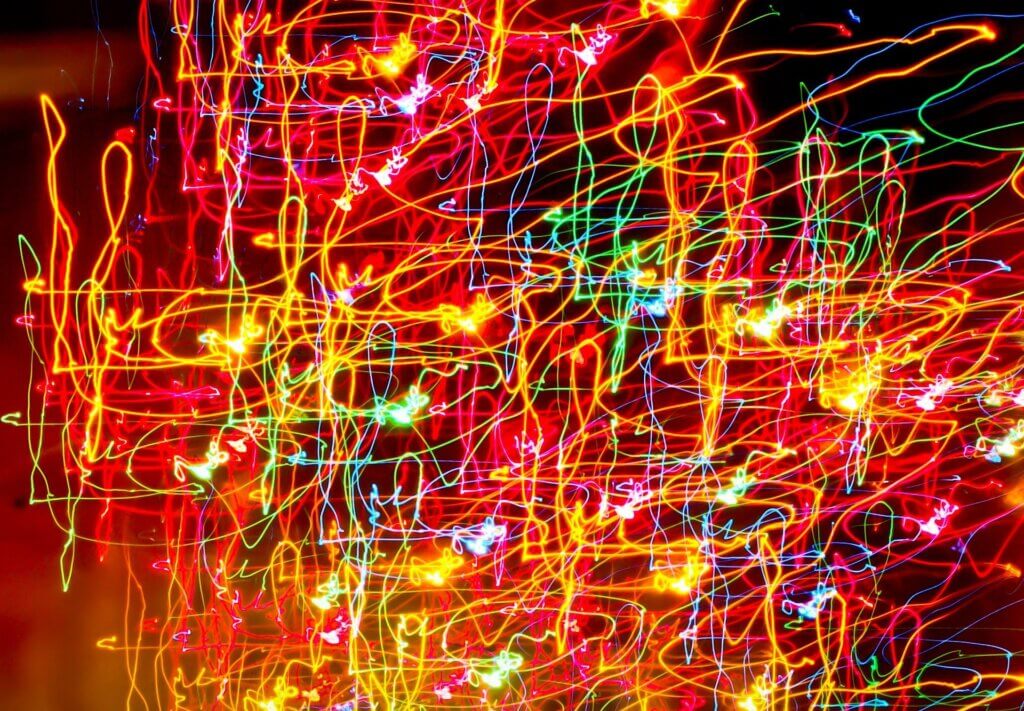
EDC Las Vegas (short for Electric Daisy Carnival) is one of the biggest electronic music festivals in the world. It takes place every year at the Las Vegas Motor Speedway, usually over three nights in May.
At its core, EDC is all about electronic dance music—genres like house, techno, dubstep, trance, and more. But it’s not just a concert. It’s more like stepping into a massive, neon-lit playground built around music, art, and experience.
What makes EDC stand out is the atmosphere. The festival grounds are transformed into a colorful, almost dreamlike world with huge stages, glowing lights, fireworks, carnival rides, and interactive art installations. Each stage has its own theme and design, and the production is on a level that feels almost unreal.
The music runs all night. Unlike many festivals that end around midnight, EDC typically starts in the evening and goes until sunrise. That creates a completely different vibe—cooler temperatures, bright lights cutting through the dark, and a kind of energy that builds as the night goes on.
Another big part of EDC is the culture. You’ll often hear about something called “PLUR,” which stands for Peace, Love, Unity, and Respect. It’s a mindset that a lot of attendees embrace—being friendly, open, and respectful to others. People dress in creative, expressive outfits, trade kandi (beaded bracelets), and treat it as more than just a music event.
It also draws a massive crowd from all over the world. Tens of thousands of people attend each night, including big-name DJs and artists. Names like Martin Garrix, Tiësto, and Skrillex have all played there.
In simple terms, EDC Las Vegas is a mix of a music festival, a carnival, and an immersive art experience—all happening overnight in one of the most high-energy environments you can imagine. It’s less about just watching performances and more about being part of something that feels like its own temporary world.
THE STORY OF ELECTRIC DAISY CARNIVAL ACTUALLY STARTS MUCH SMALLER AND MORE UNDERGROUND THAN WHAT YOU SEE TODAY
Back in the early 1990s, electronic dance music in the United States was mostly part of the rave scene—events that were often held in warehouses, empty fields, or small clubs. These gatherings were all about music, freedom of expression, and community, but they weren’t very mainstream yet.


EDC was created by Pasquale Rotella, the founder of Insomniac Events. He started throwing parties in Southern California in the early 1990s, inspired by that rave culture. His goal was to take that same feeling—music, art, and connection—and turn it into something more organized, creative, and large-scale.
The first official Electric Daisy Carnival took place in 1997 in Los Angeles. At that time, it was still very much a rave-style event, just with a more imaginative theme and production. The “carnival” idea came from blending electronic music with visual art, performers, and playful elements like costumes and decorations—making it feel like a festival rather than just a party.
As the years went on, EDC kept growing. By the 2000s, it had become one of the biggest electronic music events in the U.S., attracting bigger DJs and larger crowds. But with that growth came challenges—especially around safety and crowd control.
A major turning point happened in 2010 after an incident at the Los Angeles event led organizers to rethink how it was run. Shortly after, EDC moved to Las Vegas in 2011, where it found a permanent home at the speedway. Las Vegas offered more space, better infrastructure, and the ability to run the festival overnight, which became one of its defining features.



From there, EDC exploded in popularity. It became known not just for music, but for its massive stages, fireworks, art installations, and carnival rides—fully embracing the “Electric Daisy Carnival” name. It also expanded globally, with events in countries like Mexico, the UK, and Japan.
So at its core, EDC started as part of the underground rave movement, then evolved into a highly produced, world-famous festival. Even with all the growth, it still tries to hold onto its original spirit—community, creativity, and that feeling of being part of something bigger than just a concert.
PEOPLE LOVE GOING TO ELECTRIC DAISY CARNIVAL FOR A MIX OF REASONS, AND IT USUALLY GOES DEEPER THAN JUST LIKING MUSIC
For a lot of attendees, it becomes one of those experiences that sticks with them long after it’s over.
One of the biggest reasons is the atmosphere. EDC doesn’t feel like a typical concert—it feels like stepping into a completely different world. The lights, massive stages, fireworks, and art installations create an environment that’s almost surreal. When it’s all happening at night under the lights, it gives people that “this doesn’t feel real” kind of experience that’s hard to find anywhere else.
Another huge factor is the music itself. Electronic dance music is designed to be felt as much as it is heard. When thousands of people are moving to the same beat, it creates a kind of shared energy that’s powerful. Seeing top DJs like Tiësto or Martin Garrix live, with full production behind them, is quite different from just listening at home.


Then there’s the sense of community. EDC is known for the idea of “PLUR”—Peace, Love, Unity, and Respect. Whether someone fully buys into that or not, there’s still a noticeable difference in how people interact compared to many other large events. Strangers talk to each other, help each other out, and share the experience. For some people, that feeling of connection is the main reason they keep coming back.
People also love the freedom of expression. You’ll see everything from wild outfits and costumes to people just being completely themselves without worrying about judgment. It gives people a chance to step outside their normal routine and express a different side of who they are.
Another reason is that it’s an all-night experience. Because EDC runs until sunrise at the Las Vegas Motor Speedway, the energy builds in a unique way. The later it gets, the more it feels like you’re part of something intense and shared. Watching the sun come up after a night of music is something a lot of people describe as unforgettable.
Finally, for many, it becomes a kind of escape. Not in a negative way, but in the sense of stepping away from everyday responsibilities and routines. For a few days, it’s just music, people, and the moment. That break from normal life is something people value a lot.
Put all of that together, and EDC becomes more than just a festival. It turns into an experience people look forward to, talk about for months, and often plan their year around.
GOING TO ELECTRIC DAISY CARNIVAL FOR THE FIRST TIME IS EXCITING, BUT IT CAN ALSO BE OVERWHELMING IF YOU DON’T KNOW WHAT TO EXPECT
It’s not your typical concert—it’s more like entering a nonstop, high-energy world for an entire night.
What to Expect (First-Time Experience)
When you first arrive at the Las Vegas Motor Speedway, one of the first things that hits you is the scale. It’s huge—multiple stages, thousands of people, lights everywhere, music coming from different directions. It can take a little time to get your bearings.
As the night goes on, you’ll notice a few things:
Constant stimulation – Music, lights, visuals, fireworks—it never really stops. It’s exciting, but pacing yourself matters.
Lots of walking – You’ll be moving between stages, food areas, rides, and rest spots. Comfortable footwear becomes especially important.
Crowds (sometimes very dense) – Especially near big-name DJs. You’ll learn quickly when to move in and when to hang back.
The energy builds late – The later it gets, the more intense and connected everything feels. By sunrise, it’s a completely different vibe than when you walked in.
Friendly but chaotic environment – Most people are positive and open, but it’s still a massive event, so staying aware of your surroundings is important.
A lot of first-timers say the biggest surprise is that it’s not something you can “do everything” at. You’ll have to pick moments and just enjoy where you are.
What You Should Bring
Packing smart can make or break your experience. Here’s what actually matters:
Comfortable clothing and shoes
You’ll be on your feet for hours. Breathable clothes and broken-in shoes are key. Blisters can ruin a night fast.
Hydration (especially important)
Vegas heat—even at night—can still get to you. Most people bring a hydration pack (like a small backpack with a water bladder). Staying hydrated is non-negotiable.
Ear protection
This is something a lot of first-timers don’t think about. The music is loud. Earplugs let you enjoy it without damaging your hearing.
Portable phone charger
Your phone will drain quickly from videos, photos, and trying to find friends. A dead phone at EDC can make things much harder.
ID and essentials only
Bring what you need, but don’t overpack. Keep it simple and secure.
Light jacket or layer
Desert nights can cool off more than you expect, especially toward early morning.
A meeting plan
Cell service can be spotty. If you’re with friends, agree on a meeting spot and time ahead of time in case you get separated.
A Few Things People Don’t Expect
You may feel overwhelmed at first—that’s normal. Give yourself time to adjust.
You won’t see every artist you planned to. And that’s okay.
Some of the best moments happen randomly—walking into a smaller stage or just talking to people.
Managing your energy is just as important as anything you bring.
For your first EDC, go in with the mindset that you’re there to experience it, not conquer it. If you stay hydrated, pace yourself, and stay aware, you’ll have a much better time.
HERE’S WHAT A FIRST NIGHT AT ELECTRIC DAISY CARNIVAL TYPICALLY FEELS LIKE, STEP BY STEP, SO YOU CAN MENTALLY WALK THROUGH IT BEFORE YOU EVER GET THERE
Step 1: Getting Ready (Late Afternoon / Early Evening)
You’ll start getting ready hours before you even arrive. This is when people:
Pick their outfits (often creative or expressive)
Pack essentials (hydration pack, charger, ID)
Eat a solid meal (especially important—you’ll need the energy)
There’s usually a sense of anticipation building here. Even before you leave, it already feels like you’re heading into something big.
Step 2: The Journey There
Getting to the Las Vegas Motor Speedway can take time. Whether it’s shuttles, rideshare, or driving, expect:
Traffic
Lines
A lot of people heading the same direction
This part can test your patience, but it’s also where the excitement starts to build. You’ll see people dressed up, music playing, everyone heading to the same place.
Step 3: Entering the Festival
When you finally walk in, this is a moment you’ll probably remember.
You go through security, scan your ticket, and then suddenly:
Lights everywhere
Massive stages in the distance
Music hitting you from all sides
It can honestly feel overwhelming at first. Many people pause here just to take it all in.
Step 4: Exploring and Finding Your Rhythm
At the beginning of the night, it’s a good idea to walk around instead of locking into one stage right away.
You might:
Check out multiple stages
Ride a carnival ride
Grab food or water
People-watch (which is half the experience)
This is when you start to figure out what kind of night you want—high energy in big crowds or more space at smaller stages.
Step 5: First Big Set (Energy Starts Building)
At some point, you’ll settle into a set—maybe a DJ you’ve been wanting to see.
This is where it clicks:
The sound is louder than anything you’ve felt before
The crowd moves together
Lights and visuals sync with the music
You start to understand why people love it.
Step 6: Peak Night Hours (Midnight–3 AM)
This is when EDC is at full intensity.
The biggest artists usually play around this time
Crowds are at their thickest
The energy is high, sometimes overwhelming
This is also when you’ll want to pace yourself:
Take breaks
Drink water
Step out of dense crowds if needed
A lot of first-timers make the mistake of going too hard too early and burning out here.
Step 7: Late Night / Early Morning Shift (3–5 AM)
This is when the vibe starts to change.
Some people leave
More space opens up
The energy becomes a little more relaxed and emotional
You might find:
Better spots closer to the stage
More meaningful interactions with people
A deeper appreciation for the music
This is often when people say the experience becomes more personal.
Step 8: Sunrise Moment
If you stay long enough, you’ll see the sky start to change.
This is one of the most talked-about parts of EDC:
The lights are still going
Music is still playing
But now the sun is coming up
There’s a kind of calm, reflective feeling here that’s completely different from earlier in the night.
Step 9: Leaving the Festival
Heading out can be slow and tiring.
Long lines for shuttles or rides
Everyone is exhausted
Your feet will probably feel it
But at the same time, there’s usually a sense of “that was worth it.”
Step 10: The After Feeling
Back at your hotel or wherever you’re staying:
You’re tired, maybe overwhelmed
Your ears are still ringing (if you skipped earplugs)
You replay moments in your head
And this is where a lot of people realize—it wasn’t just a concert. It was an experience.
Your first night at EDC isn’t about doing everything perfectly. It’s about finding your own pace inside something that’s much bigger than you expected.
If you go in prepared and open-minded, the night tends to unfold in a way that feels natural—and often unforgettable.
THE BIGGEST FIRST-TIMER MISTAKES AND HOW TO AVOID THEM
Trying to Do Everything
This is probably the #1 mistake.
EDC is massive, and first-timers often show up with a packed schedule thinking they’ll hit every stage and see every DJ. It doesn’t work like that.
What happens:
You spend most of your time walking
You feel rushed instead of enjoying anything
You end up missing moments that matter
Better approach:
Pick a few must-see artists, then stay flexible. Some of your best experiences will happen randomly.
Going Too Hard Too Early
People get excited and burn all their energy in the first couple of hours.
What happens:
You’re exhausted by midnight
You miss the peak hours and late-night magic
You might even leave early
Better approach:
Pace yourself. Think of it like a marathon, not a sprint—especially since it goes until sunrise.
Not Hydrating Enough
Even though it’s at night, you’re still in the Nevada desert, and you’re walking a lot.
What happens:
Headaches, fatigue, dizziness
Your whole experience goes downhill fast
Better approach:
Drink water regularly, not just when you feel thirsty. A hydration pack helps a lot.
Wearing the Wrong Shoes
This one sounds simple, but it ruins a lot of nights.
What happens:
Blisters
Sore feet after a few hours
You stop enjoying yourself because you’re in pain
Better approach:
Wear comfortable, broken-in shoes. Not brand new ones.
Losing Your Group
With huge crowds and spotty service, this happens all the time.
What happens:
Stress trying to reconnect
Wasted time searching or messaging
Better approach:
Set a meeting spot and time ahead of time in case you get separated.
Staying in Packed Crowds Too Long
Everyone wants to be close to the stage, but sometimes it’s not worth it.
What happens:
You feel cramped or overwhelmed
It’s harder to leave than you expect
Better approach:
If it feels too tight, move back. You’ll often have more space and still great sound.
Ignoring Your Body
EDC is intense, and it’s easy to push past your limits.
What happens:
You crash hard
You stop enjoying the experience
Better approach:
Take breaks. Sit down. Eat something. Listen to your body—it’s not weakness, it’s how you last the whole night.
Not Exploring Enough
Some people do the opposite of mistake #1—they stay at one stage all night.
What happens:
You miss the full experience
You don’t see what makes EDC unique
Better approach:
Spend some time exploring—art installations, smaller stages, rides. That’s part of what makes it special.
Overpacking or Underpacking
Bringing too much or forgetting essentials can both cause problems.
What happens:
Too much = annoying to carry all night
Too little = you’re stuck without what you need
Better approach:
Stick to essentials: water, charger, ID, light layer, earplugs.
Expecting It to Be Perfect
This one’s more mental than physical.
What happens:
Small inconveniences feel bigger than they are
You get frustrated instead of going with the flow
Better approach:
Expect some chaos—lines, crowds, delays. If you accept that upfront, it won’t bother you nearly as much.
Most of these mistakes come down to one thing: trying to control the experience too much or pushing yourself too hard.
If you stay flexible, take care of yourself, and don’t feel like you need to do everything, you’ll avoid 90% of what trips people up.
Comparing Electric Daisy Carnival to festivals like Coachella Valley Music and Arts Festival and Bonnaroo Music and Arts Festival is actually one of the best ways to understand what makes each one unique. On the surface they’re all big music festivals—but the experience feels quite different.
OVERALL VIBE
EDC (Las Vegas)
Feels like a high-energy, neon-lit nightlife world. It’s intense, immersive, and almost surreal. Everything is designed to stimulate your senses.
Coachella (California)
Feels more like a cultural event. It blends music, fashion, celebrities, and trends. It’s as much about being seen and experiencing the scene as it is about the music.
Bonnaroo (Tennessee)
Feels more laid-back and community-driven. It has a “camping festival” spirit where people settle in and live there for a few days.
MUSIC FOCUS
EDC
Almost entirely electronic dance music—DJs, remixes, and nonstop beats.
Coachella
Very diverse: hip-hop, rock, pop, indie, electronic. Big mainstream headliners.
Bonnaroo
Also diverse, but often leans toward jam bands, rock, indie, and alternative, with some EDM mixed in.
SCHEDULE & TIMING
EDC
Starts in the evening
Goes all night until sunrise
Cooler temperatures, nighttime energy
Coachella
Daytime into late night
Ends around midnight
Hot desert sun is a big factor
Bonnaroo
Runs nearly all day and night
Some late-night sets, but also daytime shows
You’re living there if you camp
ENVIRONMENT
EDC at Las Vegas Motor Speedway
Built like a giant themed playground
Lights, fireworks, carnival rides
Highly produced and visually intense
Coachella (Empire Polo Club)
Open fields and art installations
More minimalist compared to EDC’s intensity
Big focus on aesthetics and layout
Bonnaroo (The Farm in Tennessee)
Large, open camping grounds
More natural, less polished feel
You’re part of a temporary community
CROWD & CULTURE
EDC
High-energy, expressive crowd
PLUR mindset (Peace, Love, Unity, Respect)
People dressed in colorful, creative outfits
Coachella
Mix of music fans, influencers, celebrities
Fashion and trends are a big deal
More image-conscious overall
Bonnaroo
Friendly, down-to-earth crowd
Strong sense of community
Less about appearance, more about connection
COMFORT LEVEL
EDC
Physically demanding (all night, lots of walking)
You usually stay in hotels and commute
Coachella
Hot during the day
Can be tiring but more structured
Bonnaroo
Camping adds another layer of challenge
Weather, showers, and sleep can be factors
WHY PEOPLE CHOOSE EACH ONE
People who love EDC usually want:
Intense energy
Nightlife atmosphere
Electronic music and visuals
People who love Coachella usually want:
Big-name artists across genres
Cultural and fashion experience
A mix of music and social scene
People who love Bonnaroo usually want:
Community and connection
A slower, more immersive pace
A mix of music and camping life
EDC is the most intense and immersive of the three. It’s built to overwhelm your senses—in a good way—if you’re prepared for it.
Coachella is the most mainstream and trend-driven, where music meets culture and visibility.
Bonnaroo is the most grounded and community-focused, where the experience is just as much about the people as the performances.
If you’re the kind of person who likes high energy, staying up late, and feeling like you’ve stepped into another world, EDC will likely stand out to you.
IF YOU WANT TO GO DEEPER ON EVERYTHING WE TALKED ABOUT—HISTORY, WHAT IT’S LIKE, HOW TO PREPARE, AND WHAT TO EXPECT—THERE ARE SOME REALLY SOLID OFFICIAL AND RELIABLE PLACES TO LEARN MORE
Official Festival & Organizer Resources (Best Place to Start)
The most accurate and up-to-date information always comes from the people who run Electric Daisy Carnival:
- Visit the official EDC Las Vegas page
This is the main hub for:- Tickets and dates
- Lineups
- Festival maps and rules
- Travel and shuttle info
- Explore Insomniac (the company behind EDC)
This gives you:- Festival photos and recaps
- Music mixes and artist content
- Updates on future events
From these official sources, you’ll get the clearest picture of what EDC actually is. For example, Insomniac explains that EDC started as a 1997 warehouse party and grew into a global, multi-sensory festival built around music, art, and community .
🎥 Watch the Experience (Highly Recommended)
Reading about EDC is helpful—but seeing it makes it click instantly:
This gives you a real sense of:
- The scale
- The energy
- The lights, stages, and crowd
📰 Helpful Articles & Guides
For more straightforward breakdowns and practical info:
- Read a full EDC guide (tickets, experience, overview)
This covers:- What EDC is like overall
- Ticket pricing ranges
- The types of music and stages
It also reinforces that EDC has grown into one of the most iconic electronic music festivals in the world, drawing massive crowds and featuring top DJs across genres .
💬 Real People & Community Insights
If you want honest, unfiltered experiences, communities can help:
- Reddit threads like those on Reddit (r/electricdaisycarnival)
These are useful for:- First-time tips
- Packing advice
- What surprised people
For example, one user noted that the official app often becomes a “one-stop shop” for maps and info during the festival —something a lot of first-timers don’t realize.
Just keep in mind: community advice is helpful, but not always perfectly accurate.
🎧 Music & Lineup Exploration
To understand the music side better:
- Look up official EDC playlists on platforms like Spotify
- Check past lineups (they often feature 200+ artists across many genres)
This helps you get familiar with the sound and discover artists before going.
If you really want to understand EDC, use a mix of:
- Official sources (for facts and planning)
- Videos (for the feeling and scale)
- Community discussions (for real-world tips)
That combination gives you the full picture—what it is, what it feels like, and how to actually experience it the right way.