


Hang Son Doong, often heralded as the world’s largest cave, is an extraordinary natural wonder nestled in the heart of Vietnam.
Specifically, it lies within Phong Nha-Ke Bang National Park in Quang Binh Province, a region famous for its extensive karst landscape and myriad caves.
Discovered relatively recently, in 1991, by a local man named Ho Khanh, the cave’s full significance wasn’t understood until 2009 when a team of British cavers led by Howard Limbert undertook a thorough exploration.
Prior to this, Hang Son Doong was virtually unknown to the outside world. The cave’s sheer size and scale make it unlike anything else on Earth. Some of its chambers are so large they could comfortably house a 40-story skyscraper, and the main passage is more than 5 kilometers long, reaching heights of over 200 meters in places.
The cave’s origins trace back millions of years to the formation of the karst limestone landscape, shaped over eons by water erosion. The Son Doong River still flows through the cave, continuing the slow, relentless process of carving out the immense chambers and passageways.
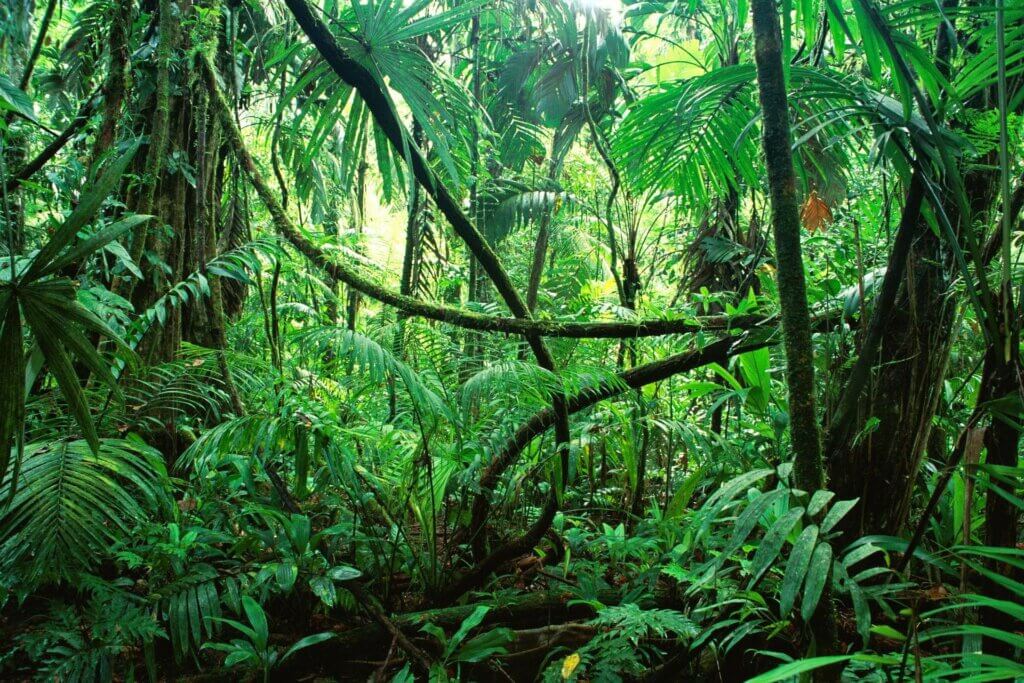
Unique to Hang Son Doong are the massive “dolines” — huge sinkholes where parts of the cave roof have collapsed, allowing sunlight to pour in and sustain lush jungle ecosystems inside the cave itself.
These openings create dramatic shafts of light that reveal spectacular stalactites and stalagmites, some of the largest in the world.
The cave’s interior is home to rare and sometimes endemic species, including unusual fish and insects adapted to its dark, humid environment. The discovery of Hang Son Doong has opened a new chapter in speleology (the study of caves) and has turned Phong Nha-Ke Bang National Park into a major destination for adventurous travelers and scientists alike.
Because of its fragile ecosystem and the logistical challenges of accessing it, the Vietnamese government has limited the number of tourists allowed inside the cave each year. Expeditions require permits and are usually guided by specialized tour companies, ensuring the cave’s preservation while allowing people to witness this astonishing subterranean world.
Hang Son Doong is not just the largest cave by volume, but also a remarkable example of nature’s power to create hidden worlds of breathtaking scale and beauty. Its discovery has reshaped our understanding of what lies beneath the Earth’s surface and remains one of the most exciting natural explorations of the 21st century.
The reason Hang Son Doong remained undiscovered by the wider world until the early 1990s—and only thoroughly explored in 2009—comes down to a combination of geography, accessibility, and historical context.
First, the cave is located in a very remote and rugged part of Vietnam’s jungle-covered karst mountains. The terrain around Phong Nha-Ke Bang National Park is dense, with thick forests, steep limestone cliffs, and limited access routes.
For local people living nearby, the cave entrance was known but difficult to reach and explore because it’s hidden behind a jungle-covered hill and concealed by thick vegetation.
Second, the cave itself is enormous but deceptive. Its entrance is a relatively small hole at the base of a mountain, not a giant cavern mouth that immediately signals the vastness inside.
Early explorers and locals knew of some caves in the region, but Hang Son Doong’s entrance didn’t look extraordinary at first glance.
Third, Vietnam’s history played a role. For much of the 20th century, the country experienced prolonged periods of war and conflict, especially during the Vietnam War and its aftermath.
These conditions limited exploration and scientific research in remote areas. After peace was established and the region opened more to tourism and research, it became possible to conduct detailed cave explorations.
Lastly, Hang Son Doong is unique in that it’s so massive the usual methods of cave exploration (like following air flow or water sources) were less obvious in revealing the cave’s scale. Only when British cavers led by Howard Limbert undertook serious explorations with modern equipment did the full extent of the cave become clear.
So, it was really a mix of difficult terrain, a modest entrance, historical circumstances, and the sheer size of the cave itself that kept it hidden for so long from the outside world. The local people’s knowledge combined with modern exploration eventually brought this underground giant into global attention.
In a way, Ho Khanh—the local man credited with discovering Hang Son Doong—did stumble upon it, but it wasn’t purely by accident. The story goes that Ho Khanh was a hunter and gatherer in the area during the early 1990s.
While navigating through the dense jungle, he found a large hole in the side of a mountain that blew out a strong gust of cool air. This was unusual and intriguing to him because caves often have this kind of airflow.
Recognizing it as something special, he returned to investigate, but lacked the proper gear and knowledge to explore deeply. For years, he kept the location a secret because he feared it might be exploited or damaged.
It wasn’t until 2009 that he guided a British caving team, led by Howard Limbert, to the site for a full, professional exploration.
So, while the initial “discovery” involved a bit of chance—coming across the hole and noticing the airflow—it was also a product of Ho Khanh’s local knowledge, curiosity, and respect for the environment. He played a crucial role not just in finding it, but in protecting it until it could be properly studied.
Hang Son Doong’s incredible size and mysterious atmosphere have naturally inspired myths, legends, and even some conspiracy theories, especially among local communities and adventure enthusiasts.
Here are some of the most interesting stories and ideas associated with the cave:
LOCAL MYTHS AND LEGENDS:
Before its official discovery, locals spoke of the cave in whispers, often describing it as a “forbidden place” or “home of the spirits.”
Some believed that powerful ancestral spirits or supernatural beings lived within its dark, vast chambers, guarding the land and the secrets beneath the earth.
These stories likely served as warnings to keep people away from the dangerous and unexplored wilderness.
Another common legend told among nearby villages is that the cave was a gateway to the underworld or another realm—a place where the veil between worlds was thin.
The occasional strange sounds coming from the cave, like echoing rumbles or eerie winds, were interpreted as signs of these supernatural forces at work.
CONSPIRACY THEORIES:
Among some adventurous online communities, a few conspiracy theories have emerged, fueled by the cave’s hidden nature and the difficulty of exploring it.
One theory suggests that the Vietnamese government or other agencies might be deliberately limiting access to Hang Son Doong to keep something secret hidden inside—ranging from ancient artifacts to undiscovered species or even clandestine research projects.
However, there is no credible evidence to support these ideas; rather, they likely arise from the natural human fascination with mystery and secrecy.
Another more speculative idea is that the cave could be connected to larger, undiscovered underground networks or tunnels beneath Southeast Asia, possibly used historically for military or smuggling purposes, but again, this remains speculative without solid proof.
MODERN MYSTIQUE:
Because the cave is so new to the public eye, its sheer size and alien landscape have made it almost otherworldly in popular imagination.
Some explorers and photographers describe the cave as a “lost world,” complete with its own ecosystem and microclimate. This sense of mystery continues to fuel a mix of awe, storytelling, and creative speculation.
Overall, the myths and stories surrounding Hang Son Doong reflect a timeless human response to awe-inspiring natural places — combining respect, fear, wonder, and curiosity.
The atmosphere inside Hang Son Doong is one of the key reasons why it inspires such powerful myths and stories—it feels almost like stepping into another world.
First, the sheer scale of the cave creates a sense of overwhelming awe. When you enter, you’re not just in a cavern; you’re in a vast underground valley with towering limestone walls that soar hundreds of feet overhead.
The darkness is profound, but at times, shafts of sunlight pour in dramatically through collapsed roof sections—called dolines—lighting up thick jungle growth inside the cave.
Imagine walking through dense tropical forest, but it’s all underground, with humid air heavy and filled with the scent of wet earth and moss.
This contrast between the natural wildness and the underground setting is surreal.
The soundscape adds to the otherworldly feeling. Deep inside, the cave echoes with dripping water, the rush of the Son Doong River, and distant rumblings caused by shifting rock or water flow.
The silence in some parts is so complete that even small sounds feel amplified, which heightens your awareness and sometimes your sense of vulnerability.
Humidity and temperature inside the cave are different from the outside world. It’s warm and humid enough to support plant life, including unique ferns, orchids, and even small trees that thrive beneath those sunlight shafts.
The air currents from the cave entrance and the river create subtle breezes that can feel like the cave itself is alive and breathing.
This combination of vastness, wild greenery, intense silence punctuated by natural sounds, and changing light conditions has inspired locals to see the cave as a living entity, guarded by spirits or ancient forces. The jungle inside is home to rare and unusual creatures—some that have adapted to life in darkness or semi-darkness—which adds an element of mystery and the unknown.
Visitors often describe a sense of timelessness when inside Hang Son Doong. Hours can pass without any sense of normal time because the outside world feels so far away. That timelessness, combined with the cave’s immense size and the hidden jungle, fuels stories of hidden worlds or realms beneath the earth—places where ancient powers or forgotten secrets dwell.
In essence, the atmosphere of Hang Son Doong is a rare blend of natural grandeur and intimate mystery. It triggers our primal responses to vast, unknown spaces—wonder, fear, reverence—and that’s why it continues to inspire myths and legends that make it so much more than just a geological wonder.
Visiting and exploring Hang Son Doong is truly a once-in-a-lifetime experience that few get to undertake, and it’s unlike any other adventure you might imagine.
First off, reaching the cave is an expedition in itself. Visitors typically start by traveling to the nearby town of Dong Hoi in Quang Binh Province, then journey through dense jungle and rugged terrain to the cave’s entrance.
The trek can take several hours, including hiking through thick forest, crossing streams, and sometimes scrambling over rocks and mud. This remote approach heightens the sense of adventure before you even step inside.
Once at the entrance, stepping into Hang Son Doong feels like entering a hidden world. The first thing many explorers notice is the sudden drop in temperature and the cool, fresh air blowing from the cave’s mouth—a stark contrast to the humid jungle outside.
The entrance leads to a massive passage where your headlamp or flashlight only scratches the surface of the darkness ahead.
Inside, you begin to see the true scale of the cave: enormous chambers with ceilings so high you can barely see them without craning your neck. The cave floor varies from smooth paths to rough, rocky terrain, and sometimes you navigate streams or shallow pools of water.
One of the most surreal sights is the patches of jungle growing beneath giant collapsed roof sections. Here, sunlight filters down, illuminating thick greenery, towering trees, and vines hanging like curtains—an entire ecosystem thriving underground.
Explorers camp inside the cave at designated spots, spending nights under the glow of headlamps or lanterns, surrounded by silence punctuated by the drip of water and the occasional distant roar of the Son Doong River. The isolation and darkness outside the campfires create a profound sense of solitude and connection to nature.
Throughout the journey, you encounter incredible natural formations—massive stalagmites and stalactites, some the size of skyscrapers, bizarre rock shapes sculpted over millions of years, and fresh mineral deposits sparkling in the cave’s dim light.
The air feels thick but fresh, and the cave sometimes breathes with gentle gusts of wind, as if alive.
Because of its fragile ecosystem and difficulty, access is limited to small groups led by expert guides who ensure safety and respect for the cave’s environment. This exclusivity adds to the mystique, as you’re walking paths few have ever seen.
Visiting Hang Son Doong is not just a physical journey but a deeply emotional one—many describe feeling humbled by the cave’s grandeur and overwhelmed by its untouched beauty. It’s a place that reminds you of how vast and mysterious the natural world remains, even in the 21st century.
If you ever consider going, be prepared for a physically demanding but incredibly rewarding adventure, one that stays with you long after you leave its shadowed chambers.
Visiting Hang Son Doong is definitely not a casual trip—it’s one of the most challenging and exclusive cave expeditions in the world.
Several factors make getting there and exploring the cave physically and logistically demanding.
ACCESS AND PERMITS:
The Vietnamese government tightly controls access to protect Hang Son Doong’s delicate ecosystem. Only a limited number of visitors are allowed each year—usually around 1,000 people total.
You can’t just show up and go in; you have to book a spot through authorized tour operators, and there’s often a long waiting list. The tours typically run during the dry season, from February to August, when conditions inside the cave are safest.
PHYSICAL REQUIREMENTS:
The trek to and inside the cave requires a good level of fitness. The approach involves several days of trekking through dense jungle, crossing rivers, and climbing rocky terrain. Inside the cave, you’ll often have to navigate slippery surfaces, wade through streams, and sometimes climb ladders or scramble over large boulders.
Tours generally last about 4 to 5 days, including hiking to the cave entrance, exploring the cave itself, and returning. You’ll camp inside the cave, so you need to be comfortable with basic camping conditions in a humid environment.
TECHNICAL SKILLS AND GEAR:
While you don’t need to be an expert caver or climber, you should be comfortable with moderate adventure travel and following safety instructions closely.
The guides provide technical gear like helmets, headlamps, and ropes, but you should be prepared to move carefully and steadily.
PREPARATION:
Because the cave is remote and the expedition physically taxing, it’s recommended that visitors do some endurance and strength training beforehand.
Good cardiovascular fitness, balance, and stamina are important to handle long hikes and varied terrain.
COST AND LOGISTICS:
Tour packages to Hang Son Doong are pricey—often several thousand dollars per person—due to the specialized guides, equipment, permits, and logistics involved. This also helps limit the number of visitors and funds conservation efforts.
Visiting Hang Son Doong is far from easy. It demands physical endurance, preparation, a willingness to embrace rugged conditions, and advance planning.
But for those who make the journey, the reward is an unforgettable encounter with one of the planet’s most spectacular natural wonders.
Hang Son Doong stands as a testament to the incredible mysteries still hidden beneath our planet’s surface, reminding us that even in an age of satellites and exploration, nature holds secrets that can astonish us.
Its immense scale, unique ecosystem, and breathtaking beauty create an experience that transcends ordinary travel—it’s a journey into a hidden world that challenges both the body and the imagination.
While reaching and exploring the cave demands careful preparation, physical endurance, and respect for the fragile environment, those who venture inside are rewarded with sights and sensations unlike anywhere else on Earth.
The interplay of darkness and light, silence and sound, vastness and intimacy creates an atmosphere that feels timeless and almost sacred.
Preserving Hang Son Doong for future generations is vital, which is why access is limited and managed with care. It serves as a powerful reminder of our responsibility to protect such natural wonders, allowing us to continue learning from and being inspired by them.
For anyone with a spirit of adventure and a deep appreciation for the natural world, Hang Son Doong represents one of the most extraordinary journeys imaginable.
FOR MORE DETAILED AND UP-TO-DATE INFORMATION ABOUT HANG SON DOONG, YOU CAN EXPLORE SEVERAL RELIABLE SOURCES:
- Official Tourism Websites:
The Vietnam National Administration of Tourism and the official site for Phong Nha-Ke Bang National Park provide valuable information about visiting the cave, permits, conservation efforts, and travel tips. - Authorized Tour Operators:
Companies like Oxalis Adventure and local guides specializing in Hang Son Doong expeditions offer detailed itineraries, preparation guidelines, and booking options. Their websites often include photos, videos, and firsthand accounts. - Documentaries and Books:
Documentaries such as “The World’s Largest Cave” by National Geographic and various travel films showcase stunning visuals and expert insights. There are also books and adventure memoirs by explorers who have ventured inside, providing personal experiences and scientific details. - Scientific Journals and Articles:
For a deeper dive into the geology, biology, and ecology of the cave, look for research articles published by speleologists and scientists studying Phong Nha-Ke Bang National Park. University databases and platforms like Google Scholar can be useful. - Travel Blogs and Forums:
Many adventurers and caving enthusiasts share their stories, tips, and photos on travel blogs, YouTube channels, and forums such as TripAdvisor or Reddit’s adventure communities.
Checking multiple sources will give you a well-rounded understanding and help you plan if you ever decide to explore this remarkable cave yourself.