
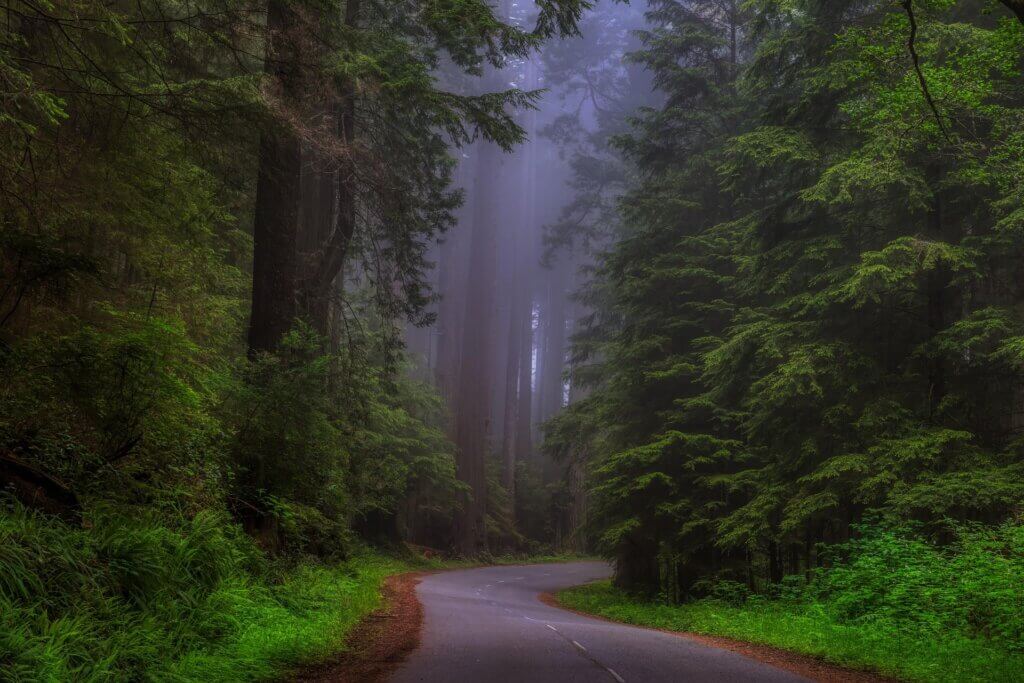
Redwood National and State Parks, nestled along the rugged northern coast of California, are unlike any other destination in the country.
When people talk about feeling small in the presence of nature, this is the place they often mean. Towering over 300 feet high in some places, the redwoods are not only the tallest trees on Earth—they are among the most awe-inspiring living things you can stand beside.
WHERE IT’S LOCATED
Redwood National and State Parks are located in Humboldt and Del Norte counties in northern California. The park is a protected collaboration of national and state lands, including Redwood National Park and three California state parks: Prairie Creek Redwoods, Del Norte Coast Redwoods, and Jedediah Smith Redwoods.
The entire region hugs the coastline, with scenic Highway 101 weaving through dense forests and offering breathtaking views of both the Pacific Ocean and the towering redwoods.
WHY PEOPLE LOVE IT
People are drawn to Redwood National Park for many reasons, and once they visit, it’s easy to see why. It’s not just the size of the trees—it’s the peaceful, almost spiritual atmosphere they create.
The filtered light that falls through the canopy, the moss-draped trunks, the quiet forest floor—it all feels timeless. Many visitors say they come to reconnect with nature, to unplug, and to simply feel grounded again. Whether it’s a short walk on a paved path or a multi-day backcountry trek, every visit feels immersive.
There’s also a surprising variety of landscapes. One moment, you’re walking through an old-growth redwood forest, and the next you’re hiking across windswept coastal bluffs or meandering through prairies filled with elk. And for those who love the coast, there are wild, rocky beaches where driftwood piles up and tidepools teem with life.
WHY OUTDOOR ENTHUSIASTS AND ADVENTURERS LOVE IT
For those who thrive on outdoor adventure, the park is a paradise. Backpackers come for the solitude and raw beauty of backcountry trails like the Redwood Creek Trail, while hikers enjoy everything from easy nature walks to challenging routes like the Boy Scout Tree Trail or the Tall Trees Grove.
Cyclists can explore scenic roads, while kayakers and canoeists take to the Smith River—a crystal-clear, undammed river that winds through part of the park.
Wildlife lovers often spot Roosevelt elk, black bears, sea lions, and a variety of bird species. Photographers and landscape artists find endless inspiration in the light, scale, and shifting coastal fog that makes the forest look almost otherworldly.
Campers, too, feel at home here. There are both developed campgrounds and remote sites, and the experience of sleeping under trees that have stood for hundreds—if not thousands—of years is something hard to forget.
PARKING AND AMENITIES
Parking in Redwood National and State Parks is generally well-marked and relatively straightforward. There are numerous trailheads with designated parking lots, especially near popular areas like Lady Bird Johnson Grove, Fern Canyon, and the Prairie Creek Visitor Center. Some lots fill up quickly during peak summer months, so it’s wise to arrive early in the day, especially if you’re heading to Fern Canyon or Gold Bluffs Beach.
As for amenities, most major access points offer restrooms, trail maps, and visitor centers with helpful rangers and interpretive displays. Campgrounds have basic facilities, including fire rings, picnic tables, and restrooms—some with showers. Cell service can be spotty, so it’s a good idea to plan ahead and download any maps or trail info in advance.
There are also a few nearby small towns, like Orick, Klamath, and Crescent City, where you can find groceries, gas, or a warm meal after a long hike.
GENERAL RULES AND REGULATIONS
Because it’s such a fragile and protected environment, there are a few important rules visitors need to follow. Staying on marked trails is essential—not only to protect the forest floor, which is easily damaged, but also to preserve the delicate root systems of the redwoods. Pets are only allowed in certain areas and must be leashed at all times.
Fires are allowed only in designated fire rings or grills, and fire restrictions can go into effect during dry periods. Collecting wood, plants, or rocks is prohibited, as is disturbing wildlife. If you plan to backcountry camp, you’ll need a free permit, which can be obtained online or at a visitor center.
Finally, pack it in, pack it out. Redwood National Park doesn’t have trash collection on trails or remote areas, so visitors are expected to leave no trace.
Redwood National and State Parks offer a blend of quiet majesty and wild, untamed beauty that calls to people from all walks of life. Whether you’re there to meditate under ancient giants, hike miles into remote wilderness, or simply enjoy a walk with your family, it’s one of those places where nature reminds you just how vast and beautiful the world can be.
Running, Festivals & Events Nearby
Avenue of the Giants Marathon
Held each May along the famed Avenue of the Giants inside Humboldt Redwoods State Park, this marathon and its half‑marathon/10K counterpart take place almost entirely beneath towering redwoods. It’s a Boston Marathon qualifier with a rich history dating back to 1972 Wikipedia+3Visit Redwoods+3Visit Redwoods+3Wikipedia+2Wikipedia+2Wikipedia+2.
A sister event, the Humboldt Redwoods Marathon, happens in October on the same route and is similarly well‑established Wikipedia+1Wikipedia+1.
LOCAL FESTIVALS, MUSIC & CULTURE (NEARBY, NOT INSIDE THE PARK)
While Redwood National Park doesn’t host these directly, nearby towns offer festivals, concerts, art shows, and local gatherings throughout the year:
Godwit Days (April in Arcata): A bird‑watching festival offering field trips, lectures, and guided walks focused on migratory shorebirds California State Parks+4Visit Redwoods+4Wikipedia+4.
North Coast festivals in Humboldt County include the Redwood Coast Jazz Festival (March), Blues by the Bay (July), Trinidad Fish Festival (June), and more Humboldt Redwoods State Park+3Wikipedia+3Visit Redwoods+3.
The Forest Moon Festival (late May–June) celebrates the redwood forests as filming locations from Return of the Jedi with tours, costuming, vendors, and film‑fan events across Humboldt and Del Norte counties Visit Redwoods.
CONCERTS & LIVE MUSIC
Local live music happens frequently in Eureka, Arcata, Fortuna, and Ferndale—not inside the national park, but accessible within a short drive:
Arcata’s Farmers Market Saturdays often include live music and community gatherings Visit Redwoods+1Visit Redwoods+1Visit Redwoods+1Visit Redwoods+1.
Arts Alive events in Old Town Eureka mix live music, galleries, and local boutiques on weekend evenings Wikipedia+10Visit Redwoods+10Visit Redwoods+10.
Seasonal music series, such as Garden Summer Music at the Humboldt Botanical Garden, feature live bands in lush outdoor settings Wikipedia.
COMPETITIONS & OUTDOOR PROGRAMS
In addition to the marathons, you’ll find running events like the Prairie Creek Redwoods 5K Run/Walk (typically in April) held right along scenic trails of Redwood State Park reddit.com+2Visit Redwoods+2Wikipedia+2.
Park programs such as “Hike and Bike Day” close the Newton B. Drury Scenic Parkway to motorized vehicles one weekend per month (often on a Saturday), allowing hikers and cyclists to enjoy the redwoods freely and safely Visit Redwoods+2Visit Redwoods+2cntraveler.com+2.
WHAT YOU WON’T FIND
Traditional concerts or music festivals inside the park gates. Large performances, gatherings, or stadium‑style events are not allowed within Redwood National Park’s protected boundaries.
Sporting competitions beyond organized trail runs or informal ranger‑led programs.
Instead, cultural, and athletic events take place in neighboring towns—Arcata, Eureka, Ferndale, Fortuna, and Trinidad—often involving nature‑adjacent experiences but hosted outside the park proper.
| Event Type | Where | When |
| Avenue of the Giants Marathon (10K / half‐ / full marathon) | Humboldt Redwoods State Park / Avenue of the Giants | May |
| Humboldt Redwoods Marathon | Same course | October |
| Prairie Creek 5K | Prairie Creek Redwoods area | April, annually |
| Godwit Days (bird festival) | Arcata and surrounding | April |
| Forest Moon Festival | Regional (film‑themed, Star Wars setting) | Late May–June |
| Local music & arts events | Eureka, Arcata, Fortuna, etc. | Varied (spring–summer) |
SO, WHAT DOES THIS MEAN FOR YOUR VISIT?
If you’re hoping to catch a festival or live music during your Redwood trip, the most likely scenarios are:
Timing your visit to coincide with one of the running events, especially if you’re enthusiastic about trail races under the redwoods.
Exploring Arcata or Eureka in spring or early summer, when arts fairs, birding festivals, live music evenings, and community gatherings are in full swing.
If you’re a Star Wars fan, check out the Forest Moon Festival celebrating the forest moon of Endor—with immersive activities amid the redwood backdrop.
At Redwood National and State Parks, most people come for the towering trees—but they often leave with memories of so much more.
The landscape offers an incredibly diverse set of experiences, from hiking under ancient giants to exploring wild coastal bluffs and rivers.
HERE ARE THE TOP THINGS PEOPLE DO WHEN VISITING:
HIKE AMONG THE TALLEST TREES ON EARTH
This is the number one draw. Walking under 300-foot coastal redwoods is an experience that humbles just about everyone. Some top trails include:
Tall Trees Grove – Requires a free permit, but well worth it for solitude and massive trees.
Lady Bird Johnson Grove – An accessible, family-friendly loop through old-growth forest.
Boy Scout Tree Trail – A longer, more rugged hike into deep redwood wilderness.
VISIT FERN CANYON
Fern Canyon, located in Prairie Creek Redwoods State Park, is a narrow gorge with 30- to 50-foot-high canyon walls completely covered in lush ferns and dripping with water. It feels like walking through a prehistoric world. It was even used as a filming location for Jurassic Park 2: The Lost World.
DRIVE THE SCENIC ROUTES
The park’s scenic drives are just as rewarding as the hikes. Top routes include:
Newton B. Drury Scenic Parkway – A 10-mile drive through old-growth redwoods.
Howland Hill Road – A narrow, winding dirt road that takes you deep into Jedediah Smith Redwoods.
Bald Hills Road – Starts in the redwoods and climbs into oak woodlands and open prairies with elk viewing opportunities.
SPOT WILDLIFE
Visitors often see:
Roosevelt Elk, especially in Prairie Creek and Elk Meadow.
Black bears, banana slugs, and river otters in more remote or quiet areas.
Whales, sea lions, and harbor seals from coastal viewpoints.
Birdwatchers also come to see marbled murrelets, owls, hawks, and other forest and coastal birds.
EXPLORE THE COASTLINE
Redwood National and State Parks also protect about 40 miles of dramatic California coastline. Visitors enjoy:
Gold Bluffs Beach – Remote and wild, great for driftwood hunting and beach walks.
Klamath River Overlook – Known for whale watching in spring and fall.
Enderts Beach – A short hike leads to tidepools and secluded views.
GO CAMPING
There are developed campgrounds and backcountry sites:
Elk Prairie and Jedediah Smith Campgrounds are among the most popular, set right inside the forest.
Backcountry campers can stay in primitive sites like Flint Ridge or Redwood Creek—some even let you camp near rivers or groves of ancient trees.
TAKE A RANGER-LED PROGRAM OR JOIN A GUIDED HIKE
In summer, ranger talks, campfire programs, and guided hikes bring the history, science, and stories of the redwoods to life. Topics might include redwood ecology, Indigenous history, or the park’s role in conservation.
BACKPACK THROUGH WILDERNESS
Outdoor adventurers often explore the park’s longer routes, like:
Redwood Creek Trail – Popular for overnight trips.
Lost Man Creek Trail or the Coastal Trail – For multi-day hikes that mix redwoods and ocean views.
Permits are required for backcountry camping, and there are strict rules to protect the fragile environment.
VISIT THE KUCHEL VISITOR CENTER
Just south of Orick, this is a great starting point. You can learn about the park’s history, watch short films, pick up maps, and speak to rangers about current trail and weather conditions.
LEARN ABOUT INDIGENOUS HISTORY AND THE YUROK PEOPLE
The redwood forests are part of the ancestral homelands of the Yurok, Tolowa, and other Indigenous tribes. Cultural sites, interpretive signs, and ranger-led programs help educate visitors about traditional lifeways and ongoing efforts to restore tribal stewardship of the land.
RIDE A BIKE OR PADDLE A KAYAK
Biking is allowed on select trails and the Newton B. Drury Parkway (which closes to vehicles one Saturday each month for “Hike & Bike Day”).
Kayaking or canoeing the Smith River, one of California’s last undammed rivers, is a hidden gem experience for paddlers.
In short, Redwood National and State Parks are not just about looking up at massive trees—they’re about immersing yourself in a uniquely rich environment where ancient forests, wild rivers, and raw coastline converge. Whether you’re there for a few hours or a few days, the park offers something meaningful for hikers, photographers, wildlife lovers, families, and serious adventurers alike.
Redwood National and State Parks are beautiful, serene, and wild, but like any wilderness area, they come with certain risks. The key to having a safe and rewarding visit is awareness, preparation, and respect for the environment.
HERE’S WHAT YOU NEED TO KNOW ABOUT THE POTENTIAL DANGERS AND HOW TO AVOID THEM.
FALLING BRANCHES AND TREES (KNOWN AS “WIDOWMAKERS”)
Redwoods are massive, and their limbs can be just as huge. During wind, storms, or even on calm days, branches can fall unexpectedly.
Safety Tip: Avoid lingering under tall trees during strong winds or storms. Be especially cautious during or after rainy or windy conditions. Don’t set up camp directly under leaning trees or large limbs.
SLIPPERY TRAILS AND TREE ROOTS
Many trails wind through damp forest where roots and mossy rocks can be slick. Fern Canyon, coastal cliffs, and shaded paths are especially prone to being slippery.
Safety Tip: Wear sturdy shoes with good traction. Take your time on uneven terrain and watch your footing, especially near drop-offs or creek beds.
WILDLIFE – BEARS AND ELK
Black bears live in the park. While they usually avoid humans, they can be attracted by food. Roosevelt elk are also common. They may look calm, but they can charge, especially during mating season or when calves are nearby.
Safety Tip: Never feed or approach wildlife. Store all food in bear-proof lockers or canisters. Keep at least 100 feet from elk. Make noise while hiking to avoid surprising animals.
SNEAKER WAVES AND COASTAL HAZARDS
Along the coast, sneaker waves can appear suddenly and sweep people into the ocean. These waves are fast, powerful, and unpredictable.
Safety Tip: Never turn your back on the ocean. Stay well above the surf line, especially on driftwood, rocks, or while exploring tidepools.
TIDES AND GETTING TRAPPED ON THE BEACH
If you’re exploring remote beaches like Enderts Beach or Gold Bluffs Beach, it’s possible to get trapped by the incoming tide.
Safety Tip: Check tide charts before you go. Plan your hike or tidepool visit for low tide and leave enough time to return safely.
GETTING LOST IN THE FOREST
The redwoods are so massive and dense that it’s easy to lose your sense of direction. Fog is common and can make trails look unfamiliar.
Safety Tip: Stick to marked trails. Carry a paper map or GPS device, as cell service is often unreliable. Let someone know your hiking plans and expected return time.
LIMITED CELL SERVICE
Most areas in the park have weak or no cell phone reception.
Safety Tip: Don’t rely on your phone. Download maps ahead of time, carry a compass or GPS, and be ready to handle basic problems on your own.
POISON OAK, TICKS, AND INSECTS
Poison oak is common, especially in open areas and along trail edges. Ticks can carry Lyme disease.
Safety Tip: Learn to identify poison oak (“leaves of three, let it be”). Wear long sleeves and pants. Use insect repellent and check yourself for ticks after hikes.
RIVER AND CREEK CROSSINGS
Some trails cross streams or rivers, and after rain, these crossings can become deep or dangerous.
Safety Tip: Avoid crossing fast-moving water. If a stream looks too strong, don’t risk it. Use trekking poles for balance.
FIRE HAZARDS
Wildfires are a concern in dry months. Campfires are only allowed in designated fire rings, and there are often seasonal fire restrictions.
Safety Tip: Always follow park fire regulations. Never leave a fire unattended. Douse it completely with water until it’s cold to the touch.
BACKCOUNTRY HIKING RISKS
Backpacking in remote areas can be rewarding, but it requires planning. Trails are sometimes hard to follow, and weather conditions can change quickly.
Safety Tip: Get a backcountry permit. Pack extra food, water, a first aid kit, and warm clothing. Know your route and tell someone where you’re going.
WEATHER AND TEMPERATURE CHANGES
Even in summer, coastal fog and rain can make the forest chilly and damp. Inland areas can be warmer and drier.
Safety Tip: Dress in layers. Bring rain gear, even if the forecast looks clear. Always have enough water.
The redwoods are wild and ancient—they’re a place to be respected as much as admired. Most visits are entirely safe, and being prepared makes all the difference. Take your time, observe the beauty, and remember that safety begins with awareness. Whether you’re walking beneath the giants or standing on a misty bluff, the experience is unforgettable—and even more so when it’s a safe one.
REDWOOD NATIONAL PARK IS STEEPED IN MYTH, LEGEND, AND MYSTERY—MANY OF THEM ROOTED IN THE REGION’S INDIGENOUS TRADITIONS, THE EERIE ATMOSPHERE OF THE TOWERING FORESTS, AND EVEN THE MODERN-DAY IMAGINATION OF THOSE WHO WALK AMONG THESE ANCIENT GIANTS. HERE ARE SOME OF THE MOST COMPELLING STORIES AND MYSTERIES ASSOCIATED WITH THE REDWOODS:
BIGFOOT SIGHTINGS
Probably the most famous mystery of the redwoods involves Bigfoot—or Sasquatch, as it’s also known. Northern California, especially Humboldt and Del Norte counties (where the parks are located), is considered a hotbed of Bigfoot sightings and lore.
The dense, fog-filled forests, enormous trees, and remote terrain make the area feel like the perfect hiding place for an undiscovered creature.
The famous Patterson-Gimlin film—arguably the most well-known footage claimed to show Bigfoot—was shot in 1967 just south of the park, in Bluff Creek near Orleans, California.
Why it sticks: Even for skeptics, the forest’s atmosphere—silent, misty, and massive—naturally stirs the imagination. Hikers sometimes report strange noises, footprints, or that eerie sensation of being watched.
INDIGENOUS LEGENDS AND SPIRIT BEINGS
The Yurok, Tolowa, and other Indigenous tribes of the redwood region have a deep spiritual connection to the forest. Their oral traditions are filled with legends that emphasize the sacredness of the land and its inhabitants.
The Spirit of the Forest: Some Indigenous stories speak of spirit beings or guardians that live within the redwoods—often as protectors or watchers of the land. These spirits are not to be seen or disturbed, and the forest is treated with great reverence.
Coyote and Transformer Tales: In many tribal stories, the world was shaped by mythic beings like Coyote, who walked through the redwood forest creating rivers, valleys, and boundaries between humans and animals.
These stories are often not shared in full outside the community out of respect, but they help explain why the redwoods are viewed as more than just trees—they are part of a living, spiritual world.
MYSTERIOUS DISAPPEARANCES
While rare, there are stories of people disappearing in or near the redwoods over the years. Most cases have logical explanations—getting lost in thick forest, misjudging the tides, or accidents in remote terrain—but some stories continue to spark intrigue.
Some locals whisper about hikers vanishing without a trace, never to be found. The forest’s vastness and isolation certainly make such disappearances plausible.
A few conspiracy theories have grown from these stories, with some connecting them to Bigfoot, secret government research, or supernatural phenomena.
It’s important to note that most of these accounts are speculative and not verified by park officials, but they add to the park’s mystique.
STRANGE LIGHTS AND SOUNDS
There have been occasional reports of strange lights deep in the forest—glowing orbs, flashes, or unexplainable movements through the trees.
In many cases, these can be explained by fireflies, distant headlights, or the tricks of light in the fog and trees.
Others remain unexplained and are sometimes described in terms of forest spirits or “will-o’-the-wisps.”
Some campers and hikers also report hearing rhythmic drumming, echoing footsteps, or low growls—none of which are easy to attribute to known wildlife in the area.
LOST CIVILIZATIONS OR HIDDEN STRUCTURES
While there’s no proven evidence of lost civilizations in the redwoods, some urban legends suggest the existence of old cabins, secret shelters, or even ancient stone markers hidden deep in the forest.
These stories often connect to outlaw legends, hermits, or even early 20th-century cults or communes trying to live in isolation.
Some hikers claim to have stumbled upon ruins, mysterious symbols carved into trees, or hidden clearings with signs of past use.
Again, most of this is likely imaginative storytelling or misinterpretation, but the forest is so vast and wild that the idea isn’t entirely unbelievable.
THE FOREST’S TIMELESSNESS
Many visitors speak of the redwoods as a place where time feels different—where silence seems to stretch and the mind wanders in unusual ways. This experience isn’t supernatural in a traditional sense, but it’s deeply psychological and spiritual.
The age of the trees—some over 2,000 years old—gives the feeling of walking through living history.
The damp fog, filtered light, and absence of city noise creates a dreamlike quality that can make a simple hike feel like stepping into another world.
This feeling has inspired countless writers, artists, and spiritual seekers, many of whom say that something about the redwoods seems beyond ordinary understanding.
While many of the legends surrounding Redwood National and State Parks remain unproven or passed down only in whispers, they contribute to the feeling that these forests are more than just groves of trees.
They’re places of mystery, ancient life, and deep human connection. Whether or not you believe in Bigfoot or forest spirits, it’s hard not to feel something extraordinary when you walk beneath the canopy. The trees don’t just rise—they loom. They watch. They whisper. And they remind you that the world is still full of wonder.
Redwood National and State Parks are breathtaking and beloved for good reason, but like any destination—especially one that’s remote, wild, and heavily visited—they come with their pros, cons, and challenges.
HERE’S A CANDID LOOK AT THE GOOD, THE BAD, AND THE UGLY WHEN IT COMES TO VISITING THESE ICONIC FORESTS.
THE GOOD: WHY PEOPLE FALL IN LOVE WITH IT
UNMATCHED NATURAL BEAUTY
You won’t find trees like this anywhere else in the world. Walking among 300-foot giants that have stood for centuries—some for over 2,000 years—is awe-inspiring. Add in ferns, fog, moss-covered trunks, and quiet, ancient trails, and the scenery feels almost otherworldly.
DIVERSE LANDSCAPES
It’s not just towering trees. There are wide open prairies, wild rivers, misty beaches, dramatic coastal bluffs, and lush canyons. You can go from hiking among redwoods to watching sea lions on a beach in the same afternoon.
WILDLIFE VIEWING
From Roosevelt elk grazing in meadows to banana slugs, black bears, and rare birds, the park teems with wildlife. Whale watching along the coast and birdwatching in the forest are both popular activities.
ROOM TO BREATHE
Despite being a world-renowned destination, the park often feels uncrowded compared to more famous national parks like Yosemite or Yellowstone—especially if you venture off the main trails.
COOL WEATHER AND COASTAL FOG
If you’re escaping summer heat, the redwoods offer a cool, damp retreat. The coastal fog and mild temperatures make for perfect hiking weather in spring and summer.
THE BAD: INCONVENIENCES AND CONSIDERATIONS
REMOTE LOCATION
Getting there takes time. The park is far from major cities and airports. Expect long drives on winding roads. If you’re coming from San Francisco, Portland, or Sacramento, it’ll likely be an all-day trip.
LIMITED SERVICES
This isn’t a place for luxury amenities. Nearby towns are small, and while they’re charming, they offer limited dining, gas, and lodging options. Cell service is often weak or nonexistent in much of the park.
UNPREDICTABLE WEATHER
Fog and rain are part of the experience, but they can dampen your plans—literally. Even in summer, you might hike through chilly mist or get caught in a sudden downpour. Coastal areas are especially prone to fast changes in conditions.
BUGS AND POISON OAK
Ticks, mosquitoes, and poison oak are part of the environment. Not a major deterrent, but definitely worth preparing for with bug spray, long sleeves, and trail awareness.
LIMITED ACCESSIBILITY
Some trails and viewpoints are not accessible for people with mobility challenges. While there are a few accessible groves and paths, much of the rugged terrain isn’t suited for wheelchairs or strollers.
THE UGLY: WHAT MIGHT CATCH YOU OFF GUARD
ROUGH ROADS AND SIGNAGE
Some of the most beautiful areas—like Howland Hill Road or parts of Gold Bluffs Beach—require driving on narrow, unpaved roads. GPS doesn’t always work, and signage can be sparse. It’s easy to miss a trailhead or feel unsure of where you’re headed.
SUDDEN HAZARDS
Large branches or trees can fall without warning, especially after storms or during wind. Coastal dangers like sneaker waves are real threats. These aren’t common issues, but they are serious when they happen.
MISJUDGING THE PARK’S SIZE
Redwood National and State Parks span over 130,000 acres and include four different parks. First-time visitors often underestimate how far apart things are. You may need to drive 45 minutes or more between trailheads or visitor centers.
SEASONAL ROAD CLOSURES OR PERMIT LIMITS
Fern Canyon, one of the most popular sites, often requires a day-use permit during summer months, and the access road can close due to rain or flooding. These surprises can frustrate visitors who don’t plan ahead.
NO MAJOR RESTAURANTS OR TOURIST TOWNS NEARBY
If you’re looking for nightlife, shopping, or high-end dining, this isn’t the place. The towns of Orick, Klamath, and Crescent City are rustic, slow-paced, and built more around local life than tourism.
The Good: Soul-stirring beauty, rare ecosystems, solitude, and variety that’s hard to beat.
The Bad: It’s remote, weather can be gloomy, and amenities are minimal.
The Ugly: Rough roads, safety risks, and poor planning can derail a trip.
But for those who come prepared and know what to expect, Redwood National and State Parks offer a powerful, even life-changing experience. It’s one of those places that reminds you how small you are—and how magnificent the natural world can be.
REDWOOD NATIONAL AND STATE PARKS ARE FILLED WITH WONDER, BUT ALSO LAYERED WITH STORIES, ECOLOGICAL IMPORTANCE, AND PRACTICAL CONSIDERATIONS MANY DON’T REALIZE AT FIRST GLANCE. HERE ARE A FEW FINAL INSIGHTS AND NOTEWORTHY POINTS YOU MIGHT NOT YET HAVE COME ACROSS:
IT’S NOT JUST ONE PARK
Redwood National Park is part of a co-managed system that includes three California state parks—Jedediah Smith Redwoods, Del Norte Coast Redwoods, and Prairie Creek Redwoods. This cooperative management between the National Park Service and California State Parks is rare and significant. Visitors often think they’re just going to “Redwood National Park,” but it’s actually a broader, interconnected area.
SOME OF THE TALLEST TREES ARE NOT MARKED
While the park is famous for its towering coast redwoods—including the tallest trees in the world—the exact locations of record-holding trees like Hyperion are kept secret. This is to protect the root systems and prevent trampling damage. Still, you can walk among giants almost everywhere in the park.
COASTAL AND MARINE ECOSYSTEMS
People often visit for the forests but overlook the coastal beauty. Tide pools, cliffs, sea stacks, and ocean fog all make for stunning scenery. You might even spot gray whales migrating along the coast or sea lions resting on the shore.
NATIVE AMERICAN HERITAGE
The land holds deep significance to local tribes including the Yurok, Tolowa, and others. The Yurok Tribe still lives in the area and is actively engaged in restoring ecological balance, including salmon populations and traditional land practices. There are cultural sites, stories, and spiritual connections embedded in the land.
WILDLIFE WATCHING
It’s not just about trees. Redwood parks are rich in biodiversity. Roosevelt elk are commonly seen, sometimes right on the trail or roadside. There are also black bears, bobcats, banana slugs, bald eagles, and marbled murrelets, a rare seabird that nests in the redwoods.
LIMITED CELL COVERAGE AND REMOTE FEELING
Much of the park feels truly wild. Cell reception is minimal or non-existent in many areas. That’s part of the charm—but it also means you should download maps ahead of time, and make sure someone knows your plans, especially if you’re hiking or camping off the beaten path.
SOME AREAS CAN BE MUDDY AND RUGGED
People sometimes underestimate the terrain. Trails, especially after rain, can become very muddy or slippery, and fallen logs are not uncommon. Proper footwear and outdoor gear are more important here than in many other national parks.
RESTORATION IS ONGOING
There are still efforts underway to restore old logging roads, replant native vegetation, and reestablish natural water flows. Some trails pass through areas that used to be heavily logged, and you’ll notice second-growth forests, giving visitors a window into both destruction and healing.
IT’S OPEN YEAR-ROUND—BUT WEATHER VARIES
The park is open all year, but conditions change dramatically. Winters are rainy, misty, and chilly. Summers are usually dry and foggy along the coast, but it can get quite warm inland. Weather affects trail conditions and river crossings, so always check ahead.
STARGAZING AND SOLITUDE
Though not a top stargazing destination due to coastal fog, inland areas can offer clear night skies, perfect for peaceful reflection. And despite its fame, the park is still one of the least crowded major parks in the U.S., especially if you wander beyond the main trails.
If you want to go deep into nature, into a place that feels spiritual, ancient, and awe-inspiring—Redwood National and State Parks are among the best places in North America to do so. The combination of towering trees, silent trails, rich wildlife, and coastal drama make it truly one of a kind.
HERE ARE SOME TRUSTED AND INFORMATIVE SOURCES WHERE YOU CAN FIND MORE IN-DEPTH INFORMATION ABOUT REDWOOD NATIONAL AND STATE PARKS, INCLUDING THINGS WE’VE TALKED ABOUT LIKE TOP ACTIVITIES, SAFETY, MYTHS, AND CULTURAL HERITAGE:
Official and Government Resources
- Redwood National and State Parks (NPS official site)
- Best for: maps, hiking trails, safety alerts, camping reservations, and trip planning.
- Also has ranger-guided programs, tide schedules, and educational materials.
- California State Parks – North Coast Redwoods District
- Includes info about the three state parks that are co-managed with the National Park:
- Jedediah Smith
- Prairie Creek
- Del Norte Coast
- Includes info about the three state parks that are co-managed with the National Park:
Local and Cultural Resources
- Yurok Tribe Official Website
- For learning about native history, tribal stewardship of the land, and cultural events or rights related to the region.
- North Coast Journal
- A local news source covering Humboldt and Del Norte Counties. They often feature articles about park issues, festivals, environmental efforts, and outdoor life.
Outdoor Enthusiast and Travel Sites
- AllTrails – Redwood National and State Parks
- Offers reviews, difficulty ratings, photos, and maps of trails.
- Outdoor Project – Redwood Guide
- Great for adventure ideas, photography tips, and lesser-known hikes or features.
- Visit Redwoods – Humboldt County Tourism
- Highlights festivals, scenic drives, nearby towns, visitor centers, and seasonal tips.
Books and Guides
- Books you might find useful:
- “Hiking Redwood National and State Parks” by Daniel Brett
- “Coast Redwood: A Natural and Cultural History” by Michael G. Barbour
- “The Wild Trees” by Richard Preston (a mix of science, adventure, and mystery about tree explorers and the secret world of the tallest trees)
- Field Guides from National Geographic or Falcon Guides are also excellent companions.