




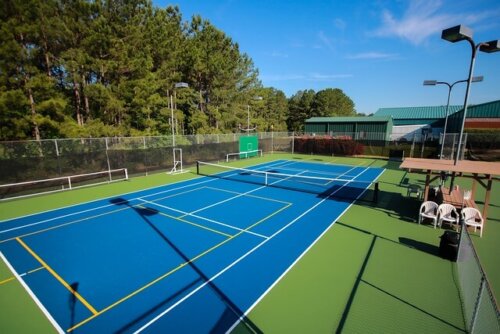
Tennis has a quiet magic to it. It can be played loudly in parks and schoolyards, or almost reverently in grand stadiums where tens of thousands of people sit in near silence. Yet whether it’s a casual rally between friends or a five-set battle at Wimbledon, tennis has a way of pulling people in and holding their attention.
To understand why so many people love watching tennis, it helps to look at where the sport came from, how it evolved, and why its culture feels so different from most other sports.
WHY PEOPLE LOVE WATCHING TENNIS
At its core, tennis is deeply personal. Unlike team sports, there’s nowhere to hide. One player stands alone on each side of the net, responsible for every decision, every mistake, and every moment of brilliance.
For spectators, this creates an intimate kind of drama. You’re not just watching athletic skill; you’re watching mental toughness, emotional control, and strategy unfold in real time.
Tennis also strikes a rare balance between power and finesse. A match can shift from explosive serves and thunderous forehands to delicate drop shots and feather-light volleys within seconds. That contrast keeps viewers engaged. There’s always the sense that one clever decision or slight lapse in focus can completely change the match.
Another reason tennis is so compelling is its scoring system. It’s unfamiliar enough to feel intriguing but logical once you understand it. Games, sets, break points, and match points create constant mini-dramas.
Every point matters, and momentum can swing suddenly. Fans often describe tennis matches as emotional rollercoasters because a player can be on the brink of defeat one moment and roaring back the next.
At the professional level, personalities add another layer. Rivalries, playing styles, and personal backstories give fans something to connect to beyond the ball itself. Watching two great players face off isn’t just about who hits harder or runs faster; it’s about how their styles clash and how they handle pressure when everything is on the line.
THE ORIGINS AND HISTORY OF TENNIS
Tennis has roots that stretch back hundreds of years. Its earliest ancestor is generally traced to a medieval French game called jeu de paume, meaning “game of the palm,” where players struck a ball with their hands. Over time, gloves, paddles, and eventually rackets were introduced, and the game spread among European nobility.
By the 16th century, a version known as “real tennis” or “royal tennis” was popular in France and England, often played indoors with complex rules and asymmetrical courts. This was a far cry from the open-air courts we know today, but many modern tennis terms, like “love” and “deuce,” are believed to have originated during this era.
Modern lawn tennis began to take shape in the late 19th century, particularly in England. Standardized rules, grass courts, and the familiar rectangular layout made the sport more accessible. In 1877, the first Wimbledon Championship was held, marking a major turning point. Tennis quickly spread internationally, becoming an Olympic sport and eventually developing a professional circuit.
Over the decades, equipment evolved, playing styles changed, and athleticism increased dramatically. Wooden rackets gave way to graphite and composite materials, and today’s players are faster, stronger, and more versatile than ever. Despite all these changes, tennis has managed to preserve many of its traditions, which contributes to its unique atmosphere.
WHY THE CROWD IS QUIET DURING TENNIS
One of the most distinctive features of tennis is the silence during play. For people new to the sport, this can feel unusual, especially compared to football, basketball, or hockey, where constant noise is part of the experience.
The primary reason is concentration. Tennis is a sport of precision and timing. Players rely heavily on focus, especially during serves and returns, where even a split-second distraction can affect performance. Silence allows players to hear the ball, feel the rhythm of the rally, and execute shots with maximum control.
Tradition also plays a significant role. Tennis developed in aristocratic settings where decorum and respect were expected. Quiet crowds were a sign of courtesy, allowing players to compete without interference. Over time, this expectation became ingrained in the culture of the sport, particularly at historic tournaments like Wimbledon.
There’s also an unspoken agreement between players and spectators. Fans remain silent during points, and in return, they are free to react fully once the point ends. The eruption of applause after a long rally or a perfectly placed winner feels more powerful because it follows silence. That contrast heightens the emotional impact of the match.
Finally, silence enhances the viewing experience itself. It allows spectators to hear the sound of the ball striking the racket, the squeak of shoes on the court, and the occasional grunt or exhale from the players. These sounds make the experience feel more immersive and personal, almost as if you’re right there on the court with them.
There is no single, universal “law” of tennis that says spectators must be silent at all times, but quiet during points is an enforced standard at virtually every organized tennis match, especially at higher levels.
In professional and sanctioned tennis, crowd behavior falls under tournament regulations and the authority of the chair umpire, not the core rulebook that governs how tennis is played.
The official rules (such as those used by the ATP, WTA, ITF, and Grand Slams) give the chair umpire the power to maintain order and prevent interference. That includes:
Stopping play if the crowd is disruptive
Asking spectators to be quiet before a serve
Removing spectators who repeatedly cause distractions
So while you won’t find a line that literally says, “fans must be silent,” quiet during points is treated as mandatory because noise can interfere with play.
WHAT IS ACTUALLY EXPECTED OF SPECTATORS?
The standard expectation at most tennis matches is:
Silence during points, especially during serves
Applause and cheering only after a point ends
No shouting, clapping, or movement that could distract a player mid-point
You’ll often hear umpires say things like:
“Quiet please.”
“Thank you.”
“Ladies and gentlemen, silence please.”
Those announcements aren’t suggestions—they’re enforcement of tournament policy.
WHY TENNIS ENFORCES THIS MORE THAN OTHER SPORTS
Tennis is unusually sensitive to distraction:
The serve requires intense focus and precise timing
Players listen closely to ball contact and footwork
Matches often hinge on a single point or break of serve
Because tennis is one-on-one, even a small distraction can unfairly affect the outcome. The quiet rule exists to protect competitive fairness, not tradition alone.
ARE THERE EXCEPTIONS?
Yes, and this is where the “no” part comes in.
Some events are known for louder, more expressive crowds, such as:
The US Open
Davis Cup matches
Certain clay-court tournaments (like Roland Garros)
Even at these events, though, noise is still expected to stop once the point begins. Cheering during play is still considered interference.
WHAT HAPPENS IF FANS DON’T STAY QUIET?
If spectators are disruptive:
The umpire may pause play
Security may issue a warning
Repeat offenders can be removed from the stadium
This happens more often than people realize, especially during televised matches.
IT REALLY CAN DISTRACT TENNIS PLAYERS—AND IT’S NOT JUST TRADITION OR PREFERENCE. FOR MANY PLAYERS, LOUD OR UNEXPECTED NOISE DURING POINTS GENUINELY INTERFERES WITH PERFORMANCE
Why Noise Actually Affects Tennis Players
The serve is especially vulnerable.
Serving in tennis is a precise, self-timed motion. Players rely on rhythm, breathing, and internal cues. A sudden shout, clap, or movement right as they toss the ball can disrupt timing just enough to cause a fault. Even a small interruption can matter at the professional level.
Players use sound as feedback.
Tennis players listen to the sound of the ball on the strings and off the court to judge contact, spin, and pace. Unexpected crowd noise can interfere with that sensory feedback, especially during fast exchanges.
The mental side of tennis is huge.
Unlike most team sports, tennis has no teammates to absorb pressure or reset the moment. Players are alone with their thoughts. Sudden noise can break concentration, interrupt momentum, and increase stress—particularly during big points like break points or match points.
DO TENNIS PLAYERS ACTUALLY DISLIKE LOUD CROWDS?
Many do—during points.
Most players are not anti-crowd or anti-cheering. In fact:
Players generally love applause after points
Big reactions can boost adrenaline and energy
Home-crowd support can feel motivating
What they dislike is noise at unpredictable moments, especially mid-swing or during a serve. It’s the lack of timing, not the enthusiasm, that causes frustration.
WHY TENNIS IS DIFFERENT FROM OTHER SPORTS
In sports like football or basketball:
The noise is constant, so players adapt
Plays are externally triggered, not self-timed
Players rely less on fine motor precision in a single isolated action
In tennis:
Every point starts with a self-initiated serve
Precision and timing are critical
Silence creates a stable, predictable environment
That difference matters more than many people realize.
ARE SOME PLAYERS BETTER WITH NOISE THAN OTHERS?
Absolutely.
Some players thrive on chaotic, loud environments
Others strongly prefer calm and structure
Younger or less experienced players often struggle more with distractions
Veterans usually adapt better, but still prefer silence on big points
You’ll sometimes see players gesture to the crowd or ask the umpire for quiet—that’s not arrogance, it’s about protecting focus in a high-stakes moment.
IS IT PSYCHOLOGICAL OR PHYSICAL?
It’s both.
Psychological: broken concentration, increased anxiety, disrupted routines
Physical: mistimed serves, rushed swings, altered footwork
At elite levels, the margin between winning and losing is so small that even a minor distraction can change a match.
Tennis players don’t dislike cheering. They dislike badly timed noise.
Silence during points isn’t about elitism or tradition—it’s about giving players a fair, predictable environment where skill, not distraction, decides the outcome. That’s why even the loudest tennis crowds instinctively quiet down when a serve is about to begin.
CHEERLEADERS WOULD BREAK THE CORE RHYTHM OF TENNIS
Cheerleaders exist to generate continuous energy and noise. Their purpose is to keep the crowd active during play. That works perfectly in sports where:
Noise is constant
Plays are externally triggered
Distractions are part of the environment
Tennis is the opposite.
Every point begins with a self-timed serve, and the sport depends on quiet, predictable conditions. Cheerleaders clapping, chanting, or leading crowd reactions during points would constantly interrupt that rhythm and directly interfere with play.
TENNIS ENERGY IS BUILT DIFFERENTLY
Tennis crowds are not passive — they’re just selective.
Silence during points protects focus
Explosive applause after points releases emotion
The tension builds point by point, not continuously
Adding cheerleaders would flatten that tension by making the atmosphere loud all the time. In tennis, the silence is part of the drama.
TRADITION AND CULTURE MATTER TOO
Tennis grew up in environments that emphasized decorum and respect. While the sport has modernized in many ways, it still values:
Player concentration
Sportsmanship
A sense of mutual respect between crowd and competitors
Cheerleaders, mascots, and choreographed chants don’t fit naturally into that culture.
IT WOULD ALSO CREATE FAIRNESS ISSUES
Cheerleaders would almost always favor one player:
A home favorite
A nationally supported player
A more popular star
That kind of organized, one-sided noise during points would raise serious questions about fairness, especially in individual competition where momentum is fragile.
WHY YOU STILL SEE BIG CROWD MOMENTS
Tennis isn’t anti-fun or anti-energy. It just channels it differently.
You’ll still see:
Massive cheers after long rallies
Standing ovations between games or sets
Players feeding off crowd energy at key moments
But it all happens between points, not during them.
THE BIGGER PICTURE
Cheerleaders don’t exist in tennis because they would undermine what makes the sport work: precision, timing, mental focus, and tension.
In tennis, silence isn’t empty — it’s charged. And when the crowd finally erupts, it means something.
PLAYERS HAVE POINTED TO CROWD NOISE WHEN THEY LOST BEFORE
Professional tennis players have, at times, said that crowd behavior affected their performance. This usually happens when:
Noise occurs during a serve or mid-point
A crowd repeatedly disrupts one player more than the other
The timing of the noise feels intentional or one-sided
In these cases, players may argue that the conditions were not equal, rather than saying “I lost because the crowd was loud.”
That distinction matters a lot in tennis culture.
WHAT PLAYERS USUALLY MEAN WHEN THEY MENTION THE CROWD
Most players are careful with their words. Instead of saying:
“I lost because of the crowd,”
they’ll say things like:
“It was hard to focus with everything going on.”
“The conditions were challenging.”
“There were a lot of distractions out there.”
This is less about excuses and more about pointing out external factors that broke rhythm or concentration, especially in matches decided by a few key points.
TENNIS HAS A STRONG ACCOUNTABILITY CULTURE
Unlike some sports, tennis players are generally expected to:
Own their mistakes
Acknowledge when the opponent played better
Avoid making excuses
When a player openly blames the crowd, it often draws criticism from:
Commentators
Fellow players
Fans
That social pressure discourages outright blaming, even when distractions were real.
WHEN CROWD COMPLAINTS ARE TAKEN SERIOUSLY
Complaints tend to be viewed as legitimate when:
The umpire repeatedly asked for quiet
Play was stopped due to crowd noise
The disruption happened at critical moments like break points or match points
In these situations, it’s widely understood that the crowd crossed a line, and the player’s frustration is seen as reasonable rather than defensive.
WHEN IT LOOKS LIKE AN EXCUSE
It’s less well received when:
Both players faced the same conditions
Noise was typical for the venue
The player made unforced errors unrelated to timing or rhythm
In those cases, fans and analysts usually conclude that the better player won, regardless of atmosphere.
THE HONEST REALITY
Both things can be true at once:
A player can lose because the opponent played better
Crowd noise can still negatively affect focus on key points
At the professional level, tennis margins are razor-thin. One mistimed serve or broken concentration can swing a set or an entire match. Acknowledging that doesn’t mean denying the opponent’s skill — it means recognizing how fragile momentum is in an individual sport.
Some pro players have blamed or cited crowd noise — but outright excuse-making is rare and often criticized. Most of the time, crowd complaints are about fairness and concentration, not avoiding responsibility.
In tennis, losing with grace is part of the unwritten code. Players who consistently blame the crowd tend to lose credibility very quickly.
Spectators are not required to be quiet by a single written rule, but silence during points is an enforced standard of the sport, upheld by umpires and tournament officials.
In tennis, the quiet isn’t about being polite—it’s about fairness, focus, and preserving the integrity of the match. The applause just feels louder because it comes after silence.
Tennis endures because it blends athleticism, psychology, tradition, and drama in a way few sports can. From its centuries-old origins to today’s global professional tours, it has retained a unique identity. The quiet crowd, the intense one-on-one battles, and the constant shifts in momentum all contribute to a sport that rewards patience and attention.
Whether someone is watching a local club match or a Grand Slam final, tennis invites viewers into a world where silence speaks volumes and every point tells a story. That combination of elegance and intensity is exactly why so many people keep coming back to watch, match after match.
When you step back and look at it as a whole, the quiet of a tennis crowd starts to make sense. It isn’t about stiffness, snobbery, or a lack of passion. It exists because tennis is built on precision, rhythm, and intense mental focus.
Silence during points creates a fair and stable environment where players can rely on their timing and decision-making, not on their ability to block out sudden distractions.
That same quiet also shapes the emotional experience of the sport. The pauses between points allow tension to build, making every rally feel meaningful. When applause finally breaks the silence, it carries weight.
A great shot isn’t just appreciated; it’s celebrated in a way that feels earned. The contrast between stillness and eruption is part of what makes tennis matches feel dramatic and intimate at the same time.
It’s also important to understand that most professional players are not hostile to crowds. They want energy, support, and excitement — just at the right moments. Noise after points, between games, and during changeovers often fuels players rather than hurts them. What they resist is poorly timed noise that disrupts the delicate balance of focus required to perform at the highest level.
Over the years, there have been moments when players have pointed to crowd behavior as a factor in a match, but at the professional level, that rarely replaces accountability. Elite players know that adapting to conditions — including crowd dynamics — is part of the job. The quiet expectation exists not to shield players from pressure, but to ensure that outcomes are decided by skill, preparation, and mental toughness rather than avoidable interference.
In the end, tennis’s quiet crowds are not a limitation but a feature. They reflect the sport’s respect for concentration, fairness, and competitive integrity. The silence invites the audience into the moment, asking them to listen, watch closely, and feel the tension alongside the players. And when the point ends, the release of sound reminds everyone why tennis, even in its quietest moments, can be one of the most gripping sports to watch.
IF YOU WANT TO DIVE DEEPER INTO EVERYTHING WE TALKED ABOUT (TENNIS HISTORY, SPECTATOR ETIQUETTE, CROWD BEHAVIOR, AND WHY SILENCE IS EXPECTED DURING PLAY), HERE ARE SOME RELIABLE RESOURCES WITH LINKS YOU CAN EXPLORE:
1. Why Tennis Crowds Are Quiet and Spectator Etiquette
These articles explain why tennis spectators stay quiet, the traditions behind it, and the etiquette expectations:
• Atlas Obscura – Why Are Tennis Crowds Quiet?
This article explores the tradition of silence in tennis, how it developed, and why it sticks around even though it’s not an official rule. It talks about unwritten etiquette and how players who grow up with quiet crowds can find noise distracting. Why Do Tennis Crowds Have to Be So Quiet? (Atlas Obscura)
• Tennis Spectator Etiquette Guides
These pages give clear explanations of what spectators are expected to do — when to be quiet, when to clap, and why these behaviors matter:
- Tennis Spectator Etiquette (Athletics.scasd.org) – youth/club level guidelines that mirror pro expectations
- Shockwave Tennis Academy – Spectators Etiquette – clear etiquette rules and the reasoning behind them
- Tennis Spectator Etiquette (Sportmentary) – overview of silence during play and applause after points
- Tennis Etiquette – Essential Tips (TennisCompanion.org) – deeper look into player distraction and respectful fan behavior
• Official Tennis Rules (NCAA example)
For organized competition, this excerpt shows how spectator conduct is formally handled — including clapping rules and noise restrictions: NCAA Tennis Spectator Conduct Rules (PDF)
2. Tennis History and Origins
If you want to learn about where tennis came from and how it evolved:
• Jeu de Paume — Ancestor of Modern Tennis
The Wikipedia page on jeu de paume explains the medieval precursor to tennis, played with the hand and later with racquets. Modern lawn tennis developed from this game in the 19th century. Jeu de paume – Tennis History (Wikipedia)
If you want to go deeper:
- You can also read the French-language page on jeu de paume to see how scoring and techniques influenced modern tennis. Jeu de paume (French Wikipedia)
3. Crowd Behavior and Modern Issues
If you’re curious about how crowd behavior intersects with modern tennis culture — especially at big events:
• News piece on noisy crowds at the US Open
This recent news article highlights how loud and rowdy spectator behavior at the US Open drew criticism from fans and even players, illustrating how etiquette isn’t always observed. Rowdy US Open Fans Draw Complaints (New York Post)
4. Additional, More Casual Perspectives
Though not official sources, Reddit threads can give you a sense of how real fans and casual viewers talk about tennis crowd etiquette and why silence exists:
- r/NoStupidQuestions why do tennis crowds need silence? Reddit
- r/tennis crowd etiquette experiences at tournaments Reddit
(These are informal and should be taken as fan opinion rather than authoritative fact, but they’re interesting to read.)
Quick Summary of What You’ll Learn from These Links
About Quiet Crowds & Etiquette
- Silence is tradition and respectful behavior, not a written rule in most official rulebooks. Atlas Obscura
- Etiquette guides explain when cheering is appropriate (after points) and why silence helps concentration. Athletics+1
- Disruptive behavior can earn warnings or ejection at tournaments. NCAA
About Tennis Origins
- Tennis evolved from jeu de paume, a medieval ball game played without racquets. Wikipedia
About Crowd Dynamics
- Modern crowd behavior at big events (like the US Open) shows a tension between tradition and party-like fan culture. New York Post