




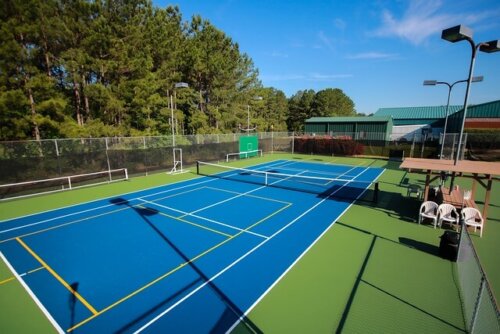
Tennis is a sport in which two players (in singles) or two teams of two players (in doubles) use rackets to hit a felt-covered rubber ball over a net and into the opponent’s side of a rectangular court.
The goal is to score points by hitting the ball in a way that the opponent can’t return it within the boundaries of the court.
WHY PEOPLE ENJOY TENNIS:
Physical and Mental Challenge:
Tennis is a full-body workout that improves speed, agility, strength, and endurance. It also demands mental sharpness—players must make quick strategic decisions, manage emotions, and stay focused for extended periods.
Accessibility and Global Appeal:
It’s played and watched all over the world, with major tournaments (like Wimbledon, the US Open, French Open, and Australian Open) drawing huge international audiences. It can be played recreationally at nearly any age.
One-on-One Competition:
Unlike many team sports, singles tennis is a direct duel. Many people enjoy the individual responsibility, strategy, and self-reliance it demands.
Elegant Yet Intense:
The sport has a long-standing reputation for grace and sportsmanship but also features high-intensity rallies and emotional drama.
Iconic Athletes:
Players like Serena Williams, Roger Federer, Rafael Nadal, and Novak Djokovic have inspired fans through their skill, rivalries, and personal stories.
Lifelong Enjoyment:
Tennis is a sport people can start young and continue playing into their senior years, which makes it a long-term part of many people’s lives.
ORIGINS OF TENNIS
Medieval Roots: Jeu de Paume (12th to 16th century, France)
Tennis began as a handball game played by French monks in monasteries. Known as Jeu de Paume (“game of the palm”), it involved hitting a ball with the hand, later evolving to the use of gloves, paddles, and eventually wooden rackets. This early form of tennis was played indoors and became extremely popular with French and English nobility. King Henry VIII of England was an avid player and had several indoor courts built.
The Birth of Lawn Tennis (19th century, United Kingdom)
In 1874, Major Walter Clopton Wingfield patented a game he called Sphairistikè, designed to be played outdoors on grass. This game laid the foundation for modern lawn tennis. It simplified the court design and rules, making the game more accessible to the public. By 1877, the first official lawn tennis tournament was held at Wimbledon, using a version of the rules closer to what we know today.
Development into a Global Sport (20th century onward)
Tennis continued to grow in popularity and spread worldwide. The game began to be played on a variety of surfaces—grass, clay, and hard courts. It was included in the Olympics, and international governing bodies such as the International Tennis Federation (ITF) were established to standardize rules and competitions. Major tournaments like the French Open, Wimbledon, the US Open, and the Australian Open became prestigious global events.
Word Origin
The term “tennis” is believed to come from the French word tenez, meaning “take it” or “here it comes,” which players would shout when serving the ball.
PLAYING TENNIS OFFERS A WIDE RANGE OF PHYSICAL AND MENTAL WELL-BEING BENEFITS, MAKING IT ONE OF THE MOST WELL-ROUNDED SPORTS FOR HEALTH AND LONGEVITY. HERE’S A BREAKDOWN OF THOSE BENEFITS:
PHYSICAL WELL-BEING BENEFITS
1. Cardiovascular Fitness
Tennis is an aerobic activity that improves heart health by increasing your heart rate, boosting circulation, and enhancing endurance. Regular play can reduce the risk of heart disease and stroke.
2. Muscle Strength and Endurance
The sport works both the upper and lower body. Your legs get a workout from running and quick directional changes, while your arms, shoulders, and core are engaged with every swing.
3. Flexibility and Coordination
Tennis requires quick reflexes, precise timing, and constant movement, which improves hand-eye coordination, agility, and balance.
4. Bone Health
As a weight-bearing activity, tennis helps strengthen bones and reduce the risk of osteoporosis.
5. Weight Management
Because it’s fast-paced and demanding, tennis burns calories efficiently. An hour of singles tennis can burn between 400 and 600 calories, depending on intensity and body type.
6. Improved Motor Skills
The diverse movements involved—sprinting, lunging, swinging, and serving—help fine-tune motor skills and body control.
MENTAL AND EMOTIONAL BENEFITS
1. Stress Reduction
Playing tennis helps lower stress levels by triggering the release of endorphins, the body’s natural mood enhancers.
2. Mental Alertness and Focus
The need for quick decisions and strategy during a match sharpens your ability to concentrate, anticipate, and stay mentally alert.
3. Emotional Resilience and Confidence
Winning, losing, staying composed, and adapting during play all build emotional resilience. Tennis players often develop higher self-confidence and self-control over time.
4. Social Connection
Whether in doubles, leagues, or recreational play, tennis fosters social interaction. This contributes to emotional well-being and can help reduce feelings of isolation or loneliness.
5. Cognitive Health
Tennis may contribute to better long-term brain health. Some studies have associated regular play with a lower risk of cognitive decline and improved memory.
Longevity and Quality of Life
Several long-term studies have found that playing tennis is associated with increased life expectancy compared to sedentary lifestyles or even some other sports. The combination of aerobic activity, mental engagement, and social interaction makes it a powerful tool for healthy aging.
IF YOU’RE NEW TO TENNIS OR RETURNING AFTER A BREAK, HERE’S A SIMPLE GUIDE TO HELP YOU GET STARTED IN A WAY THAT’S ENJOYABLE, SAFE, AND EFFECTIVE.
GETTING STARTED WITH TENNIS
Start with the Basics
Racket: Choose a lightweight racket with a comfortable grip. Ask for help at a sports store if unsure.
Tennis Balls: Use regular balls or “starter balls” (slower, with lower bounce) to help learn control.
Shoes: Wear tennis-specific shoes with good lateral support to prevent ankle injuries.
Find a Court
Check out local public parks, community centers, or schools. Many courts are free or low-cost.
Some gyms or tennis clubs offer open court times or beginner sessions.
Learn the Rules and Scoring
Learn the basic rules: serving, rallying, scoring (15-30-40-game), and boundaries.
YouTube tutorials or free apps like “Tennis TV” or “TennisPAL” can help you understand the basics quickly.
Take a Lesson or Clinic
Beginner lessons or group clinics are great for learning form, technique, and rules in a low-pressure setting.
Many parks and rec departments or clubs offer low-cost beginner programs.
Practice Regularly
Start by rallying with a friend—no need to play full matches right away.
Use a ball machine or wall (backboard) if you don’t have a partner.
Focus on Fun and Improvement
Keep early sessions short and enjoyable. Avoid overexertion.
Track your progress: better serves, longer rallies, improved fitness.
Join a Social Tennis Group
Many cities have casual tennis meetups or ladder leagues for beginners.
Doubles play is a fun, less physically demanding way to build skill and meet others.
TIPS FOR RETURNING PLAYERS
Ease back in gradually to avoid injury, especially in knees, shoulders, and elbows.
Stretch before and after, and work on building general fitness outside of tennis.
Reassess your equipment—rackets and strings wear out over time and may need replacing.
TENNIS CAN BE AFFORDABLE OR EXPENSIVE, DEPENDING ON HOW YOU APPROACH IT. HERE’S A BREAKDOWN TO HELP YOU UNDERSTAND TYPICAL COSTS AND HOW TO KEEP IT BUDGET-FRIENDLY:
AFFORDABLE WAYS TO PLAY TENNIS
Public Courts (Free or Low Cost)
Many cities and towns have public tennis courts at parks or schools that are free or have a small fee.
Some recreational facilities may offer monthly passes.
Beginner Gear
Racket: A decent beginner racket costs around $40–$80. You don’t need a high-end one to get started.
Tennis Balls: A can of balls costs $3–$5. Pressureless balls last longer for practice.
Shoes: Tennis shoes range from $50–$100, but any athletic shoes with good grip and ankle support can work initially.
Lessons or Group Clinics
Private lessons can be costly ($50–$100+ per hour), but group lessons or clinics are much cheaper (often $10–$30 per session).
Some parks and rec departments offer beginner programs at exceptionally low rates.
Clothing
No need for designer tennis outfits. Comfortable athletic wear works fine.
Some private clubs require specific tennis attire, but public courts typically don’t.
Used or Discount Gear
You can find affordable used rackets or clearance items online or at sports stores.
Local resale or gear swap groups often have good-quality gear for less.
MORE EXPENSIVE OPTIONS (OPTIONAL)
Private Clubs or Country Clubs: Memberships can cost hundreds or thousands of dollars per year.
Frequent Lessons: Regular one-on-one coaching can add up quickly.
Tournament Play and Travel: If you’re getting competitive, travel, entry fees, and equipment upgrades raise costs.
Stringing and Maintenance: Frequent players may need to restring rackets every few months ($20–$40 each time).
TENNIS CAN BE VERY AFFORDABLE IF YOU:
Use public courts
Start with basic gear
Take group lessons instead of private ones
Focus on fun and fitness rather than competition
THE LENGTH OF A TENNIS GAME OR PRACTICE SESSION CAN VARY QUITE A BIT DEPENDING ON THE TYPE OF PLAY AND THE PLAYERS’ GOALS. HERE’S A GENERAL GUIDE:
Casual or Recreational Play
Typical Duration: 45 minutes to 1.5 hours
Most people who go to a park or club to hit around with a friend or play informal matches usually play for an hour or so.
Doubles play often lasts a bit longer since there’s less physical strain per person.
Practice Sessions
Solo or Drill Practice: 30 minutes to 1 hour
Many players hit balls with a partner, practice serves, or use a ball machine for 30–60 minutes.
Group Clinics or Lessons: Usually 1 hour
Organized beginner clinics or group lessons tend to be structured and last about an hour.
Competitive Matches
Singles Match (3 Sets): Typically 1.5 to 2.5 hours
If the match is contested, it can go longer.
Professional Men’s Matches (Best of 5 Sets): 2.5 to 5+ hours
Grand Slam matches can sometimes stretch beyond 4 hours.
Doubles Matches: Usually shorter, around 1 to 2 hours
Most people play or practice for 1 to 1.5 hours.
Competitive or tournament matches take longer, especially at higher levels.
HERE IS A CLEAN, NO-FRILLS VERSION OF A 1-HOUR TENNIS PRACTICE SESSION:
1-Hour Tennis Practice Plan
Warm-Up (10 minutes)
Light jogging and dynamic stretching (5 minutes)
Do movements like arm circles, high knees, side shuffles, and gentle lunges to prepare your body.
Mini tennis (5 minutes)
Rally with your partner from inside the service boxes to work on control and touch. This helps with hand-eye coordination before moving to full-court play.
Groundstroke Practice (20 minutes)
Crosscourt rally (10 minutes)
Hit forehands crosscourt, then switch sides and do backhands. Focus on rhythm and placement.
Down-the-line rally (5 minutes)
Practice aiming shots down the sideline for better directional control.
Target practice (5 minutes)
Set up cones or use specific areas of the court as targets to build precision.
Solo option: use a backboard or wall and alternate forehands and backhands.
Serve and Return Practice (15 minutes)
Serving (10 minutes)
Practice first and second serves, focusing on technique and getting the ball into the correct service box. Use a basket of balls if available.
Returning (5 minutes)
If practicing with someone, have them serve while you practice returning. Alternate roles.
Solo option: practice toss and serve motion or aim serves into a box placed in the service court.
Net Play and Volleys (10 minutes)
Volleys (5 minutes)
One player feeds balls while the other practices forehand and backhand volleys at the net.
Approach and volley (5 minutes)
Start at the baseline, hit an approach shot, move forward, and finish with a volley. Alternate turns with your partner.
Solo option: volley against a wall or practice quick-reaction volleys close to the wall.
Cool Down (5 minutes)
Light rally or slow mini tennis (2 to 3 minutes)
Ease your heart rate down with controlled, slow-paced shots.
Stretching (2 to 3 minutes)
Focus on the shoulders, back, legs, and wrists to promote recovery and flexibility.
Starting tennis offers more than just a way to stay active—it provides a well-rounded approach to improving physical, mental, and emotional health. One of the best aspects of tennis is its adaptability. It’s a sport you can begin at nearly any age, and it doesn’t require a team to get started.
Whether you’re playing singles or doubles, hitting against a wall, or practicing your serve alone, you’re constantly working on agility, coordination, and endurance. The movements required—like sprinting, pivoting, and swinging—help develop balance, strengthen joints, and improve cardiovascular health, making it an excellent sport for overall fitness.
Another benefit of starting tennis is how it uniquely challenges the brain. Unlike repetitive workouts, tennis requires constant decision-making, anticipation, and strategy. Every shot you hit is different based on your opponent’s position, the type of ball coming at you, and where you want to place your return.
This mental engagement enhances concentration, problem-solving skills, and hand-eye coordination. It’s one reason tennis is often referred to as a “physical chess match.” Over time, players also build emotional resilience. Because no match is perfect, tennis teaches how to manage frustration, refocus after mistakes, and stay calm under pressure.
Tennis also supports emotional and psychological well-being by promoting a sense of achievement and progress. Even small improvements—like mastering a consistent serve or sustaining a longer rally—can build self-confidence.
Playing regularly with others offers healthy social interaction, which is critical for mental health and reducing feelings of isolation. It’s not uncommon for lifelong friendships to form on the tennis court, especially among those who meet through recreational leagues, clinics, or community centers.
For those who want to improve their overall lifestyle, tennis is an excellent foundation. It encourages healthy routines, such as regular sleep, hydration, and stretching. Many people who start playing begin to pay more attention to nutrition and self-care because they want to feel better and play better. In that sense, tennis becomes a positive influence beyond just the time spent on the court.
TO FIND LOCAL TENNIS COURTS, COMMUNITY CLINICS, OR BEGINNER-FRIENDLY PROGRAMS, HERE ARE A FEW STRATEGIES YOU CAN USE:
Local Parks and Recreation Centers
Check City or County Websites: Many municipalities have public tennis courts that are free or available for a low rental fee. You can also find information about organized clinics or beginner programs.
Tennis Leagues and Social Play: Some parks offer tennis leagues or group play opportunities for beginners. Look for “social tennis” events, where players of all levels can meet up for casual games.
Tennis Clubs and Facilities
Local Tennis Clubs: Many private tennis clubs offer beginner programs, coaching, and social events. Look for introductory lessons or discounted memberships for new players.
Community Centers: Many community centers offer beginner lessons and have courts available for rent. These centers may also run leagues for newcomers to the sport.
Tennis Associations and Nonprofits
USTA (United States Tennis Association): The USTA provides resources for beginners, including finding local tennis programs and leagues. They also offer “Tennis for All” programs to make the sport more accessible.
National or Local Tennis Programs: Many nonprofit organizations work to make tennis accessible to beginners. These programs often offer affordable lessons and social play opportunities.
Tennis Meetups and Online Groups
Tennis Meetups: Platforms like Meetup.com often have tennis groups that host regular games, lessons, or clinics. These groups typically cater to players of all levels.
Tennis Apps: Apps like “TennisPAL” help you find local tennis players to practice with, join beginner events, or find available courts near you.
Social Media & Local Facebook Groups
Search for local tennis groups or community pages where people post about casual tennis play, beginner-friendly events, or even just looking for a practice partner.
Local Sports Stores or Tennis Retailers
Sometimes, sports stores like Dick’s Sporting Goods or tennis-specific retailers like Tennis Warehouse host beginner clinics or partner with local tennis clubs to offer lessons.
Starting tennis can be a fantastic decision for both your physical and mental well-being. As we discussed, tennis offers a unique blend of fitness, strategy, and social interaction that benefits players of all ages and skill levels.
It’s a sport that not only enhances cardiovascular health, flexibility, and strength but also keeps your mind sharp, improving decision-making, focus, and resilience. Whether you’re practicing serves, working on your groundstrokes, or participating in friendly doubles matches, every session is an opportunity for both physical growth and mental clarity.
Moreover, tennis provides a welcoming space for social interaction, fostering friendships and community connections. Whether you choose to play casually, join group lessons, or get involved in a league, tennis allows you to connect with like-minded individuals who share your passion for the game.
And the mental benefits of tennis are equally profound. The combination of concentration, anticipation, and adaptability helps reduce stress and anxiety, while the sense of achievement you gain from mastering new skills builds self-confidence and emotional resilience.
If you’re ready to start, there are numerous resources available, from local public courts to tennis clinics and meetups. Finding a program or a partner is a great way to get started, and with consistent practice, you’ll see improvements in both your game and your overall health. Tennis is a lifelong sport that can fit into any lifestyle, and the positive effects it brings extend far beyond the court.
As you begin your tennis journey, keep in mind that every player starts somewhere. Focus on enjoying the process, meeting new people, and improving at your own pace. Tennis is not just about the game itself, but the overall experience—improving health, gaining confidence, and having fun along the way. Let it be a new chapter in your pursuit of well-being.
To dive deeper into all the topics we’ve covered, here are several helpful resources for tennis, health benefits, and getting started in the sport:
1. Tennis-Specific Resources
- USTA (United States Tennis Association): The USTA website is a wealth of information for beginners, offering resources on local tennis programs, how to find a coach, and joining leagues or tournaments. They also offer a “Tennis for All” initiative that includes beginner-friendly resources.
- Website: https://www.usta.com
- Local Tennis Clubs: Search for tennis clubs in your area. Many clubs offer lessons, leagues, and opportunities for recreational players to get involved.
- A simple Google search like “Tennis clubs near me” should show several options.
- Tennis Meetups: Use platforms like Meetup.com to find local tennis events, groups, and casual play opportunities.
- Website: https://www.meetup.com
- TennisPAL: An app where you can find local tennis partners, join events, and even book courts. It’s a great tool for meeting people at your level and practicing regularly.
- Website: https://www.tennispal.com
2. Health Benefits of Tennis
- Mayo Clinic: For general information on the physical health benefits of playing tennis, the Mayo Clinic offers articles on fitness, cardiovascular health, and how sports like tennis can improve overall well-being.
- Website: https://www.mayoclinic.org
- WebMD: This site features articles on the mental health benefits of exercise, including sports like tennis. It’s a great source for understanding the impact of sports on stress management, mental clarity, and overall mood.
- Website: https://www.webmd.com
3. Tennis Training and Tips
- Tennis Warehouse: A great resource for finding equipment, reading up on tennis techniques, and accessing expert advice on improving your game. They also provide training videos and tips for beginners.
- Website: https://www.tennis-warehouse.com
- Essential Tennis: This site offers coaching videos, tutorials, and a blog with a focus on improving skills for players at every level.
- Website: https://www.essentialtennis.com
- Tennis.com: Offers articles and advice on drills, fitness, and strategy for players at all levels.
- Website: https://www.tennis.com
4. Mental Health and Well-Being Resources
- Psychology Today: For understanding how sports like tennis impact mental health, they have numerous articles on how physical activity can reduce anxiety and depression, while improving focus and emotional resilience.
- Website: https://www.psychologytoday.com
- Mental Health Foundation: Offers information on how exercise improves mental health, including reducing stress and boosting mood through physical activities.
- Website: https://www.mentalhealth.org.uk
5. Community Resources
- Local Community Centers or Parks: Many community centers offer beginner tennis lessons and casual play options. Check your local government’s parks and recreation website for these programs.
- Social Media Groups: Search for local tennis clubs or groups on Facebook, Reddit, or other social media platforms. These groups often post about events, lessons, and opportunities to play casually.
6. Apps for Tennis Players
- Tennisbuddy: Another app where you can find players in your area, get tips, and book courts.
- Website: https://www.tennisbuddy.com
By utilizing these resources, you’ll have a better idea of where to start, how to improve, and how tennis fits into a healthy, balanced lifestyle.