





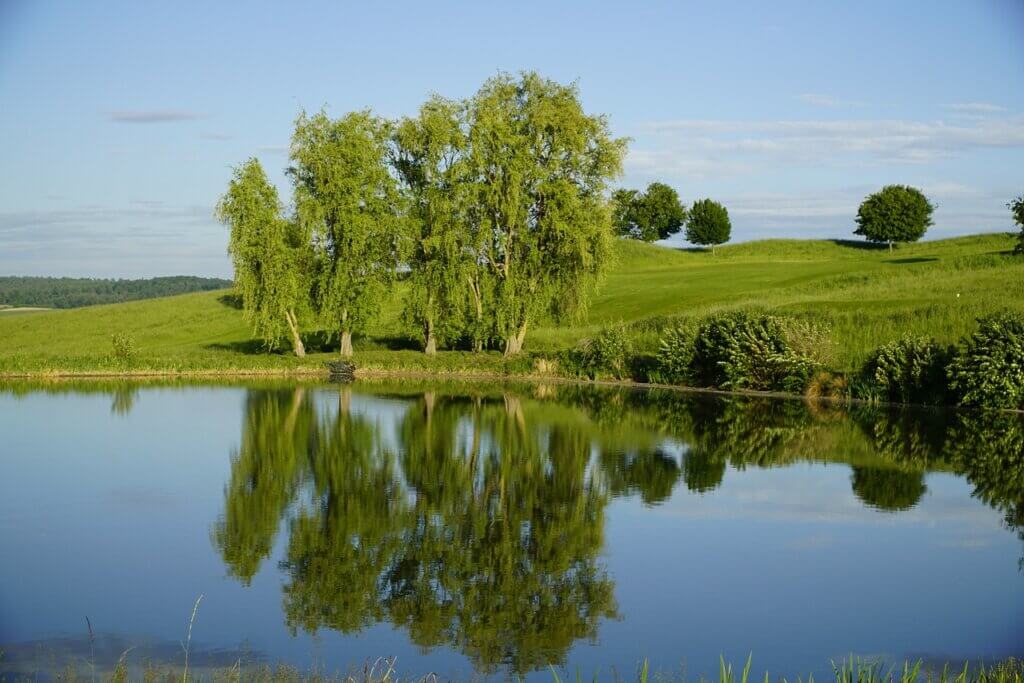
When most people think about fishing destinations, they picture Florida, Alaska, or the Great Lakes. Kansas is often overlooked, and that’s exactly why it’s so interesting.
The state has a surprisingly rich fishing culture with excellent opportunities, hidden traditions, and fascinating details that rarely make it into travel guides.
One of the biggest things nobody talks about is that Kansas is a state of adaptation. Anglers often have to become problem-solvers rather than simply casting a line into famous waters full of fish. The weather, water levels, and fish behavior can change dramatically, rewarding those who pay close attention.
KANSAS WASN’T ALWAYS KNOWN FOR GREAT FISHING
Historically, much of Kansas was prairie with relatively few natural lakes. Unlike states with thousands of glacial lakes, Kansas had to create many of its fishing opportunities through reservoirs, farm ponds, and water management projects.
Many of the state’s best fisheries are actually man-made reservoirs that have become thriving ecosystems over decades.
That means Kansas fishing is, in many ways, a success story of conservation and environmental management rather than simply taking advantage of natural geography.
FARM PONDS ARE A HIDDEN TREASURE
One thing outsiders rarely realize is how important farm ponds are.
Thousands of privately owned ponds dot the Kansas landscape. Some contain surprisingly healthy populations of:
- Largemouth bass
- Bluegill
- Channel catfish
- Crappie
- Redear sunfish
Some ponds have received extraordinarily little fishing pressure for years.
Stories circulate among local anglers of ponds producing trophy bass that nobody outside the local community even knows exist.
Of course, permission from the landowner is essential before fishing private property.
WIND CHANGES EVERYTHING
Kansas is famous for wind.
People talk about tornadoes, but anglers know every day wind can completely change fishing conditions.
The wind affects:
- Water clarity
- Oxygen levels
- Surface temperature
- Food movement
- Baitfish locations
- Predator behavior
Experienced Kansas anglers often don’t complain about wind—they use it.
Many intentionally fish the windy side of reservoirs because baitfish get pushed there, attracting predators.
Learning to “fish the wind” is almost a Kansas tradition.
RESERVOIR PERSONALITIES
An interesting thing rarely discussed is that every reservoir develops its own personality.
One lake might consistently produce giant catfish.
Another becomes famous for crappie.
Another develops outstanding white bass fishing.
Another quietly produces trophy smallmouth.
Local anglers often know these personalities better than official reports do.
Over decades, these reputations become part of local fishing culture.
WATER LEVEL CHANGES CREATE OPPORTUNITIES
Kansas reservoirs often experience changing water levels.
To newcomers this seems frustrating.
Experienced anglers often become excited.
When water rises:
- New brush floods
- Insects move in
- Baitfish arrive
- Bass follow
- Catfish patrol fresh shoreline
When water falls:
- Old channels become obvious
- Structure is exposed
- Fish become concentrated
Some of the best fishing occurs during changing conditions rather than stable ones.
CATFISH CULTURE RUNS DEEP
People underestimate just how serious Kansas catfish anglers are.
Catfishing isn’t simply an occasional hobby.
For many families it becomes:
- A tradition
- A social gathering
- A weekend ritual
- Multi-generation knowledge passed down through families
Many anglers have homemade bait recipes they’ve protected for decades.
Some recipes are treated almost like family secrets.
Arguments over “best bait” can last for hours.
NIGHT FISHING HAS ITS OWN CULTURE
Kansas can become extremely hot during summer.
Many experienced anglers simply shift their schedules.
Night fishing offers:
- Cooler temperatures
- Less boat traffic
- Active catfish
- Active bass
- Peaceful conditions
Entire fishing communities essentially come alive after sunset.
People who only fish during daylight may never experience this hidden side of Kansas fishing culture.
WEATHER READING BECOMES A SKILL
Successful Kansas anglers often become amateur meteorologists.
They pay attention to:
- Wind direction
- Incoming fronts
- Air pressure
- Storm development
- Cloud cover
- Temperature swings
Many longtime anglers can make remarkably accurate predictions simply from years of observation.
WHITE BASS CAN CREATE INCREDIBLE ACTION
Many visitors don’t expect Kansas reservoirs to produce explosive schools of white bass.
When feeding activity erupts:
- Birds dive
- Fish chase baitfish
- Surface boils appear
- Multiple fish may be caught rapidly
It can feel almost like saltwater fishing.
These feeding frenzies become memorable experiences that keep anglers returning year after year.
CRAPPIE FISHING BECOMES AN OBSESSION
Some Kansas anglers become almost entirely dedicated to crappie.
They spend enormous amounts of time:
- Finding brush piles
- Building habitat
- Studying electronics
- Learning seasonal movements
- Mapping underwater structure
Small details can dramatically change success.
The best crappie anglers often possess extraordinary local knowledge.
ELECTRONICS HAVE CHANGED EVERYTHING
Older generations relied on:
- Shoreline landmarks
- Memory
- Paper maps
- Experience
Modern anglers often use:
- GPS
- Side imaging
- Forward-facing sonar
- Digital contour maps
Yet an interesting reality exists.
Technology helps, but local experience still regularly beats expensive electronics.
Someone who has fished one reservoir for thirty years often knows patterns that machines cannot explain.
KANSAS HAS SURPRISING DIVERSITY
People often imagine Kansas as flat farmland.
The fishing environments actually vary considerably.
You’ll find:
- Large reservoirs
- Rivers
- Small streams
- Farm ponds
- Marshes
- Wildlife areas
- Tailwaters
- Flood-control lakes
Each fishes differently.
Eastern Kansas often looks quite different from western Kansas.
FLOOD YEARS CAN RESHAPE FISHERIES
Floods don’t simply create temporary inconvenience.
They can:
- Add habitat
- Remove habitat
- Relocate fish
- Change channels
- Flood timber
- Alter vegetation
Fishing patterns may completely change for years afterward.
Some lakes improve dramatically following major environmental changes.
LOCAL KNOWLEDGE IS PRICELESS
One of the biggest secrets nobody discusses is that successful Kansas anglers often know tiny details that never appear online.
Examples include:
- Which boat ramp fishes best after rain
- Which shoreline warms first in spring
- Which creek arm clears fastest after muddy inflow
- Which wind direction activates certain coves
- Which submerged roadbeds consistently hold fish
These observations often come from decades of experience.
CONSERVATION QUIETLY MATTERS
Many Kansas anglers care deeply about conservation.
They volunteer for:
- Habitat projects
- Fish stocking support
- Lake cleanups
- Youth fishing events
- Education programs
Healthy fisheries don’t happen by accident.
Many excellent Kansas lakes exist because generations of people invested time and effort into maintaining them.
THE SOCIAL SIDE IS STRONGER THAN MANY REALIZE
Fishing in Kansas often becomes less about catching fish and more about relationships.
Grandparents teach grandchildren.
Friends gather before sunrise.
Families spend entire weekends at reservoirs.
Stories get told repeatedly around campfires.
Many anglers remember conversations and shared experiences more vividly than the fish they caught.
SEASONAL RHYTHMS BECOME PART OF LIFE
Longtime Kansas anglers often organize their year around fish movements.
Spring brings excitement about spawning fish.
Summer often means early mornings and late evenings.
Fall can produce aggressive feeding activity.
Winter still attracts dedicated anglers willing to brave cold temperatures for crappie or other species.
For many people, the fishing calendar becomes as meaningful as the regular calendar.
THE PSYCHOLOGY OF KANSAS FISHING
Perhaps the least-discussed aspect is the mindset it develops.
Kansas fishing often teaches:
- Patience instead of instant gratification.
- Observation over guesswork.
- Respect for changing conditions.
- Humility when fish refuse to cooperate.
- Persistence through slow days.
- Appreciation for small improvements.
Many longtime anglers will tell you that the greatest lessons weren’t about fish at all—they were about paying attention, adapting to change, and enjoying time outdoors regardless of the final catch.
In that sense, Kansas fishing reflects something deeper than recreation. It is a blend of practical skill, environmental awareness, local tradition, and community knowledge that has quietly evolved over generations.
While it may not receive the same publicity as more famous fishing destinations, its understated nature is part of its appeal. Those who spend enough time on Kansas waters often discover that the state’s greatest fishing stories are the ones that never make headlines but are passed from one angler to another over years of shared experience.
Kansas has a fairly straightforward set of fishing regulations, but there are important details that every angler should know. The rules can also change from one lake or reservoir to another, so it’s always worth checking the latest official regulations before heading out.
1. You generally need a fishing license
For most people, a valid Kansas fishing license is required.
In general:
- Kansas residents ages 16 through 74 need a fishing license.
- Most nonresidents age 16 and older need a fishing license.
- There are exemptions for certain groups and situations, such as some private-water circumstances and designated free fishing days.
2. Some species require additional permits
A regular fishing license isn’t always enough.
Certain activities or species may require an additional permit, including:
- Trout fishing in designated waters
- Paddlefish snagging
- Hand fishing for flathead catfish
Always verify the specific requirements before targeting those species.
3. Daily creel limits apply
Kansas limits how many fish you can keep each day.
Examples of statewide limits include:
- Crappie: 30
- Channel catfish: 10
- Blue catfish: 5
- Flathead catfish: 5
- Walleye/sauger and hybrids: 4
- Paddlefish: 2
However, many lakes have special regulations that override the statewide limits.
4. Size limits matter
Some fish must reach a minimum legal size before you can keep them.
For example, certain waters have minimum lengths for:
- Channel catfish
- Walleye
- Sauger
- Paddlefish
Many lakes also have their own unique size restrictions, so local rules are important.
5. There are limits on your fishing equipment
For standard rod-and-reel fishing:
- You are generally limited to two rods.
- A special three-pole permit allows a third rod.
- Hook and lure restrictions also apply.
Kansas also has detailed rules governing trotlines, setlines, floatlines, and tip-ups.
6. Local waters can have special rules
One thing that surprises many newcomers is that regulations can vary dramatically from lake to lake.
Special rules may cover:
- Different creel limits
- Different size limits
- Bait restrictions
- Boat restrictions
- Seasonal closures
- Special management areas
Never assume the statewide rule automatically applies everywhere.
7. Live bait has regulations
Kansas regulates the collection and transportation of live baitfish and other aquatic organisms.
Rules govern:
- Where bait can be collected
- How it can be transported
- Drainage restrictions
- Aquatic nuisance species restrictions
These rules are designed to help prevent the spread of invasive species and fish diseases.
8. Catch-and-release still requires careful handling
Even if you plan to release fish:
- Handle them as gently as possible.
- Return them to the water quickly.
- Avoid unnecessary stress.
- Support larger fish properly instead of hanging them vertically for long periods.
While not every handling practice is specifically required by law, good fish care helps maintain healthy fisheries.
9. Some species have specific seasons
Many Kansas fish can be caught year-round, but certain activities are seasonal.
Examples include:
- Paddlefish snagging season
- Trout season in designated waters
- Bullfrog season
These dates are established by regulation and should always be checked before planning a trip.
10. Private property rights are important
One of the biggest mistakes beginners make is assuming any pond is open to fishing.
In Kansas:
- Many ponds are privately owned.
- Landowner permission is generally required to fish private waters.
- Trespassing laws are enforced.
Always obtain permission before entering private land.
11. Don’t waste fish
Kansas regulations include possession and cleaning requirements.
For example:
- Fish generally must retain identifying parts while you’re still on the water.
- There are rules for giving legally caught fish to another person.
- Sport fish that are kept should not simply be discarded or wasted.
12. Conservation officers can check your compliance
Game wardens and wildlife officers may:
- Check your fishing license
- Inspect your catch
- Verify size limits
- Count your daily limit
- Check equipment
- Enforce local regulations
Keeping your license accessible and knowing the rules for the water you’re fishing can make these encounters quick and routine.
Practical advice for beginners
If you’re just getting started fishing in Kansas, a simple checklist can save you a lot of trouble:
- Buy the appropriate fishing license.
- Check whether you need any additional permits.
- Look up the regulations for the specific lake or river you plan to fish.
- Know the daily creel and size limits for your target species.
- Make sure your equipment complies with Kansas law.
- Get permission before fishing on private property.
- Keep only legal fish and release undersized fish promptly.
- Stay up to date because regulations can change from year to year.
For the most current and official information, the best resource is the Kansas Department of Wildlife and Parks’ fishing regulations and licensing information, which are updated regularly.
Kansas has far more good fishing than many people realize. In fact, one of the state’s biggest secrets is that there isn’t just one “best” lake or river—it depends on what species you’re after and what kind of experience you want.
The Kansas Department of Wildlife and Parks manages dozens of reservoirs, state fishing lakes, community lakes, and rivers that offer excellent opportunities for everything from giant blue catfish to trophy walleye and largemouth bass.
TOP LAKES IN KANSAS
Milford Lake
4.7•Lake
Often called the “Fishing Capital of Kansas,” Milford is one of the state’s premier fisheries.
Known for:
- Walleye
- Smallmouth bass
- Largemouth bass
- White bass
- Wipers (hybrid striped bass)
- Crappie
- Blue catfish
- Channel catfish
If someone could only fish one Kansas lake, Milford would be near the top of many anglers’ lists.
Wilson Lake
4.7•Lake
Wilson is famous for its clear water and rocky structure, making it feel different from many other Kansas reservoirs.
Excellent for:
- Smallmouth bass
- Walleye
- White bass
- Striped bass
- Crappie
Many anglers consider it one of the most beautiful lakes in Kansas.
El Dorado Lake
4.5•Lake
A favorite in south-central Kansas.
Popular species include:
- Crappie
- White bass
- Walleye
- Catfish
- Largemouth bass
It’s well known for producing quality fish throughout the year.
Cheney Reservoir
4.4•Lake
Cheney has built a strong reputation for:
- Walleye
- Wipers
- White bass
- Crappie
- Catfish
Wind often plays a major role here, and many experienced anglers specifically target windblown shorelines.
Tuttle Creek Lake
4.5•Lake
Located in northeastern Kansas, Tuttle Creek offers:
- Blue catfish
- Flathead catfish
- White bass
- Crappie
- Saugeye
It can produce some truly impressive catfish.
Clinton Lake
4.6•Lake
One of the better bass and crappie fisheries in eastern Kansas.
Common catches include:
- Largemouth bass
- Smallmouth bass
- Crappie
- Catfish
- White bass
Hillsdale Reservoir
4.6•Reservoir
Especially popular with anglers around the Kansas City area.
Known for:
- Largemouth bass
- Crappie
- Catfish
- White bass
EXCELLENT RIVERS
Kansas rivers don’t always get the attention they deserve.
Kansas River
Also called “The Kaw.”
It offers:
- Flathead catfish
- Channel catfish
- Blue catfish
- Carp
- White bass
- Sauger
Many experienced anglers believe some of the river’s biggest fish never get caught.
Missouri River
For anglers chasing truly large fish, this river deserves respect.
It is known for:
- Giant blue catfish
- Flathead catfish
- Channel catfish
Fishing here requires caution because of strong currents and constantly changing conditions.
Arkansas River
Fishing quality varies by location and water conditions, but anglers regularly catch:
- Catfish
- Carp
- Walleye in some sections
- Sauger
- Bass
Neosho River
A favorite among many local anglers for:
- Flathead catfish
- Channel catfish
- Bass
- Crappie
STATE FISHING LAKES THAT DESERVE MORE ATTENTION
Many visitors focus only on giant reservoirs and miss some outstanding smaller waters.
Examples include:
- John Redmond Reservoir
- Lovewell Reservoir
- Webster Reservoir
- Cedar Bluff Reservoir
- Marion Reservoir
These waters can provide excellent fishing while often seeing less pressure than some of the better-known destinations.
The hidden gems: farm ponds
Perhaps the biggest secret in Kansas fishing isn’t a famous reservoir at all.
It’s the countless private farm ponds scattered across the state.
Some contain:
- Trophy largemouth bass
- Huge bluegill
- Excellent channel catfish
- Quality crappie
Many have experienced extraordinarily little fishing pressure over the years. Of course, they are generally on private property, so you must always have the landowner’s permission before fishing.
Walk-In Fishing Access (WIFA)
One of the least-talked-about advantages of fishing in Kansas is the state’s Walk-In Fishing Access program, which opens many privately owned waters to public anglers through agreements with landowners. It’s a great way to discover ponds and small lakes that many people overlook. The Kansas Department of Wildlife and Parks also offers the Community Fisheries Assistance Program (CFAP), providing access to hundreds of community lakes across the state.
If your goal is a specific species
- Best for walleye: Milford Lake, Wilson Lake, Cheney Reservoir, Webster Reservoir
- Best for largemouth bass: Clinton Lake, Hillsdale Reservoir, El Dorado Lake
- Best for smallmouth bass: Wilson Lake and Milford Lake
- Best for crappie: El Dorado Lake, Clinton Lake, Hillsdale Reservoir, Lovewell Reservoir
- Best for blue catfish: Milford Lake, Tuttle Creek Lake, the Kansas River, and the Missouri River
- Best for flathead catfish: Kansas River, Neosho River, Missouri River
- Best for white bass and wipers: Milford Lake, Cheney Reservoir, Wilson Lake
One final observation that longtime Kansas anglers often make: the “best” fishing spot is frequently the one that receives the least attention. A small community lake, an overlooked river bend, or a little-known pond with legal public access can sometimes outfish a famous reservoir. Patience, local knowledge, and learning seasonal fish behavior often matter more than simply driving to the biggest lake on the map.
One of the interesting things about fishing in Kansas is that there is no single “magic time” for fishing in Kansas. The best time depends on the season, the weather, the type of fish you’re targeting, and even the particular lake or river. That said, there are some exceptionally reliable patterns that experienced Kansas anglers have followed for generations.
BEST TIME OF DAY
Early morning (often the best overall)
About 30 minutes before sunrise until 9:00 or 10:00 a.m. is often excellent fishing.
During this time:
- Water temperatures are cooler.
- Fish are often actively feeding.
- There is less boat traffic.
- Light levels make many predator fish more comfortable.
This is especially true during the hot Kansas summers.
Best species:
- Largemouth bass
- Smallmouth bass
- Walleye
- Catfish
- Crappie
Evening
Late afternoon until sunset is another prime fishing window.
Many fish become active again as temperatures begin dropping.
Evening fishing can produce excellent:
- Bass
- Catfish
- Walleye
- White bass
Many Kansas anglers actually prefer evenings during July and August.
Night fishing
This is one of the least talked-about secrets in Kansas.
Many serious anglers intentionally fish after dark during summer.
Night fishing can be outstanding for:
- Channel catfish
- Blue catfish
- Flathead catfish
- Largemouth bass
The cooler temperatures make it more enjoyable for both anglers and fish.
Midday
Midday can still produce fish, but success often requires adjustments.
Fish may move:
- Into deeper water
- Around submerged brush
- Into shade
- Along drop-offs
Summer afternoons can be particularly slow unless you’re targeting species like catfish or fishing deep structure.
BEST TIME OF YEAR
Spring (March through May)
Many experienced anglers consider spring the best overall fishing season.
Fish become increasingly active as water temperatures rise.
Excellent fishing for:
- Crappie
- Bass
- Walleye
- White bass
- Catfish
Spring also brings some of the year’s most comfortable weather.
Summer (June through August)
Summer can still provide fantastic fishing, but timing becomes critical.
The best periods are usually:
- Early morning
- Evening
- Night
Catfish fishing often reaches its peak during warm summer nights.
White bass schools can also provide fast-paced action.
Fall (September through November)
Fall is often overlooked but can be one of the finest seasons.
Cooling water temperatures trigger increased feeding activity.
Excellent opportunities for:
- Bass
- Walleye
- Crappie
- White bass
- Catfish
Many veteran anglers quietly consider October one of the best fishing months in Kansas.
Winter (December through February)
Many people stop fishing entirely.
Dedicated anglers know winter can still be productive.
Fish can be caught year-round, including:
- Crappie
- Walleye
- Sauger
- Catfish
The fish are often slower, requiring more patience and finesse.
Best weather conditions
Many Kansas anglers actually prefer:
- Slightly cloudy days
- Light rain
- Moderate wind
- Stable weather patterns
Overcast skies often encourage fish to feed longer during daylight hours.
Wind can actually help
One thing that surprises newcomers is that wind isn’t always the enemy.
Moderate wind can:
- Push baitfish toward shore
- Increase oxygen in the water
- Trigger feeding activity
- Improve bass and walleye fishing
Many successful Kansas anglers intentionally fish windblown shorelines.
Before and after cold fronts
A common saying among anglers is that “the day before the front is better than the day after.”
Often:
Before a cold front:
- Fish feed aggressively.
Immediately after:
- Fish may become sluggish.
- Bites can become more difficult.
This isn’t a guarantee, but it’s a pattern many experienced anglers have observed over many years.
BEST SEASONS BY SPECIES
Species Best Time of Year Best Time of Day Largemouth Bass Spring & Fall Dawn and dusk Smallmouth Bass Spring & Fall Morning and evening Crappie Spring Morning and evening Walleye Spring & Fall Early morning, evening, and night White Bass Spring & Fall Morning and evening Channel Catfish Late Spring through Summer Evening and night Blue Catfish Summer & Fall Evening and night Flathead Catfish Summer Mostly night Bluegill Late Spring & Summer Morning
One of the biggest “nobody talks about it” secrets
The absolute best anglers in Kansas often don’t chase a specific clock time at all. They pay attention to conditions.
They watch:
- Wind direction
- Water temperature
- Cloud cover
- Recent rainfall
- Water level changes
- Seasonal fish movements
- Moon phases (some anglers believe these influence feeding activity, though scientific evidence for strong effects is mixed)
Many longtime Kansas fishermen would rather fish on a cool, overcast Tuesday with a light breeze than on a perfectly sunny Saturday afternoon. Learning to read the conditions rather than simply watching the clock is often what separates consistently successful anglers from everyone else.
Kansas may not be the first place that comes to mind when people think about great fishing, but those who spend enough time on its waters often discover something special. From massive reservoirs and winding rivers to quiet farm ponds and hidden community lakes, the state offers a surprising variety of fishing experiences.
Some days will bring fast action and full coolers, while others will test your patience and persistence, but every trip offers the opportunity to learn something new.
One of the greatest lessons Kansas fishing teaches is that success rarely comes from luck alone. The anglers who consistently catch fish are usually the ones who pay attention to changing conditions, study seasonal patterns, and spend countless hours observing the water.
They learn to read the wind, notice subtle temperature changes, recognize fish behavior, and appreciate that every lake and river has its own unique personality. Over time, these observations become experience, and experience becomes confidence.
Fishing in Kansas is also about much more than catching fish. It is about early mornings watching the sunrise over a quiet lake, conversations with friends and family in a boat, children catching their first bluegill from a dock, and stories that are retold for years afterward. Many lifelong anglers can barely remember the exact number of fish they caught on a memorable trip, but they vividly remember the people they were with and the moments they shared.
Perhaps the biggest secret about fishing in Kansas is that it rewards those who are willing to slow down. In a fast-paced world filled with constant distractions, spending a few peaceful hours on the water offers a chance to reconnect with nature, sharpen your observation skills, and enjoy a simpler way of life. Whether you are casting from a shoreline, paddling a quiet river, or drifting across a large reservoir, the experience itself often becomes just as valuable as the catch.
For anyone willing to explore beyond the obvious destinations, Kansas has countless hidden gems waiting to be discovered. Every season brings new opportunities, every body of water has its own story, and every fishing trip has the potential to become a lasting memory. The fish may be the reason you start fishing, but for many people, the peace, friendships, traditions, and lifelong lessons are the reasons they keep coming back.
IF YOU WANT TO REALLY UNDERSTAND FISHING IN KANSAS BEYOND JUST THE BASICS, THE BEST INFORMATION COMES FROM A MIX OF OFFICIAL STATE RESOURCES, DETAILED MAPS, AND LOCAL FISHING REPORTS. KANSAS ACTUALLY HAS SOME VERY GOOD TOOLS ONLINE THAT MOST PEOPLE DON’T FULLY USE.
Here are the best places to start:
Official Kansas fishing resources (best place to start)
This is the main hub for everything:
- Fishing regulations
- Lake listings
- Species guides
- Maps
- Stocking reports
Kansas Department of Wildlife and Parks (KDWP) Fishing Page
https://www.ksoutdoors.gov/outdoor-activities/fishing-in-kansas
This is the most important page overall because it connects you to:
- Where to fish
- What’s in each lake
- Seasonal updates
- Forecasts and reports
Interactive “Where to Fish” map (especially useful)
This is one of the most powerful tools Kansas offers:
Kansas public fishing access map
https://www.ksoutdoors.gov/outdoor-activities/fishing-in-kansas/where-to-fish
It lets you:
- Zoom in on lakes near you
- Find community lakes, reservoirs, and rivers
- Discover Walk-In Fishing Access (WIFA) ponds
- See access points and boat ramps
This is where many experienced anglers quietly find their best spots.
Official fishing regulations (must-know rules)
Before fishing anywhere, this is the guide you check:
Kansas fishing regulations summary
https://www.ksoutdoors.gov/programs-services/law-enforcement/regulations-statutes/fishing-regulations
It covers:
- Limits and size rules
- Bait restrictions
- Special lake regulations
- Seasons (like trout and paddlefish)
- Legal gear rules
If there’s ever confusion, this is the final authority.
Community Fishing Lakes (hidden everyday spots)
Kansas has hundreds of smaller lakes that are often closer to towns than big reservoirs:
Community Fisheries Assistance Program (CFAP)
https://www.ksoutdoors.gov/outdoor-activities/fishing-in-kansas/where-to-fish/community-fishing-lakes
These are important because:
- They are often free or low-cost
- Many are stocked regularly
- They are perfect for bass, bluegill, and catfish
- They are much less intimidating than big reservoirs
Fishing forecasts and reports
KDWP also provides seasonal updates and fishing reports through their main fishing hub (same site as above). These reports help you figure out:
- When fish are biting
- What species are active
- What lakes are performing well
Extra helpful resources outside the state site
These aren’t official regulations, but they help a lot:
Fishbrain app
- Community reports from anglers
- Real-time catches posted by users
- Maps of fishing spots
Reddit fishing communities
- Local anglers sharing real conditions
- Honest feedback about lakes
- Tips that don’t always show up in official guides
The “hidden” resource most people miss
The Kansas Fishing Atlas (PDF + mobile map tools) is one of the most underrated tools. It shows:
- Every public fishing area
- Access points
- Lake structure details
It’s basically the “road map” for fishing Kansas.
Simple way to use all of this together
If you want a practical routine that experienced anglers use:
- Check the KDWP “Where to Fish” map
- Pick a nearby lake or river
- Check the regulations for that specific water
- Look at recent reports or community feedback
- Go fish and adjust based on conditions
That combination is what turns Kansas fishing from “guessing” into actually understanding patterns over time.