



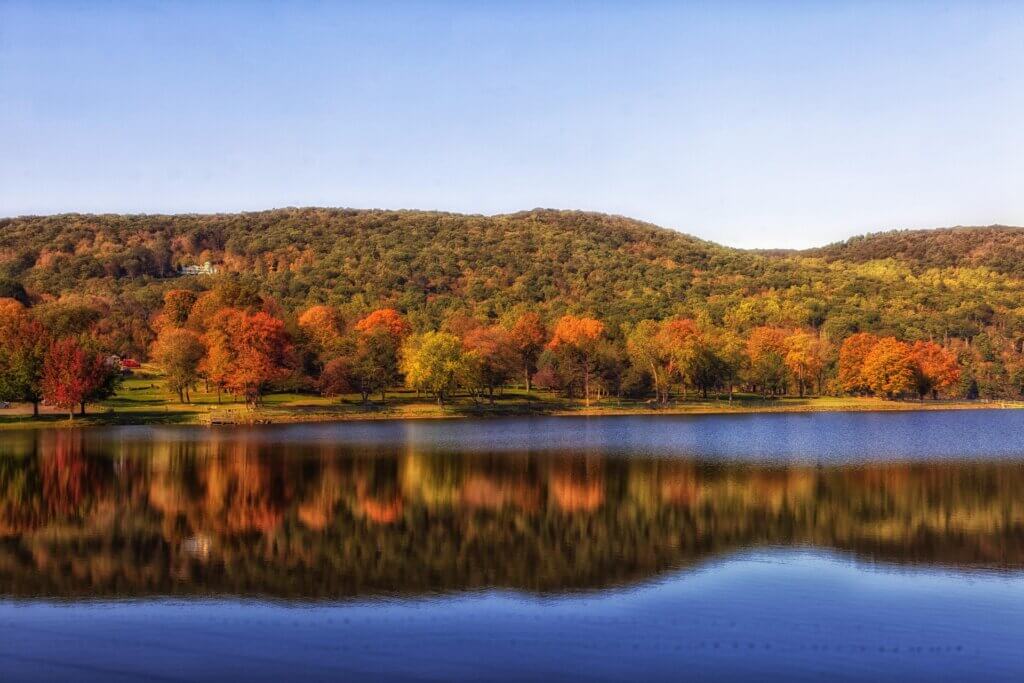
Fishing in Connecticut is quite a rich experience—diverse habitats, good access, managed fisheries—and a lot of anglers love it for those very reasons.
WHY PEOPLE LOVE FISHING IN CONNECTICUT
There are several things that draw anglers to Connecticut:
Despite being a relatively small state, the variety of water types is impressive—rivers, streams, lakes, reservoirs, and a significant salt-water coastline via the Long Island Sound. For example: “Connecticut is fortunate to have over 180 public lakes and ponds and thousands of miles of rivers and streams teeming with … gamefish and panfish.”
The fisheries are actively managed: there are stocking programs, trout parks, special fisheries in rivers, good access. For example, the guide mentions that the state has “well-stocked fisheries” throughout.
Accessibility: Many spots are publicly accessible, from shoreline parks to boat ramps. The saltwater “Where to fish” page mentions that the state offers excellent boat launches along the coast and convenient party/charter boat fishing.
Variety: Whether you want a simple “sit on the shore with your rod” day or a more committed fly-fishing expedition in a river, Connecticut offers both. The contrast between a tide-water striped bass or flounder session off the coast and a cold-water trout stream inland is part of the charm.
WHAT TYPES OF FISHING DO PEOPLE DO
Here’s a breakdown of the main modes of fishing and fish-types in Connecticut:
Saltwater / Coastal Fishing
Along Long Island Sound and its estuaries you’ll find shore fishing, boat fishing, charter trips, launch ramps, piers, etc.
Target species include sea-bass, fluke (summer flounder), striped bass, bluefish, tautog, and many others. For example: “With over 100 species of fish found in Long Island Sound, anglers can enjoy some of the very best striped bass, bluefish, summer flounder, scup, hickory shad, black sea bass and tautog fishing along the entire coast.”
Techniques vary: from shore casting plugs or bait, to boat bottom-fishing, to trolling or live-bait rigs for big salt-water fish.
Freshwater / Lakes, Ponds, Rivers, Streams
Lakes/reservoirs: good for bass (largemouth, smallmouth), pike, walleye, panfish, stocked trout in many places. Example: One list of “best fishing spots” mentions lakes like Candlewood Lake (large lake, bass) and Lake Lillinonah (diverse species).
Rivers/streams: Especially cold‐water trout streams, fly fishing in select areas, wild trout populations, etc. For example: “The West Branch of the Farmington River, … has the highest trout density of any stretch of river in the state.”
“Trout Parks” and special stockings: some bodies of water are regularly stocked to provide good trout fishing for anglers.
TYPES OF TECHNIQUES
Fly fishing on rivers/streams for trout
Spinning/ bait casting for bass, pike in lakes
Shore or boat fishing in coastal waters for salt species
Boat‐based bottom fishing for sea-bass / fluke etc. on the Sound
Shore fishing from piers, jetties, beach, or marsh edges
BEST AREAS (COAST, LAKES, RIVERS, STREAMS) + WHAT YOU FISH THERE
Here are some of the standout areas and what you can expect in each:
Coast / Long Island Sound
The entire coastline of Connecticut along Long Island Sound is a strong area: shore and boat access.
Specific example: in the “best spots” list from Boatsetter, Long Island Sound is listed for saltwater species (striped bass, bluefish, fluke).
What you catch: striped bass (often a top target), bluefish, summer flounder (fluke), black sea bass, tautog, scup, various others. The saltwater species regulations page calls out striped bass in particular.
Types of spots: rocky headlands, jetties, estuary mouths, piers, boat launches, reefs/rocks offshore, marsh edges.
Lakes & reservoirs
Candlewood Lake (Connecticut’s largest lake, around 5,420 acres) is highlighted for bass, trout, pike.
Lake Lillinonah (reservoir on the Housatonic) — noted for bass, catfish, walleye.
Many smaller lakes and ponds scattered across the state—some designated as “trout parks” where trout are stocked weekly. For example: Squantz Pond State Park is mentioned as year-round and stocked with brown, brook, rainbow trout.
What you might catch: largemouth/smallmouth bass, northern pike, walleye, trout (in stocked or cold lakes), panfish (bluegill, sunfish), chain pickerel.
Rivers & streams
Housatonic River is called out as “among the finest for trout in the eastern U.S.” and has dedicated fly-fishing stretches.
Farmington River (especially the West Branch) likewise highlighted for trout density.
Other smaller streams/tributaries where you can get wild trout, brooks, etc.
What you catch: trout (brook, brown, rainbow), sometimes wild trout; in warmer rivers and lower reaches you might catch bass, pickerel, other warm-water species.
Special access / stocking areas
“Trout Parks” – lighter skill level, good for family outings. Example: the state site mentions “Trout parks are Connecticut ponds or streams that will be stocked weekly with trout … anglers of all skill levels can fish here.”
Maps & interactive resources exist: state has “Saltwater Fishing Resource Map” and “Where to Go Fishing” page with boat launches, shore access, etc.
RULES & REGULATIONS
It’s really important to know the regulations in Connecticut—licenses, size/possession limits, access rules, etc. Here are the key details:
Licensing
Anyone age 16 or older must have a fishing license for inland (freshwater) and for marine waters.
There are different license types: inland‐waters only, all‐waters (which covers marine as well), marine‐only, etc.
Example fees (resident): For inland water fishing license $28 for ages 18-64, $14 for ages 16-17. For all‐waters permit $32 for ages 18-64, $16 for ages 16-17. Nonresidents higher.
There are “free fishing” days where a license isn’t required (state parks mention some days where no license needed) – good for casual/family trial.
Size, creel limits, seasons, special rules
Saltwater species: Example from the state: For striped bass in Connecticut, minimum length is 28 inches and you cannot possess any fish 31 inches or larger; daily creel limit is 1 fish per angler. Also, when fishing with bait you are required to use inline circle hooks.
Freshwater: The freshwater regulations guide (2025) states there are no changes for 2025 for the inland district.
Shoreline/Coastal Access: The state notes that while private shorefront property exists, the tidelands (waterward of the mean high-water line) are held in public trust and are publicly useable for fishing, shellfishing, boating, etc.
Access & launch: The “Where to go fishing” page mentions boat launches, shore access, accessibility for persons with disabilities.
Other regulatory matters
Invasive aquatic species: Anglers and boaters are expected to help prevent the spread of invasive species; there are resource maps and programs for this.
Property rights: Even if the land around a waterbody is privately owned, many waterbodies are publicly accessible, but you must obey posted signs and know if access is allowed. (From private property fishing blog)
OTHER INFORMATION YOU SHOULD KNOW
Here are some extra nuances, tips, “insider” stuff:
Many lakes are easily accessible—boat rentals exist at some state parks (e.g., Lake Saltonstall) for more relaxed fishing experiences.
Fly-fishing is strong in certain rivers and is a big draw for those who enjoy that style. The Housatonic and Farmington are examples.
For coastal fishing: tides, currents, estuaries matter. Especially for species like striped bass that may move between fresh and salt water (rivers/estuary mouths). From the “Fishing in Connecticut” guide: “They normally prefer saltwater but are known to head to freshwater when it’s time for spawning.” (referring to stripers)
Seasonality: Stocked trout are often more active in spring and early season; warm‐water species will follow typical seasonal behavior (shallow in morning/evening, deeper midday). The “best spots” article mentions early morning/late evening for bass at Candlewood.
Family friendly: With many stocked lakes/ponds and accessible shoreline spots, Connecticut is good for families and beginners. The state parks site says, “Whether you’re looking for trophy size bass … or just want to relax on a warm summer’s day fishing for bluegills … a bounty of fish awaits everyone from the most seasoned anglers to those casting a line for the first time.”
THE GOOD, THE BAD, AND THE UGLY
The Good
Variety of fishing options in one state: fresh + salt, rivers + lakes + streams.
Decent access: public lands, state parks, boat ramps, shore access.
Strong management/stocking programs: enabling good wild and stocked fisheries.
Great for both beginner and experienced anglers.
Good infrastructure for saltwater boats and launches along the coast.
Scenic surroundings: fishing opportunities in beautiful natural settings (forests, state parks, rivers) which adds to the experience beyond just the catch.
The Bad
Some limitations: Because the state is small and fairly populated, particularly the coastal areas, access may be more crowded or competitive.
Some fishing spots may require paying for boat rentals, ramps, or permits for access.
Seasonal constraints: For some cold-water fish you’ll have to go in certain seasons; similarly, some species might require time or effort to locate.
Private property/access issues: Even though water may be public, reaching it might involve crossing private property or dealing with parking/rights. You’ll want to check if a spot is truly public or authorized. (See the private property fishing blog)
The Ugly
Regulations can be strict and penalties real: For example, there was a news story where an angler in Lyme was fined over $1,000 for being far over the limit and without a license.
Invasive species and environmental threats: Spread of invasive aquatic plants or other species can degrade fisheries. (News note about hydrilla in Connecticut River)
Water quality concerns: Some rivers may have consumption advisories (especially for contaminants) which affects whether you keep your catch or not (especially for eating). For example, the Housatonic River page mentions fish consumption advisories remain.
Some prime fishing spots may require more effort/skill (fly fishing rivers) or may be local secrets so new anglers might struggle at first.
If you’re thinking of fishing in Connecticut, you’re in a good place. It offers both relaxed fishing (easy lakes, stocked trout) and more ambitious outings (fly fishing in scenic rivers, boat fishing for coastal species). I’d recommend:
Get the latest regulations (freshwater and saltwater) from the state’s site before you go.
Choose your target species ahead of time and match your gear and spot (e.g., bass vs. trout vs. saltwater).
Check access and boat launch/shore parking ahead of time.
Be aware of seasons, limits, and any consumption advisories.
Respect the environment (especially invasive species rules, clean your gear/boat) and private property boundaries.
Fishing in Connecticut is more than a pastime—it’s a way of connecting with the state’s natural beauty, diverse waterways, and long-standing outdoor traditions. Whether you’re casting a line into the clear waters of the Farmington River, drifting on Candlewood Lake at sunrise, or feeling the tug of a striped bass along Long Island Sound, each experience offers its own reward. The variety of environments means there’s always a new challenge or peaceful moment waiting, no matter the season or your level of experience.
At its best, fishing here brings together family, friends, and solitude in equal measure. The carefully managed trout parks, easily accessible lakes, and well-maintained coastal launches reflect Connecticut’s dedication to preserving its fisheries for future generations. It’s also a reminder that fishing is about more than catching fish—it’s about slowing down, tuning into nature, and appreciating the balance between conservation and recreation.
Of course, responsible fishing is essential. Understanding the state’s licensing requirements, following catch limits, and respecting private property ensure that everyone can continue to enjoy these waters.
While challenges like invasive species and crowded spots do exist, they don’t overshadow the abundance of opportunities that make Connecticut such a beloved fishing destination. For anyone seeking a peaceful escape, an exciting fight on the line, or simply the quiet rhythm of casting under an open sky, Connecticut offers a fishing experience that’s as rewarding as it is memorable.
FOR MORE DETAILED AND OFFICIAL INFORMATION ABOUT FISHING IN CONNECTICUT—INCLUDING MAPS, REGULATIONS, AND LOCAL FISHING REPORTS—THESE ARE THE BEST AND MOST RELIABLE SOURCES TO EXPLORE:
1. Connecticut Department of Energy & Environmental Protection (DEEP)
- Website: https://portal.ct.gov/DEEP/Fishing
- This is the main authority for fishing in Connecticut. You’ll find current fishing regulations, license requirements, trout park details, stocking schedules, species guides, and the “Where to Fish” map covering both inland and coastal locations.
2. Connecticut Fishing Regulations Guide (Online Edition)
- Website: https://www.eregulations.com/connecticut/fishing
- Provides the complete annual rulebook for inland and marine fishing, including seasons, creel limits, size restrictions, and area-specific rules.
3. CT Visit – Official State Tourism Site
- Website: https://www.ctvisit.com/articles/hooked-fishing
- Offers an overview of the best fishing destinations, trout parks, and scenic spots across the state. It’s a great source for travel planning and combining fishing with other outdoor activities.
4. CT Parks & Forests – Fishing Section
- Website: https://ctparks.com/fishing
- Highlights fishing opportunities within state parks, including which parks have stocked lakes, ponds, and river access.
5. Take Me Fishing (Connecticut Section)
- Website: https://www.takemefishing.org/connecticut/fishing/
- Provides clear step-by-step guidance on buying a license, local species, fishing tips, and introductory advice for beginners and families.
6. FishingBooker – Connecticut Fishing Guide
- Website: https://fishingbooker.com/blog/fishing-in-connecticut/
- Offers insights on popular fishing charters, seasonal species, and coastal fishing tips, especially for Long Island Sound.
7. Local Fishing Clubs and Forums
- Examples include the Connecticut Fly Fisherman’s Association and regional fishing Facebook groups. These communities often share updates on water conditions, local catches, and advice specific to certain rivers or lakes.
Together, these resources will keep you informed on everything from the latest fishing conditions to where the fish are biting, so you can plan your next Connecticut fishing trip with confidence and respect for the waters you enjoy.