



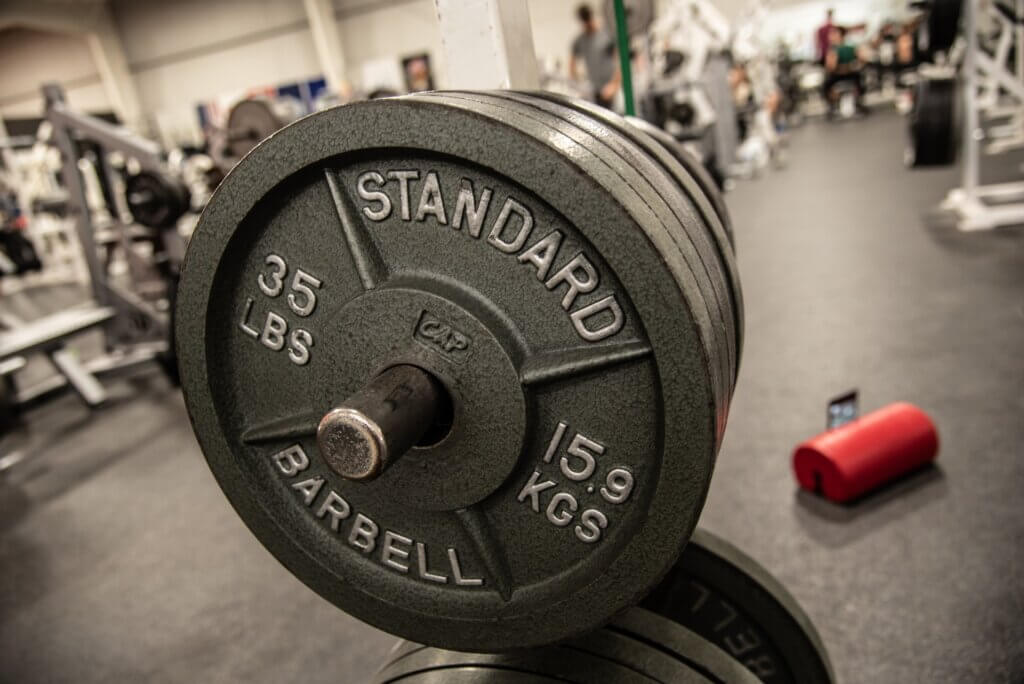
The concept of a “gym” has been around far longer than most people realize. The word gymnasium comes from the Greek word gymnos, meaning “naked,” because ancient Greeks trained and competed unclothed.
Gymnasiums in ancient Greece were not just places to build strength or tone the body — they were holistic centers for education, encompassing physical, intellectual, and even philosophical training.
Around the 6th century BCE, Greek city-states built open-air gymnasiums where young men trained in wrestling, running, discus, and javelin — preparing for both battle and the Olympic Games. These were often state-sponsored institutions, and many of the great thinkers like Socrates and Plato are said to have frequented them, blending physical conditioning with spirited debate.
Over in ancient Rome, the emphasis shifted slightly. Romans built baths that often included exercise spaces, called palaestrae, alongside steam rooms and cold plunges. Roman soldiers, in particular, followed rigorous physical regimens, but overall Roman culture didn’t revere physical perfection in quite the same intellectualized way the Greeks did.
THE MIDDLE AGES: A DORMANT PERIOD FOR PHYSICAL TRAINING
As Europe moved into the Middle Ages, interest in organized physical fitness declined significantly. The gymnasium concept essentially vanished. With the rise of Christianity and the focus on spiritual development, the body was often seen as secondary — or even sinful — compared to the soul. Physical fitness was still practiced, of course, but largely for military purposes, not personal development, or aesthetics.
THE 18TH AND 19TH CENTURIES: THE REVIVAL BEGINS
Fast-forward to the Enlightenment and Industrial Era. As scientific thought and educational reform spread across Europe, the value of physical education re-emerged. Germany and Sweden were especially pivotal during this period.
In the early 1800s, German educator Friedrich Ludwig Jahn founded the Turnverein movement, which emphasized gymnastics as a form of nationalistic physical and moral training. Jahn’s outdoor gymnasiums featured climbing structures, balance beams, rings, and other apparatus that would influence modern gym equipment. His goal was to make German youth stronger, both physically and mentally, especially in the face of Napoleonic occupation.
Around the same time, in Sweden, Per Henrik Ling developed a more medical and therapeutic approach to exercise, focusing on posture and movement control. His influence gave rise to Swedish gymnastics and eventually influenced modern physical therapy.
By the late 19th century, gymnasiums had become integrated into schools, particularly in Germany, Scandinavia, and parts of the United States.
THE 20TH CENTURY: FROM STRENGTH TO AESTHETICS
As the 20th century dawned, the idea of personal physical fitness began to shift toward strength training and bodybuilding. The early 1900s saw the rise of strongmen like Eugen Sandow, who is often considered the father of modern bodybuilding. Sandow opened one of the first commercial “physical culture” gyms in London, where clients lifted weights and followed structured routines.
In the 1930s and 40s, physical fitness became a public concern again during the lead-up to and aftermath of World War II. Governments emphasized physical readiness, and exercise was promoted in schools and military training.
But it was after the war — particularly in the 1950s and 60s — that gyms began to resemble what we know today. The idea of training for aesthetics and personal health became mainstream, largely influenced by figures like Jack LaLanne, who opened one of America’s first health clubs in Oakland, California. He was also among the first to market exercise on television, bringing fitness into the living room.
Then came the golden age of bodybuilding in the 1970s, centered in Venice Beach, California. Gold’s Gym, founded in 1965, became the mecca for bodybuilders, with icons like Arnold Schwarzenegger making the gym a cultural landmark. The documentary Pumping Iron in 1977 helped explode public interest in gym culture.
THE LATE 20TH AND EARLY 21ST CENTURIES: FITNESS FOR EVERYONE
From the 1980s onward, gyms diversified. Aerobics, popularized by Jane Fonda and others, drew large numbers of women into fitness spaces that had previously been male-dominated. The rise of machines like the Nautilus, as well as cardio equipment like treadmills and stair steppers, made fitness more accessible and less intimidating.
In the 1990s and early 2000s, gym chains like 24 Hour Fitness, Planet Fitness, and LA Fitness made memberships affordable and available to the masses. Specialized studios emerged too, with spinning, yoga, Pilates, CrossFit, and HIIT workouts becoming cultural trends in their own right.
TODAY’S LANDSCAPE: THE DIGITAL AND BOUTIQUE ERA
Today, the gym has evolved into a wide spectrum of experiences — from high-tech smart gyms and virtual training platforms to minimalist functional training boxes and luxury boutique studios. The COVID-19 pandemic accelerated the rise of at-home workouts and hybrid models, with many fitness enthusiasts now alternating between digital platforms and physical spaces.
There’s also a growing awareness of mental health, inclusivity, and long-term sustainability in fitness. Many modern gyms focus on holistic wellness rather than just aesthetics or performance. We’re seeing spaces that blend mindfulness, recovery (like cryotherapy and infrared saunas), nutrition, and community.
The gym has transformed dramatically over the centuries — from ancient Greek training grounds to today’s smart-equipped wellness hubs. What began as a place for warriors and philosophers is now a destination for nearly anyone seeking strength, balance, health, or simply a space to move and feel better. It’s a mirror of our evolving views on the body, society, and self-care — and it continues to adapt with every generation.
GYMS TODAY VARY QUITE A BIT ACROSS THE GLOBE, AND THE DIFFERENCES OFTEN REFLECT DEEPER CULTURAL VALUES, LOCAL HEALTH TRENDS, SOCIOECONOMIC REALITIES, AND EVEN CLIMATE.
UNITED STATES AND CANADA: VARIETY, CONVENIENCE, AND SCALE
In North America, gyms come in nearly every form imaginable. From massive 24/7 chains like Planet Fitness, Anytime Fitness, and LA Fitness, to boutique studios offering yoga, barre, HIIT, or boxing — convenience and choice drive the market.
What stands out is the accessibility — many gyms are open all hours, memberships are affordable, and there’s a strong emphasis on customer service and amenities (showers, childcare, smoothie bars, saunas). There’s also a huge rise in fitness technology, with integrated apps, wearables, and virtual training options becoming the norm.
North American gym-goers tend to focus on a mix of aesthetics, health, and stress relief, and the gym is often seen as a personal lifestyle space, not just a place to sweat.
BRAZIL: PASSION, BODY CULTURE, AND OUTDOOR FITNESS
Brazil has one of the most body-conscious cultures in the world, especially in cities like Rio de Janeiro and São Paulo. Gyms are often social and high-energy places. Many Brazilians work out to maintain beach-ready physiques, and aesthetic fitness — muscular definition, posture, and symmetry — is emphasized just as much as functional strength or endurance.
Outdoor gyms are also common — think beachfront pull-up bars, open-air weight stations, and calisthenics zones in public parks. Group classes like Zumba, dance-based fitness, and functional training are extremely popular, often accompanied by music and high energy.
JAPAN: COMPACT, POLITE, AND PRECISE
Gyms in Japan tend to reflect the country’s broader cultural traits — cleanliness, order, efficiency, and consideration for others. Facilities are often compact due to space constraints, and there’s typically less socializing or loud behavior. People follow etiquette strictly: re-racking weights, wiping down equipment, and respecting quiet zones.
High-tech machines and tracking devices are common, and elderly members are highly active, often forming the majority of gym-goers during daytime hours. Group fitness is growing in popularity, especially yoga, stretching, and dance.
There’s also a rise in “fitness salons” — small, boutique studios focused on posture correction, balance training, or specific types of rehabilitation.
GERMANY AND NORTHERN EUROPE: DISCIPLINE, FUNCTIONALITY, AND WELLNESS
In Germany, the Netherlands, and Scandinavia, fitness centers focus on precision, structure, and full-body health. Functional fitness, weightlifting, and cycling are popular, and gyms are often modern, clean, and tech-forward.
There’s also a strong wellness culture — many gyms incorporate saunas, steam rooms, cold plunges, and recovery zones as part of the experience. Membership may come with access to a wellness spa or bathhouse-like facility.
Group classes are respected and well-attended, but workouts are often more reserved and focused compared to Latin American or American gym culture. There’s less emphasis on aesthetics and more on capability, mobility, and endurance.
INDIA: RAPID GROWTH, DIVERSE INTERESTS
India’s gym culture is booming, especially in urban centers like Mumbai, Delhi, and Bengaluru. You’ll find everything from low-cost local gyms with basic free weights to international chains like Gold’s Gym and Anytime Fitness.
There’s a strong male demographic at many gyms, especially those focused on bodybuilding, but that’s changing fast. Women-focused gyms, yoga studios, and mixed-use wellness centers are rising. Home workouts and app-based fitness are also growing, partly due to space, traffic, and affordability factors.
Ayurveda, yoga, and meditation are deeply rooted in Indian tradition, so many modern gyms offer a hybrid model that blends strength training with ancient wellness practices.
MIDDLE EAST: LUXURY, SEGREGATION, AND INNOVATION
In wealthier Gulf countries like the UAE, Qatar, and Saudi Arabia, many gyms are state-of-the-art, luxury-driven facilities. Think marble floors, cold towels, espresso bars, and on-demand personal trainers. High-end chains like Fitness First, UFC Gym, and local elite clubs cater to a status-conscious clientele.
Due to cultural norms, men’s and women’s gyms are often separate, especially in Saudi Arabia, although this is slowly changing. Female-only gyms have become wellness sanctuaries, offering everything from Pilates to aesthetic treatments.
There’s also a rising interest in combat sports, CrossFit, and bodybuilding — particularly among men — with large-scale competitions and influencers driving the trend.
AFRICA: COMMUNITY, FUNCTIONALITY, AND GROWTH
Gym culture is growing fast in many African countries, especially in cities like Lagos (Nigeria), Nairobi (Kenya), and Johannesburg (South Africa). Local gyms often prioritize affordability and community. Equipment may be basic, but there’s often a strong sense of camaraderie and motivation among members.
In South Africa, fitness culture is particularly vibrant. You’ll find everything from luxury gyms like Virgin Active to boxing studios, CrossFit boxes, and outdoor fitness parks. Group training is especially popular, and there’s a strong connection between sport, gym training, and social activity.
CHINA AND EAST ASIA: INNOVATION, APPEARANCE, AND SPEED
In China, gym memberships are rising rapidly, especially in major cities like Beijing and Shanghai. Large chains such as Tera Wellness, Will’s, and Supermonkey are leading the way. Gyms here often combine tech, personal training, and appearance-focused fitness. Mirror workouts, body scanning devices, and mobile integration are common.
However, the culture is still developing. In many cities, the gym is viewed more as a trend or lifestyle statement than a lifelong habit. Appearance is a key driver — slimming, toning, and physique-focused training dominate, especially among younger users.
SOUTHEAST ASIA: HYBRID MODELS AND AFFORDABILITY
Countries like Thailand, Vietnam, Indonesia, and the Philippines offer a wide mix. Expats and locals alike frequent gyms that range from budget community spots to luxury wellness resorts. In places like Bali or Bangkok, you’ll find eco-gyms and retreat-style fitness spaces that blend workouts with detox, spa, and mindfulness practices.
Affordability and accessibility remain challenges in some areas, so many people rely on public parks, outdoor calisthenics setups, or community fitness groups to stay active.
While gyms share the common purpose of improving physical health, the experience of working out can feel completely different depending on where you are. Culture, climate, economics, and tradition shape everything — from equipment and layout to noise level and dress codes.
But there’s one thread that connects them all: the desire for better health, greater confidence, and a shared space to grow stronger — physically, mentally, and socially.
A LOT OF PEOPLE STILL GO TO GYMS, AND IN FACT, GYM MEMBERSHIPS ARE REBOUNDING AND GROWING GLOBALLY, EVEN AFTER THE MAJOR SPIKE IN HOME WORKOUTS DURING THE COVID-19 PANDEMIC.
Here’s a bit more on the current landscape:
GYMS ARE STILL VERY POPULAR
Despite predictions that home fitness would replace gyms permanently, commercial gyms have bounced back strongly since 2021:
In the U.S., the International Health, Racquet & Sportsclub Association (IHRSA) reported over 70 million gym members in 2023, close to pre-pandemic levels.
Chains like Planet Fitness, Gold’s Gym, and Anytime Fitness are expanding locations.
Boutique studios offering spin, CrossFit, pilates, boxing, and yoga have also seen a steady return in attendance, especially in urban areas.
People go back for reasons like:
Motivation from being around others
Access to better equipment and classes
Structure and routine
Social interaction and community
HOME GYMS AND DIGITAL WORKOUTS ARE STILL BIG
That said, the home fitness boom isn’t going away — it’s just settling into its own lane.
Peloton, Apple Fitness+, and YouTube workouts remain wildly popular.
Many people now blend gym memberships with home routines — especially for days when they’re short on time.
Compact home equipment like adjustable dumbbells, resistance bands, and smart mirrors (like Tonal or Mirror) make it easier to get a decent workout at home.
Who tends to stick with home fitness:
Busy parents or professionals who want flexibility
Those who live far from a gym or in rural areas
People who feel more comfortable working out in private
HYBRID FITNESS IS THE NEW NORM
Most people today follow a hybrid approach:
Gym for strength, classes, or cardio machines
Home for yoga, stretching, bodyweight workouts, or quick training sessions
Outdoors for jogging, walking, cycling, or hiking
The days of “either/or” have shifted toward “both/and” when it comes to gym vs. home.
DEMOGRAPHIC TRENDS
Young adults (Gen Z and Millennials) are the most active gym-goers right now — especially in cities. Many enjoy the social and aesthetic aspects of being at a gym.
Middle-aged adults increasingly invest in home gym setups for convenience.
Seniors are returning to gyms, particularly for low-impact classes, swimming, and wellness programs.
A lot of people still go to gyms — in fact, membership is growing again. But many have added home fitness into their routine. Rather than one replacing the other, the modern trend is about finding what fits your lifestyle — and for most people, that’s a mix of gym, home, and outdoor workouts.
MANY MODERN GYMS HAVE BLENDED DIFFERENT FITNESS CULTURES UNDER ONE ROOF.
LARGE COMMERCIAL GYMS: THRIVING AND EXPANDING
Big chains like Planet Fitness, LA Fitness, 24 Hour Fitness, Crunch, and Anytime Fitness have regained millions of members and are continuing to expand. These gyms attract a wide range of people because they:
Offer affordable pricing tiers
Provide a mix of cardio, weightlifting, group classes, and personal training
Have modern, clean, and spacious facilities
Cater to both beginners and experienced gym-goers
These gyms are not exclusively bodybuilding-focused but usually include free weights and strength areas for those who want to train hard. However, their messaging and branding often focus more on overall fitness, inclusivity, and lifestyle rather than intense physique goals.
For example:
Planet Fitness markets itself as a “Judgment Free Zone” and limits heavy lifting culture.
Crunch Fitness and Gold’s Gym try to walk the middle ground, appealing to both casual members and serious lifters.
Are Bodybuilding Gyms Still Around?
Yes — but they’re less common and more niche than they used to be.
Old-school bodybuilding gyms still exist in major cities and regions with strong fitness subcultures. Places like:
Gold’s Gym Venice Beach (still a mecca for bodybuilders)
Hardcore independents like Metroflex Gym (Texas) or Iron Addicts Gym
Smaller, locally-owned “iron” gyms that cater to powerlifters, strongmen, and physique competitors
These gyms focus on:
Heavy lifting equipment, plate-loaded machines, squat racks, and chalk-friendly zones
A no-frills, gritty environment
A community of people training for serious strength, size, or competition
While they aren’t as mainstream, they’re still thriving in pockets and often have loyal, tight-knit memberships.
THE BLENDING OF GYM CULTURES
In recent years, there’s been a blending of training styles and gym designs. Many commercial gyms now include:
Dedicated strength training zones with power racks and Olympic platforms
Functional fitness areas (turf, sleds, kettlebells, battle ropes)
Bodyweight and mobility equipment alongside traditional machines
Some even offer CrossFit-style setups in one section and Zumba classes in another
This reflects how fitness itself has become more diverse and integrated. Someone might:
Warm up on a rowing machine
Do heavy squats
Finish with a HIIT finisher
Then go to a yoga class the next day
Modern gym-goers don’t always identify strictly as “bodybuilders” or “cardio junkies” — many train across disciplines.
GYM CULTURE BY REGION
In places like Southern California, Miami, or parts of Texas, bodybuilding and aesthetic fitness remain extremely popular — so gyms often cater to that look and lifestyle.
In more suburban or rural areas, you’ll often find multi-purpose gyms that try to meet a variety of needs, from family fitness to older adult programs.
In major cities, boutique gyms and studios are thriving too — specializing in things like boxing, spin, CrossFit, or pilates, pulling people away from traditional big-box gyms.
Large commercial gyms are booming, especially post-pandemic, and they’re designed to serve a broad audience.
Classic bodybuilding gyms still exist, but they’re more niche and often regional.
Today’s gyms are often hybrids, offering weightlifting, cardio, group classes, and functional training all under one roof.
So while the days of every gym being a hardcore lifting dungeon are largely gone, the culture lives on — just integrated into a broader, more inclusive fitness world.
THERE ARE SEVERAL LESSER-KNOWN BUT FASCINATING ASPECTS OF THE EVOLUTION OF GYMS THAT ROUND OUT THE PICTURE. THESE TRENDS REVEAL HOW MUCH GYMS REFLECT DEEPER SOCIAL, TECHNOLOGICAL, AND CULTURAL SHIFTS. HERE’S WHAT YOU MAY NOT HAVE HEARD YET:
GYMS AS A SOCIAL HUB, THEN AND NOW
In ancient Greece, gymnasiums were social and intellectual centers — not just for exercise, but for debate, discussion, and education. Surprisingly, today’s gyms are returning to that role in new forms:
Some modern gyms are incorporating lounges, co-working spaces, cafés, and wellness seminars.
People build entire friend groups and social networks around their gym or training style.
Boutique studios (like Orangetheory or SoulCycle) often create cult-like communities, where members feel a strong bond through shared struggle and progress.
So while we usually think of gyms as just physical spaces, they’ve often played a much broader community role — and they still do.
THE RISE OF GYM FRANCHISING
Just like fast food chains, gyms have become major franchise businesses:
Planet Fitness, Orangetheory, F45, and Anytime Fitness operate on franchise models with global footprints.
This has made fitness more accessible, but also more standardized — meaning your gym experience in one town might feel almost identical to one across the country.
Franchising also plays a big part in the growth of specialized fitness, like boxing gyms, boot camps, or spin studios.
THE SHIFT TOWARD WELLNESS AND RECOVERY
Over the past 10–15 years, there’s been a huge shift in gym culture from “no pain, no gain” to balanced health and wellness. Many gyms now offer:
Mindfulness, meditation, and breathwork classes
Recovery tools like foam rolling stations, infrared saunas, cryotherapy, and massage chairs
Nutritional coaching, stress management, and even sleep guidance
This is a big change from the old-school mentality that focused strictly on reps and sets. People now see the gym as a whole-life support system.
THE INFLUENCE OF SOCIAL MEDIA
Social media has reshaped how people interact with gyms:
Instagram and TikTok fitness influencers have fueled trends like glute training, aesthetics, or calisthenics.
People document their workouts, meals, transformations — turning the gym into a stage for identity and branding.
Some even choose gyms based on how photogenic they are — lighting, mirrors, and branding matter.
It’s not just about results anymore. It’s also about how the experience is shared.
GYMS FOR SPECIALIZED POPULATIONS
Modern gyms are increasingly catering to specific groups, including:
Seniors – with balance, mobility, and low-impact classes
Women-only gyms – designed for comfort, cultural needs, or empowerment
Youth fitness programs – teaching movement and nutrition early
People with disabilities – offering adaptive equipment and training
This inclusion is a recent evolution. Not long ago, gyms catered mostly to young, able-bodied men. That’s changing rapidly.
TECHNOLOGICAL INTEGRATION
From smart weights to apps, gyms have gone high-tech:
Many now offer keyless entry, fitness tracking integration, and even AI-powered personal training.
Smart mirrors, interactive screens, and wearables like WHOOP and Apple Watch
The story of the gym is much more than a timeline of barbells and machines — it’s a mirror of how societies view the body, health, and even personal worth. What began as an open-air training ground for warriors and philosophers in ancient Greece has grown into a global network of wellness hubs, social spaces, and high-tech fitness ecosystems.
Along the way, gyms have absorbed cultural shifts, adapted to technology, and expanded their reach beyond athletes to include people of all ages, abilities, and backgrounds.
What’s most remarkable is that gyms have never stopped evolving. From iron-laden bodybuilding dens to sleek, app-connected training studios, every generation has reshaped what it means to work out — and why. Today’s gym might include a cold plunge, meditation room, or nutrition seminar just steps from a squat rack or spin class.
It might welcome a new parent at 6 AM, a retiree at 10, a CrossFitter at noon, and a yoga enthusiast after work. That kind of variety would have been unthinkable just a few decades ago.
And yet, beneath all the changes, one thing has stayed the same: people come to the gym for transformation. Whether it’s strength, healing, energy, community, or confidence they’re after, the gym remains a place where people challenge themselves, grow, and take charge of their well-being.
In a world that often moves too fast, the gym offers something timeless — the simple act of showing up, pushing forward, and becoming stronger, one rep at a time.
As fitness continues to merge with lifestyle, technology, and wellness, the next chapter of the gym will likely be even more integrated, personalized, and inclusive. But whether you’re lifting weights under fluorescent lights or stretching on a sunlit studio floor, the core idea remains: movement is powerful, and the gym — however it looks — is where that power begins to build.
TO EXPLORE MORE ABOUT THE HISTORY, EVOLUTION, AND GLOBAL DIVERSITY OF GYMS, HERE ARE SOME RELIABLE SOURCES AND TYPES OF MATERIALS YOU CAN TURN TO:
Books and Academic Resources
- “A Brief History of Physical Education” by Emmett A. Rice
- Covers the evolution of physical education and gym culture from ancient times to modern day.
- “Muscle: Confessions of an Unlikely Bodybuilder” by Samuel Fussell
- A firsthand account that gives insight into bodybuilding culture and gym life in the late 20th century.
- Journal of Physical Education, Recreation & Dance (JOPERD)
- Academic journal that often explores physical education history and the role of gyms in society.
Fitness Industry Organizations and Reports
- IHRSA (International Health, Racquet & Sportsclub Association)
- https://www.ihrsa.org
- Offers industry reports, statistics, trends, and global market insights.
- Statista – https://www.statista.com
- Search “gym membership trends” or “fitness industry by country” to access charts and data (some articles require a subscription).
- IBISWorld or McKinsey Fitness Industry Reports
- If you want in-depth market analysis, both organizations occasionally publish public-facing reports on fitness industry trends.
Websites and Articles
- Verywell Fit – https://www.verywellfit.com
- Offers a wide range of articles on gym history, types of workouts, and fitness trends.
- Men’s Health, Women’s Health, and Shape Magazine
- These magazines frequently publish features on gym culture, trends, and global fitness lifestyles.
- The History Channel website
- Occasionally features articles on ancient sports, Roman baths, and cultural movements that influenced modern gyms.
Documentaries and Videos
- “Pumping Iron” (1977)
- Classic documentary that provides a window into the golden age of bodybuilding and gym life in the 1970s.
- YouTube Channels like ATHLEAN-X, Jeff Nippard, or The History of Fitness
- Some fitness YouTubers have created deep dives into gym history, bodybuilding origins, and the evolution of training methods.
- Netflix and other streaming services occasionally feature documentaries or series on wellness, CrossFit, and global fitness culture (e.g., Unwell or Human Playground).
Museums and Cultural Institutions
- Olympic Museum in Lausanne, Switzerland – offers information on the evolution of athletic training, including ancient gymnasiums.
- National Museum of Health and Medicine – in the U.S., occasionally showcases exhibits related to fitness, physical culture, and the human body.