




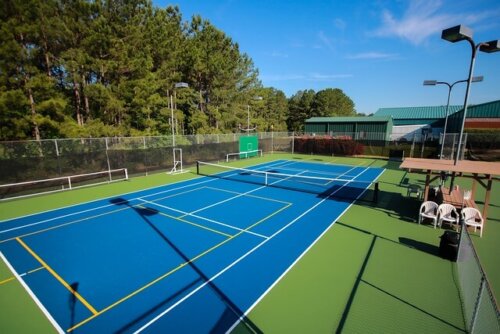
Tennis and pickleball look simple on the surface. Two people, a court, a paddle or racket, and a ball. But underneath that simplicity are a lot of things people rarely talk about.
Both sports reveal a lot about psychology, aging, athleticism, social dynamics, patience, ego, and even human behavior itself.
A lot of people think tennis and pickleball are just recreational games. In reality, they can become lifelong studies of movement, discipline, strategy, emotional control, and social interaction.
Here are the deeper things people often do not talk about.
The Sports Look Easy Until You Actually Play
One of the biggest surprises for beginners is how difficult both sports really are.
Watching tennis on television can fool people. Professional players make impossible shots look casual. Then someone steps onto a tennis court for the first time and realizes:
- Timing is hard
- Footwork is exhausting
- Consistency is rare
- Mental focus disappears quickly
- A moving ball is much harder to hit than expected
The same thing happens in pickleball.
People joke about pickleball being “easy tennis,” but experienced players know that high-level pickleball becomes extremely fast, strategic, and mentally demanding. At advanced levels, reflexes, anticipation, positioning, and touch matter enormously.
The better someone gets at either sport, the more respect they develop for skilled players.


TENNIS IS OFTEN MORE PHYSICALLY BRUTAL THAN PEOPLE REALIZE
Tennis can quietly wear down the body.
People see the elegance and athleticism, but they do not always notice:


- The constant stopping and starting
- The torque on knees and hips
- The shoulder stress from serving
- The lower back strain
- The mental fatigue from long matches
- The repetitive impact on joints
Many recreational tennis players eventually deal with:
- Tennis elbow
- Rotator cuff issues
- Knee pain
- Achilles problems
- Lower back tightness
The sport rewards movement and conditioning, but it also punishes poor mechanics and overuse.
One hidden truth is that flexibility and recovery become more important with age than raw athletic ability.
Older players who usually last a long time:
- Stretch regularly
- Hydrate well
- Manage ego
- Play smarter instead of harder
- Accept recovery days
PICKLEBALL IS SOCIAL IN A WAY TENNIS OFTEN IS NOT
This is one reason pickleball exploded in popularity.


Tennis can sometimes feel isolating or intimidating:
- Large courts
- Harder learning curve
- More running
- Longer rallies can be difficult for beginners
Pickleball shrinks the barriers.
People can:
- Learn faster
- Rally sooner
- Laugh more quickly
- Join games easier
- Meet people naturally
A huge hidden reason pickleball became massive is loneliness.
Many adults are isolated:
- Remote work
- Screens
- Less community
- Fewer friendships
- Less physical activity
Pickleball accidentally became a social solution disguised as a sport.
A lot of people are not just showing up for exercise. They are showing up for:
- Community
- Routine
- Conversation
- Human connection
- Competition without extreme pressure
This part rarely gets discussed enough.
BOTH SPORTS REVEAL PERSONALITY FAST
You can learn a surprising amount about people from playing doubles or singles with them.
Sports strip away masks because pressure reveals habits.
For example:
- Some people blame others constantly
- Some stay calm under stress
- Some become angry after mistakes
- Some encourage partners
- Some collapse mentally after losing a few points
- Some stay steady and resilient
Tennis especially exposes emotional control because there are long stretches without interruption. There is nowhere to hide mentally.
Pickleball reveals social behavior quickly because of the close interaction and constant partner communication.
You often discover:
- Who is patient
- Who is insecure
- Who is humble
- Who is arrogant
- Who is coachable
- Who cannot handle losing
A lot of experienced players quietly know this.
THE MENTAL SIDE IS FAR BIGGER THAN MOST BEGINNERS EXPECT
People think these sports are mainly physical.
They are heavily psychological.
In tennis:
- Confidence changes everything
- Fear tightens strokes
- Frustration ruins timing
- Overthinking destroys rhythm
Many players lose matches mentally before they lose physically.
A player can:
- Lead comfortably
- Start thinking about winning
- Become tight and cautious
- Suddenly unravel
This happens constantly.
Pickleball has a similar mental side:
- Hesitation gets punished
- Confidence at the kitchen line matters
- Panic creates pop-ups
- Emotional frustration speeds mistakes
One hidden truth:
The player who manages emotions best often wins over the player with more talent.
FOOTWORK IS THE HIDDEN FOUNDATION
Beginners focus on swings.
Experienced players focus on feet.
Good footwork:
- Creates balance
- Improves timing
- Prevents injuries
- Conserves energy
- Makes difficult shots easier
In tennis especially, poor footwork destroys consistency.
In pickleball, tiny positioning adjustments make huge differences.
A lot of people plateau because they obsess over fancy shots while ignoring movement.
Professional players spend massive amounts of time on:
- Split steps
- Recovery positioning
- Balance
- Court awareness
- Anticipation
The feet often matter more than the racket or paddle.
AGING CHANGES THE SPORTS IN INTERESTING WAYS
One fascinating thing about tennis and pickleball is how people adapt as they age.
Younger players often rely on:
- Speed
- Aggression
- Athletic recovery
Older experienced players often rely on:
- Placement
- Patience
- Reading opponents
- Shot selection
- Efficiency
Some older players become incredibly difficult to beat because they understand patterns and psychology so well.
Pickleball especially allows older athletes to remain competitive much longer.
This is emotionally important for many people.
Sports often become part of identity. When aging limits athletic ability, people can feel loss or sadness. Pickleball gives many former athletes:
- Competition
- Community
- Movement
- Purpose
- Confidence
That emotional dimension is rarely discussed enough.
THE “KITCHEN” IN PICKLEBALL IS ACTUALLY PSYCHOLOGICAL WARFARE
The non-volley zone looks silly to outsiders.
But advanced pickleball at the kitchen line becomes:
- Chess at high speed
- Hand-fight battles
- Deception
- Patience testing
- Reaction competition
Soft dinks are not boring at advanced levels. They are strategic pressure.
Players are trying to:
- Force mistakes
- Create bad positioning
- Set up attack opportunities
- Manipulate anticipation
Many beginners do not realize pickleball becomes incredibly tactical.
TENNIS HAS A LONELINESS PEOPLE RARELY TALK ABOUT
Singles tennis can feel emotionally isolating.
Unlike team sports:
- Nobody substitutes in
- Nobody calls plays
- Nobody rescues you
- Momentum swings are personal
You are alone with:
- Your thoughts
- Your mistakes
- Your frustration
- Your confidence
This can actually help people grow emotionally.
Tennis teaches:
- Self-responsibility
- Emotional resilience
- Focus
- Recovery after mistakes
But it can also mentally exhaust people who are overly perfectionistic.
Many players quietly struggle with self-criticism.
BOTH SPORTS CAN BECOME ADDICTIVE
Not in a destructive way necessarily, but psychologically addictive.
Why?
Because every rally creates:
- Challenge
- unpredictability
- adrenaline
- learning
- social reward
- physical movement
The brain loves variable rewards.
A great shot every few minutes creates excitement similar to:
- Golf shots
- Fishing catches
- Surfing waves
People keep chasing “the perfect point.”
That is one reason players become obsessed.
EQUIPMENT MATTERS LESS THAN PEOPLE THINK
Beginners often think:
- Expensive racket = instant improvement
- Expensive paddle = advanced skill
Not really.
Good players can usually outperform beginners using cheap equipment.
Technique, timing, positioning, and consistency matter far more.
Equipment can help refine performance later, but it rarely replaces fundamentals.
PICKLEBALL AND TENNIS SOMETIMES CREATE GENERATIONAL TENSION
This is a hidden social issue.
Some tennis players resent pickleball because:
- Pickleball courts replace tennis courts
- Pickleball is louder
- The culture feels different
- Tennis took years to master
Meanwhile pickleball players often feel:
- Tennis players are dismissive
- The sport is unfairly mocked
- Pickleball skill is underestimated
IN REALITY, BOTH SPORTS HAVE LEGITIMATE STRENGTHS
Tennis generally demands:
- More endurance
- Larger movement range
- More stroke complexity
Pickleball often demands:
- Faster reflex exchanges
- Precision touch
- Tactical patience
- Quick hand battles
They are different, not identical.
THE CULTURE AROUND THE SPORTS MATTERS
Every club or court develops its own culture.
Some environments are:
- Welcoming
- Relaxed
- Encouraging
Others become:
- Cliquish
- Ego-driven
- Hyper-competitive
- Passive aggressive
This matters enormously for long-term enjoyment.
A good court culture can improve:
- Mental health
- Motivation
- Friendships
- Consistency
A toxic one can ruin the experience completely.
Many longtime players eventually realize:
The people matter as much as the sport.
INJURY PREVENTION IS BARELY DISCUSSED ENOUGH
Most recreational players do not warm up properly.
That becomes dangerous over time.
The best long-term players often:
- Strength train
- Stretch
- Improve mobility
- Hydrate consistently
- Sleep well
- Cross-train
- Respect recovery
Longevity usually beats intensity.
People who try to play “like they are 22 forever” often burn out or get hurt.
BOTH SPORTS QUIETLY TEACH LIFE LESSONS
Without sounding overly dramatic, tennis and pickleball can teach:
- Humility
- Patience
- Emotional control
- Adaptability
- Resilience
- Sportsmanship
- Focus under pressure
A bad attitude usually hurts performance.
So does ego.
People who improve long term usually learn:
- To stay teachable
- To handle mistakes better
- To stop panicking
- To focus on consistency
That carries over into life surprisingly often.
ONE OF THE BIGGEST HIDDEN TRUTHS: MOST PEOPLE JUST WANT TO BELONG
At the deepest level, many people are not truly chasing trophies.
They are chasing:
- Friendship
- Confidence
- Routine
- Health
- Meaning
- Community
- Feeling alive again
That may actually explain the rise of pickleball more than the sport itself.
And it explains why tennis players often stay devoted for life.
These sports give people:
- Movement
- Purpose
- Challenge
- Social connection
- Personal growth
That combination is powerful.
Tennis and pickleball are much bigger than most people realize. On the surface, they look like simple recreational sports, but underneath they become studies in movement, discipline, patience, emotional control, and human connection.
Over time, many players discover that the games are not just testing their athletic ability — they are testing their mindset, attitude, humility, and resilience.
One of the most beautiful things about both sports is that people can continue learning for decades. Even highly skilled players are constantly adjusting, improving, and discovering new layers of strategy. The sports evolve with the person.
Younger players may rely on speed and power, while older players often develop wisdom, precision, patience, and court awareness that make them incredibly difficult opponents. In many ways, tennis, and pickleball mirror life itself: adaptation matters more than perfection.
Another thing people rarely talk about is how healing these sports can be emotionally and socially. Many people arrive at a court carrying stress, loneliness, frustration, burnout, or discouragement from everyday life.
Then they spend a couple of hours moving, laughing, competing, learning, and interacting with others face-to-face. That combination can be deeply restorative. For some people, the local court becomes one of the few places where they feel connected, challenged, and fully present in the moment.
Both sports also quietly teach humility. No matter how good someone becomes, there will always be bad days, missed shots, difficult opponents, and moments of frustration.
The people who stay in the sports long term usually learn to stop chasing perfection and start appreciating growth, consistency, and enjoyment. They realize that improvement is gradual and that emotional steadiness often matters more than flashy talent.
In the end, tennis and pickleball are not really just about rackets, paddles, balls, or scoreboards. They are about learning how to handle pressure, how to work with others, how to stay mentally strong after mistakes, and how to keep growing over time. They give people movement, challenge, friendship, routine, and purpose. That is why so many people become passionate about them for life.
IF YOU WANT TO REALLY LEARN TENNIS AND PICKLEBALL DEEPLY — NOT JUST THE RULES, BUT THE PSYCHOLOGY, STRATEGY, MOVEMENT, CULTURE, MENTAL SIDE, AND LONG-TERM LIFESTYLE ASPECTS — THESE ARE SOME OF THE BEST PLACES TO EXPLORE FURTHER
Tennis Organizations and Learning Resources
USTA (United States Tennis Association)
The United States Tennis Association is one of the best starting points for:
- Beginner guides
- Local leagues
- Coaching resources
- Mental game articles
- Skill development
- Tennis drills
- Rules and ratings
It also has excellent sections on sportsmanship, player development, and the mental side of tennis.
ITF (International Tennis Federation)
The International Tennis Federation is useful if you want to understand:
- The global structure of tennis
- Rankings
- International tournaments
- Tennis development worldwide
- Advanced educational material
Tennis.com covers:
- Professional tennis
- Match analysis
- Equipment reviews
- Instructional content
- Tennis culture and psychology
It is especially useful for staying connected to the modern tennis world.
Pickleball Organizations and Learning Resources
USA Pickleball is probably the best overall beginner-to-advanced resource for:
- Official rules
- Court positioning
- Beginner education
- Skill ratings
- Coaching certification
- Tournament information
It also helps explain why the sport is growing so quickly socially and competitively.
Paddle Pickler focuses heavily on:
- Pickleball strategy
- Equipment understanding
- Tutorials
- Skill progression
- Practical advice for improving faster
Their material is especially good for players trying to move beyond beginner level.
Briones Pickleball is widely respected for:
- High-level instruction
- Advanced strategy
- Footwork
- Kitchen play
- Competitive development
A lot of players consider Jordan Briones one of the better teachers online because he breaks down the tactical side clearly.
Tanner Tomassi has become popular for:
- Short practical tips
- Mental game advice
- Fast instructional videos
- Real-match concepts
- Drills for improving consistency
Many newer players like his teaching style because it is direct and easy to apply.
The Picklr Academy offers:
- Structured learning paths
- Beginner-to-advanced training
- Clinics
- Drills
- Competitive development systems
Their “P-Series” progression system is helpful for understanding how players develop over time.
YouTube Channels Worth Following
YouTube has become one of the best free ways to improve at both sports.
For pickleball, many players online consistently recommend:
- Jordan Briones
- Tanner Pickleball
- Prime Time Pickleball
- John Cincola
- Pickleball Kitchen
- That Pickleball Guy
- Tyson McGuffin
These creators are often praised for explaining:
- Mechanics
- Court positioning
- Strategy
- Mental mistakes
- Match analysis
- Kitchen battles
- Doubles communication
Reddit discussions among players repeatedly mention these channels as some of the most helpful for improving.
Reddit Communities
Sometimes the best learning comes from regular players instead of polished organizations.
r/Pickleball is great for:
- Beginner questions
- Paddle discussions
- Strategy debates
- Injury prevention
- Community advice
- Court culture discussions
Many people share honest experiences there about what actually improves their game.
r/10s is one of the main online tennis communities where players discuss:
- Tennis technique
- Equipment
- Match psychology
- Improvement struggles
- Competitive experiences
It also gives a more realistic picture of recreational tennis culture than professional media sometimes does.
Books Worth Reading
The Inner Game of Tennis
The Inner Game of Tennis is one of the most famous sports psychology books ever written.
It is less about technique and more about:
- Focus
- Confidence
- Mental blocks
- Self-criticism
- Performance under pressure
Many athletes in many sports have used its concepts.
Winning Ugly
Winning Ugly teaches:
- Match strategy
- Mental toughness
- Competitive thinking
- How smart players beat more talented players
It explains the hidden mental warfare inside tennis.
Injury Prevention and Longevity
If you want to stay healthy while playing long term, these are important:
Mayo Clinic Exercise Resources
Mayo Clinic has useful information on:
- Warmups
- Joint health
- Recovery
- Flexibility
- Overuse injuries
Hospital for Special Surgery Sports Medicine
Hospital for Special Surgery offers excellent educational material on:
- Tennis elbow
- Knee pain
- Shoulder injuries
- Mobility
- Athletic longevity
One Hidden Truth About Learning These Sports
A lot of improvement comes from simply being around experienced players consistently.
Books and videos help, but:
- Playing often
- Watching skilled players
- Asking questions
- Joining clinics
- Drilling basics
- Learning emotional control
…usually matter even more.
Over time, many players realize these sports are not really about mastering every shot. They are about mastering consistency, patience, awareness, positioning, and mindset. That deeper layer is what keeps people passionate about tennis and pickleball for decades.