


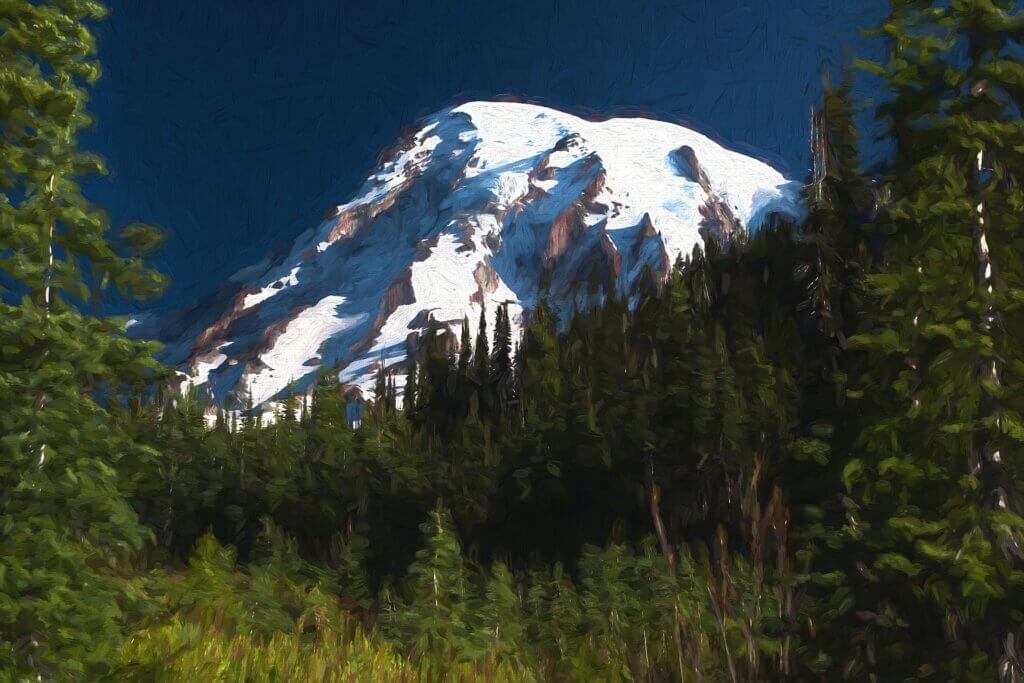
Mount Rainier National Park is a breathtaking natural wonder located in the state of Washington, in the Pacific Northwest region of the United States.
It’s centered around Mount Rainier, a massive stratovolcano that towers at 14,410 feet (4,392 meters) — making it the tallest peak in the Cascade Range and one of the most iconic mountains in North America.
Imagine this: a snow-capped volcano rising dramatically above dense, green forests, alpine meadows bursting with wildflowers in the summer, waterfalls cascading down rocky cliffs, and glaciers that seem to glow in the sunlight. That’s the kind of landscape you’ll find in Mount Rainier National Park.
SO, WHERE EXACTLY IS IT?
The park is about 60 miles southeast of Seattle, making it a relatively easy getaway for both locals and tourists. It’s nestled within Pierce and Lewis counties, and stretches across over 230,000 acres of wilderness.
WHY PEOPLE LOVE VISITING MOUNT RAINIER NATIONAL PARK
It’s not just about the mountain — though that alone is spectacular. Here’s what draws people in:
Hiking Heaven: With over 260 miles of maintained trails, the park offers everything from gentle walks through wildflower fields to strenuous backcountry treks. The Wonderland Trail, a 93-mile loop around the entire mountain, is a bucket-list hike for serious adventurers.
Wildflower Bloom: During late July to early August, the subalpine meadows around Paradise and Sunrise explode into a sea of vibrant colors. People come from all over to see the wildflower “super bloom” — lupines, Indian paintbrush, avalanche lilies, and more.
Glaciers and Waterfalls: Mount Rainier is the most glaciated peak in the contiguous U.S. — it’s home to 25 named glaciers. Meltwater feeds countless waterfalls, like Narada Falls and Christine Falls, which are both easily accessible and incredibly photogenic.
Wildlife Watching: The park teems with wildlife. On any given visit, you might spot black bears, marmots, elk, mountain goats, or even a rare sighting of a cougar (from a safe distance, of course).
Starry Skies and Solitude: At night, the higher elevations offer incredible stargazing opportunities. People seeking peace and silence find a special kind of serenity here, especially in the off-season.
Photography and Inspiration: For artists, photographers, and nature lovers, Mount Rainier is endlessly inspiring. The light, the clouds, the changing seasons — every visit feels different.
Mount Rainier National Park is a place where nature feels big, bold, and humbling. Whether you’re looking to challenge yourself on rugged trails, soak in jaw-dropping views, or simply escape into quiet beauty, it offers something magical in every season. It’s no wonder so many people fall in love with it — and keep coming back year after year.
EXTREME OUTDOOR ENTHUSIASTS ARE DRAWN TO MOUNT RAINIER NATIONAL PARK FOR ONE BIG REASON: IT OFFERS REAL ADVENTURE — THE KIND THAT TESTS YOUR SKILL, ENDURANCE, AND RESPECT FOR NATURE.
Here’s why it’s such a magnet for the hardcore crowd:
MOUNT RAINIER ITSELF IS A TRUE ALPINE CHALLENGE
Climbing Mount Rainier is no casual hike — it’s a technical mountaineering feat. Standing over 14,000 feet with 25 active glaciers, Rainier is often a training ground for climbers preparing for bigger peaks like Denali or even Everest.
It requires glacier travel skills, crevasse navigation, and avalanche awareness.
Weather can change in an instant, adding to the challenge.
Climbers face thin air, icy terrain, and intense elevation gain — over 9,000 feet from base to summit.
Thousands attempt it each year, but only about half reach the summit. That statistic alone makes it irresistible to extreme adventurers who want to prove themselves.
BACKCOUNTRY ISOLATION AND TOUGH TERRAIN
For backpackers and extreme hikers, Rainier offers deep, remote backcountry where few people venture. Trails like the Wonderland Trail (a 93-mile loop that circles the mountain) are demanding:
Elevation gain and loss is brutal — around 22,000 feet total.
You’ll face changing ecosystems, unpredictable weather, and stream crossings.
Permits are limited, so there’s a strong feeling of solitude.
It’s a multi-day, mentally and physically exhausting experience — exactly what serious hikers and backpackers crave.
WINTER SPORTS IN A WILD SETTING
In the winter, Rainier transforms into a snow-covered playground for skilled backcountry skiers, snowboarders, and snowshoers. But this isn’t resort skiing — this is raw, unpatrolled wilderness:
Avalanches are a real threat.
Routes are unmarked and require navigation, beacon use, and self-rescue knowledge.
Areas like Paradise offer steep terrain, epic descents, and fresh powder.
Extreme snow athletes love the challenge, the quiet, and the untouched conditions.
ROCK, ICE, AND MIXED CLIMBING OPPORTUNITIES
Rainier’s varied landscape offers more than alpine climbing:
Ice climbers find plenty of frozen waterfalls and glacial ice walls.
Rock climbers seek out rugged cliffs and technical routes in surrounding areas.
Mixed routes test every skill set — combining rock, snow, and ice.
For multi-discipline climbers, it’s an all-in-one destination.
IT’S PHYSICALLY DEMANDING, MENTALLY TOUGH, AND SPIRITUALLY REWARDING
Extreme enthusiasts aren’t just looking for thrills — they’re often looking for personal growth. Mount Rainier delivers on that front:
It requires full preparation: physical training, gear planning, emergency skills.
Nature forces humility. Conditions change fast and mistakes can be costly.
Success — whether summiting or just enduring the elements — feels deeply rewarding.
Rainier is a place where comfort zones are left far behind, and that’s exactly why those who love to push limits are drawn to it.
Mount Rainier National Park is not just scenic — it’s fierce, wild, and alive. It’s a proving ground for climbers, skiers, hikers, and adventurers who want to feel fully alive in nature’s rawest elements.
MOUNT RAINIER NATIONAL PARK MAY BE KNOWN FOR ITS WILD, MAJESTIC SCENERY, BUT WHEN IT COMES TO PARKING AND AMENITIES, IT’S IMPORTANT TO PLAN AHEAD SO YOUR VISIT GOES SMOOTHLY. HERE’S WHAT YOU NEED TO KNOW.
PARKING AT MOUNT RAINIER NATIONAL PARK
Parking is available throughout the park, but during the busy summer season (especially July through September), it can be a challenge.
The most popular areas like Paradise, Sunrise, and Longmire have parking lots, but they fill up quickly—often by mid-morning on weekends and holidays.
Once lots are full, you may have to wait for someone to leave or drive to a different area entirely.
During winter, some higher elevation areas such as Sunrise are closed due to snow, and others may have limited or plowed parking only.
If you’re driving a large RV or oversized vehicle, parking is extremely limited. Longmire and White River tend to have more space for those types of vehicles.
Best bet: Arrive early, especially in summer or on weekends. If you can visit during the weekday, you’ll have a much easier time finding a spot.
AMENITIES BY MAIN VISITOR AREAS
Although it’s a national park, Mount Rainier does offer some creature comforts—especially near its major hubs.
PARADISE (SOUTH SIDE)
One of the most visited spots in the park.
The Paradise Visitor Center has maps, exhibits, and ranger information.
The Paradise Inn, a historic lodge, offers seasonal lodging, a restaurant, and a gift shop.
Clean, modern restrooms are available.
Popular starting point for trails like the Skyline Trail and great for wildflower viewing in late summer.
SUNRISE (NORTHEAST SIDE)
The highest point accessible by car in the park.
Open seasonally, typically late June through early October.
The Sunrise Visitor Center has exhibits, trail information, and rangers on site.
The Day Lodge serves snacks and drinks but does not provide overnight lodging.
Vault toilets are available, and the trail options are excellent, including routes to lookouts and alpine views.
LONGMIRE (SOUTHWEST ENTRANCE)
Open year-round and rich with history.
The Longmire Wilderness Information Center handles backcountry permits.
The National Park Inn is open year-round with cozy lodging and a full-service dining room.
Restrooms and picnic areas are available.
There are a variety of short trails here, including the Trail of the Shadows.
OHANAPECOSH (SOUTHEAST ENTRANCE)
Heavily forested area focused more on river and forest scenery than alpine terrain.
The Ohanapecosh Visitor Center (seasonal) has educational exhibits and maps.
Nearby campground is one of the park’s largest and most popular.
Restrooms and drinking water available.
Short trails wind through old-growth forest and past hot spring ruins.
CAMPING AND LODGING
The park has three main campgrounds: Cougar Rock, Ohanapecosh, and White River. All are seasonal, and reservations are highly recommended in peak season.
For traditional lodging, there are two historic inns inside the park: Paradise Inn and National Park Inn. Both book out quickly, sometimes months in advance.
Backcountry camping is allowed with a permit, and must be reserved in advance. Bear safety practices and Leave No Trace principles are strongly emphasized.
FOOD, GAS, AND SUPPLIES
Dining options are limited inside the park.
Paradise Inn and National Park Inn both offer meals, but only during their open seasons.
The Sunrise Day Lodge has grab-and-go snacks.
There are no gas stations inside the park, so you should fuel up before entering.
Bring snacks, water, and basic supplies with you. There are no grocery stores inside the park.
CELL SERVICE AND INTERNET
Cell phone coverage is spotty or nonexistent throughout most of the park.
You may get occasional service near the entrances or in Longmire, but don’t count on it.
Download any trail maps or offline apps ahead of time, and let someone know your plans if you’re going into the backcountry.
ENTRANCE FEES
The entrance fee is $30 per vehicle for a 7-day pass currently.
You can also purchase an annual pass for Mount Rainier or use the America the Beautiful national parks pass.
Most entrance stations accept credit or debit cards, but it’s smart to bring some cash, just in case.
While Mount Rainier National Park offers some modern amenities like visitor centers, lodging, and restrooms, much of the park remains wild and remote. Parking is limited during peak times, services are seasonal in many areas, and preparation is key. Bring what you need, arrive early, and be ready to embrace both the comforts and the challenges that come with visiting one of America’s most awe-inspiring national parks.
MOUNT RAINIER NATIONAL PARK HAS A NUMBER OF RULES AND REGULATIONS IN PLACE TO PROTECT THE NATURAL ENVIRONMENT, WILDLIFE, AND VISITORS. WHETHER YOU’RE THERE FOR A SHORT HIKE OR AN EXTENDED BACKCOUNTRY ADVENTURE, IT’S IMPORTANT TO KNOW AND FOLLOW THESE GUIDELINES. HERE’S A BREAKDOWN IN A CLEAR AND CONVERSATIONAL FORMAT:
GENERAL RULES FOR ALL VISITORS
Park Entrance Fees Are Required
Everyone entering the park must pay an entrance fee unless they have a valid pass (such as an annual or lifetime pass). Keep your receipt visible in your vehicle if required.
Stay on Designated Trails
Going off-trail can damage fragile ecosystems, especially wildflower meadows and alpine tundra. Stick to marked trails and boardwalks to preserve the landscape.
No Picking or Disturbing Plants
Wildflowers, plants, mushrooms, and other natural features must be left untouched. Picking or damaging them is prohibited.
Leave No Trace
Pack out all trash, leftover food, and litter. There are very few trash cans in remote areas, so plan to carry out what you bring in.
Pets Are Limited
Dogs and other pets are not allowed on trails, in the backcountry, or in wilderness areas. They are allowed in parking areas, campgrounds, and along roads, but must be on a leash at all times.
Do Not Feed Wildlife
Feeding wildlife is dangerous and illegal. It can lead to animals becoming aggressive or dependent on human food, which often results in them being euthanized.
Fires Are Restricted
Campfires are only allowed in established fire rings in certain campgrounds. No fires are allowed in the backcountry. Fire restrictions may increase during dry conditions.
Drones Are Prohibited
Flying drones anywhere in the park is not allowed. This protects wildlife, ensures visitor safety, and maintains the natural soundscape.
BACKCOUNTRY AND WILDERNESS RULES
Permits Are Required
If you’re camping in the backcountry or doing the Wonderland Trail, you’ll need a wilderness permit, which must be reserved in advance during peak season.
Bear Canisters or Food Storage Required
You must store food properly—either in bear-proof containers or in provided bear wires at campsites. Never keep food in your tent.
Group Size Limits
Most backcountry areas limit groups to no more than 12 people. Some sensitive areas have smaller group size limits.
Camp Only in Designated Areas
Backcountry camping is only allowed in designated sites or zones with a permit. Random camping is prohibited to reduce human impact.
CLIMBING REGULATIONS
Climbing Registration Required
If you plan to climb above 10,000 feet or on any glacier, you must register and pay a climbing fee. This helps fund rescue operations and maintain safety.
Mountaineering Experience Expected
The park does not provide guides. Climbers must be self-sufficient and know how to travel on glaciers, handle crevasse rescues, and manage changing weather.
CAMPING RULES
Camp Only in Official Campgrounds or Backcountry Zones
Dispersed camping is not allowed in the front country. Use established campgrounds or approved backcountry campsites.
Quiet Hours Enforced
From 9:00 PM to 7:00 AM, quiet hours are enforced in all campgrounds.
Generators Are Limited
In developed campgrounds, generator use is allowed only during specific hours (usually mid-morning and early evening). Check posted rules at your site.
WINTER USE RULES
Tire Chains May Be Required
In winter and early spring, vehicles must carry tire chains, even if roads appear clear. Park rangers can turn you away if you don’t have them.
Check for Road Closures
Some areas, like Sunrise and Mowich Lake, are closed in winter. Others, like Paradise, have limited access depending on weather and avalanche risk.
OTHER IMPORTANT GUIDELINES
Don’t Harass Wildlife
Stay at least 25 yards from most animals and 100 yards from bears. Use binoculars or zoom lenses to observe.
Alcohol and Marijuana Rules
Alcohol is allowed in campgrounds and some picnic areas, but public intoxication is not tolerated. Marijuana, although legal in Washington, is still illegal on federal land like Mount Rainier National Park.
Bikes and E-Bikes
Bicycles are allowed on roads and certain paved areas but not on hiking trails. E-bikes follow the same rules as regular bikes.
Mount Rainier National Park’s rules are all about protecting the natural environment, keeping visitors safe, and ensuring future generations can enjoy the same beauty. Following the rules is not only respectful—it’s essential. If you’re ever unsure about what’s allowed, visitor centers and park rangers are excellent resources and happy to help.
MOUNT RAINIER NATIONAL PARK DOESN’T HOST LARGE-SCALE CONCERTS OR FESTIVALS INSIDE THE PARK ITSELF, BUT THE SURROUNDING COMMUNITIES AND PARK PARTNERS OFFER SEVERAL NOTABLE EVENTS THAT CELEBRATE THE MOUNTAIN’S BEAUTY, CULTURE, AND ACTIVE COMMUNITY SPIRIT:
LOCAL MUSIC & FESTIVAL EVENTS NEARBY
1. Rainier Music Festival
- Held at Ashford County Park, just outside the park’s Nisqually Entrance, this festival features regional artists playing rock, reggae, blues, soul, and more.
- The next one is scheduled for August 2, 2025 (12–10 pm), with a free open mic at Base Camp Bar & Grill the night before reddit.com+13visitrainier.com+13rainiermusicfestival.com+13.
2. Fields & Fins & Mineral Lake Fishing Derby
- In nearby Mineral, this family-friendly weekend (April 26–27, 2025) celebrates local rivers and fishing culture. It includes live music, food trucks, vendor markets, and a trout pond for kids mt-rainier.com.
3. Eatonville Arts and Music Festival
- Just beyond the southeast side of the park, Eatonville hosts this arts festival (August 1–3, 2025), featuring live music, crafts, food, and community events stonecreeklodge.net.
COMPETITIONS & ATHLETIC EVENTS
1. RAMROD (Ride Around Mount Rainier in One Day)
- This grueling 154-mile cycling challenge encircles the park at approximately 10,000 feet of elevation gain, held annually on the last Thursday in July. Registration is lottery-based, capped at 800 riders en.wikipedia.org.
2. Mount Rainier Half & Trail Events
- These charity runs—organized by Wander Project—occur around July 18–19, 2025, supporting park fundraising efforts wnpf.org+2wnpf.org+2wnpf.org+2.
PARK-SPONSORED & RANGER-LED PROGRAMS
Inside the park, the National Park Service offers a variety of free interpretive programs, including:
- Campfire hikes
- Guided walks and ranger talks at Paradise and Sunrise
- Night sky viewing events using telescopes at Paradise
These typically run from late June through Labor Day reddit.com+4nps.gov+4nps.gov+4.
Additionally, in August 2016, the park hosted a series of classical performances titled “Music in the American Wild,” shining a spotlight on the mountain’s majestic ambiance nps.gov+1theolympian.com+1. While this isn’t a recurring series, it highlights the type of unique programming the park has held in the past.
WHY ENTHUSIASTS ENJOY THESE EVENTS
- Setting: Events like RAMROD and the half trail run take participants through forested roads, riversides, and scenic loops around the majestic mountain.
- Community & Cause: Many events benefit the Washington’s National Park Fund, encouraging charitable giving and community connection courierherald.com+10wnpf.org+10wnpf.org+10.
- A Range of Experiences: Whether you’re into music under open skies, serious endurance challenges, or learning from park rangers, there’s something for diverse interests and ages.
PLANNING TO ATTEND
- Check official websites or community outlets (e.g., Visit Rainier, Washington’s National Park Fund) for registration deadlines, weather updates, and logistics.
- Most events take place just outside park boundaries, making them accessible without a timed-entry reservation.
- Park programs in summer are informal and drop-in friendly—but for sporting events like RAMROD or trail races, early signup is essential.
| EVENT TYPE | WHEN | WHERE |
| Rainier Music Festival | Aug 2, 2025 | Ashford County Park |
| Fishing Derby & Music | Apr 26–27, 2025 | Mineral, WA |
| Eatonville Arts & Music | Aug 1–3, 2025 | Eatonville |
| RAMROD Cycling | Last Thu in July | Around Mount Rainier |
| Half & Trail Runs | Jul 18–19, 2025 | Enumclaw / Park region |
| Ranger-led programs | Late June–Labor Day | Paradise, Sunrise, campground areas |
Mount Rainier National Park is one of the most beautiful and majestic natural places in the United States, but it also comes with very real dangers and risks. Visitors need to be well-prepared and aware of their surroundings. The mountain and its surrounding wilderness are dynamic, remote, and at times unpredictable.
Here’s a detailed breakdown of the dangers, risks, and safety precautions you should know about:
VOLCANIC HAZARDS
Mount Rainier is an active stratovolcano.
While it’s not erupting, it is still considered active and monitored closely by the U.S. Geological Survey.
The greatest volcanic threat is not lava, but lahars—fast-moving mudflows caused by melting ice and snow during a volcanic event.
Signs and sirens are in place in surrounding valleys, but the risk is low for typical visitors.
Precaution: Learn the evacuation routes in lowland areas, especially if you’re staying in towns like Orting or Sumner.
WEATHER CONDITIONS
The weather changes rapidly and can become dangerous.
Sudden storms, cold temperatures, and high winds are common—even in summer.
Visibility can drop fast, especially at high elevations like Paradise or Sunrise.
Hypothermia is a real danger, particularly if you are unprepared or wet from rain or snow.
Precautions:
Always check the weather forecast before heading out.
Dress in layers and carry waterproof and cold-weather gear.
Turn around if conditions become unsafe or if visibility drops too low.
SNOW AND ICE HAZARDS
Glaciers and year-round snowfields can be treacherous.
There are over 25 named glaciers on the mountain, many of which hide deep crevasses.
Snow bridges can collapse, even in late summer.
Avalanches are possible, especially in winter and spring.
Precautions:
Only trained mountaineers with proper gear should travel on glaciers.
Do not walk onto snowfields without knowing the terrain underneath.
During winter, check avalanche forecasts and carry safety gear if skiing or snowshoeing.
HIKING AND BACKCOUNTRY RISKS
Slips, falls, and getting lost are common hazards.
Trails can be steep, rocky, or covered in snow or ice.
Trail signs may be buried or unclear in early summer or late fall.
Cell service is often nonexistent, making communication difficult.
Precautions:
Carry a physical map and compass or a GPS device.
Let someone know your plans before you go.
Stick to marked trails and avoid shortcuts.
Carry the Ten Essentials (navigation, food, water, headlamp, first aid kit, fire starter, extra clothing, emergency shelter, sun protection, repair tools).
WILDLIFE ENCOUNTERS
The park is home to black bears, mountain lions, elk, marmots, and more.
Bears usually avoid humans, but can be dangerous if surprised or attracted to food.
Elk can be aggressive, especially during rutting season in the fall.
Rodents like marmots may chew through gear to get to salty items like sweat-soaked straps.
Precautions:
Make noise while hiking to avoid surprising wildlife.
Keep food secured in bear-proof containers or storage lockers.
Never feed wildlife.
Stay at least 25 yards from most animals and 100 yards from predators like bears or cougars.
RIVER AND STREAM CROSSINGS
Glacial rivers are cold, swift, and can rise quickly.
Snowmelt makes streams more dangerous in the afternoon.
Log bridges may be slippery or unstable, especially early or late in the season.
Precautions:
Cross early in the day when water is lower.
Use trekking poles for balance.
Never cross a stream that feels unsafe—turn back or find an alternate route.
ALTITUDE AND PHYSICAL DEMANDS
Mount Rainier’s high elevation can affect your body.
Paradise is around 5,400 feet and the summit reaches over 14,000 feet.
Altitude sickness, fatigue, and dehydration are common issues.
Precautions:
Acclimate gradually to higher elevations.
Drink plenty of water.
Know your limits and don’t push beyond your ability.
LIMITED SERVICES AND REMOTENESS
Help may be hours away.
There are no hospitals or urgent care centers inside the park.
Some areas are far from ranger stations or emergency responders.
Precautions:
Carry a basic first aid kit.
In remote areas, consider carrying a satellite communication device.
Know basic first aid and self-rescue techniques if hiking or climbing.
ROAD HAZARDS
Roads can be narrow, winding, and affected by weather.
Snow and ice are common into late spring and early fall.
Wildlife can suddenly cross the road.
Rockfalls or trees may block roads during storms.
Precautions:
Drive slowly and watch for warning signs.
Always carry tire chains in winter or early spring.
Fill up your gas tank before entering the park.
Mount Rainier is a spectacular destination, but also a powerful and unpredictable environment. Safety requires preparation, awareness, and respect for the terrain. The more prepared you are, the more you can focus on enjoying the incredible views, fresh air, and unforgettable experience of exploring one of America’s true natural treasures.
MOUNT RAINIER ISN’T JUST A NATURAL WONDER — IT ALSO HAS A RICH BACKDROP OF MYTHS, LEGENDS, AND MYSTERIES. MANY OF THESE COME FROM NATIVE AMERICAN TRADITIONS, WHILE OTHERS HAVE GROWN OVER TIME THROUGH LOCAL FOLKLORE AND UNUSUAL SIGHTINGS.
Here are some of the most compelling stories and beliefs tied to the mountain:
THE NATIVE AMERICAN LEGENDS OF “TAHOMA”
Many indigenous tribes in the Pacific Northwest, including the Puyallup, Nisqually, Yakama, and Cowlitz, refer to Mount Rainier by its ancestral name, Tahoma (or Tacobet, Ta-co-bet, Ta-homa). In their traditions:
The mountain is often seen as a sacred being or a sleeping god.
It was said to be in conflict with neighboring peaks, such as Mount St. Helens (Loowit) and Mount Adams (Pahto), in ancient mythical battles.
One legend tells of the mountains as former chiefs, turned into stone during a fight over a woman — with Mount Rainier emerging as a wise, silent elder.
This deeply spiritual perspective reminds people that the mountain holds cultural significance far beyond its physical form.
BIGFOOT AND SASQUATCH SIGHTINGS
Mount Rainier and the surrounding forests have long been considered prime Bigfoot territory.
People have reported strange footprints, odd howls or screams in the woods, and even brief sightings of tall, hairy, human-like creatures in the backcountry.
The area’s dense wilderness, remote valleys, and low visibility make it a natural setting for such legends.
Some hikers and campers have shared experiences of feeling watched, hearing tree-knocks, or coming across inexplicable structures made of branches.
While there’s no proof, the myth of Bigfoot remains a beloved part of Mount Rainier’s mysterious reputation.
THE VANISHING HIKERS AND CLIMBERS
Mount Rainier’s extreme conditions and rugged terrain have led to a number of disappearances, fueling stories and speculation.
Each year, the mountain claims lives through accidents, falls, and sudden weather changes.
Some cases remain unsolved, with climbers vanishing without a trace — no gear, no bodies, no explanation.
This has led to whispers of strange forces, curses, or even secret military activity in the remote areas around the mountain.
While most of these stories have logical explanations, they contribute to the mountain’s air of mystery and danger.
UFO SIGHTINGS
Mount Rainier has an unexpected place in UFO lore.
In 1947, private pilot Kenneth Arnold reported seeing nine “saucer-like” objects flying near Mount Rainier at extremely high speeds.
His description gave rise to the term “flying saucer” and is widely considered the start of the modern UFO phenomenon.
Since then, the area has remained a hotbed for unidentified aerial sightings, with some people convinced that something unexplained lingers in the skies above the Cascades.
This incident has made Rainier a point of interest not only for hikers, but also for ufologists and conspiracy theorists.
HAUNTED LOCATIONS AND GHOST STORIES
Some rangers, visitors, and overnight campers have shared ghostly tales over the years.
Stories include phantom voices on quiet trails, strange lights in the forest, and ghostly figures near old structures like the Longmire cabins.
The wilderness itself, especially when cloaked in fog or snow, often gives people an eerie, otherworldly feeling.
Some believe the spirits of lost climbers or ancient tribes still walk the trails, watching silently from the trees.
While not officially acknowledged, these accounts continue to circulate in books, campfire stories, and online forums.
MYSTERIOUS SOUNDS AND LIGHTS
Some backpackers and rangers have reported odd low-frequency sounds, unexplained humming, or distant booming noises in clear weather. Others have spotted:
Strange lights moving across the night sky without sound.
Flickering orbs seen in dense fog or after nightfall.
Shadowy shapes moving in the forest, vanishing when approached.
Skeptics chalk these up to natural phenomena, wildlife, or imagination — but those who’ve experienced them sometimes walk away convinced something unusual is happening on or around the mountain.
Mount Rainier National Park isn’t just a place of physical beauty — it’s also a place of spiritual depth, mystery, and wonder. From Native American mythology and Sasquatch sightings to historic UFO encounters and tales of vanishing hikers, the mountain holds layers of meaning and legend.
Whether you’re a believer or just intrigued, these stories remind us that Rainier is not just a mountain — it’s a symbol, a presence, and in some ways, a mystery that refuses to be fully understood.
Mount Rainier National Park is one of those rare places where nature still feels wild, untamed, and deeply alive. It’s not just about the towering volcano or the stunning scenery—it’s about the sense of awe you feel when standing beneath a glacier, hearing the roar of a waterfall, or watching the sun rise over a ridge lined with wildflowers.
It’s a destination that offers quiet solitude for reflection as well as challenges that test endurance and skill. Whether you’re walking a simple trail, climbing toward the summit, or stargazing in alpine silence, the park has a way of making you feel part of something larger.
You might want to check out Mount Rainier National Park if you’re craving more than just a pretty view. This is a place for people who want to breathe cleaner air, move their body, and reconnect with nature’s rhythms.
It’s ideal for families, solo travelers, artists, athletes, and anyone who finds peace in the outdoors. With a wide range of trails, scenic roads, educational programs, and wilderness experiences, there’s something here for every kind of explorer—novice or seasoned.
Mount Rainier isn’t just a destination; it’s an experience. It reminds you what it means to slow down, to be quiet, and to see the world with a little more wonder. Whether you go for a day or stay for a week, it’s the kind of place that stays with you long after you’ve left. If you’re seeking beauty, challenge, inspiration, or just a break from the noise of modern life, Mount Rainier is absolutely worth discovering.
TO LEARN MORE ABOUT EVERYTHING WE DISCUSSED REGARDING MOUNT RAINIER NATIONAL PARK—INCLUDING ITS HISTORY, RULES, LEGENDS, ACTIVITIES, SAFETY TIPS, AND EVENTS—HERE ARE SOME TRUSTED RESOURCES WHERE YOU CAN DIVE DEEPER:
1. Official National Park Service Website
www.nps.gov/mora
- The most accurate and up-to-date source for:
- Park hours, fees, and closures
- Trail maps and hiking conditions
- Safety information and rules
- Ranger-led programs
- Weather and road conditions
- Backcountry and climbing permits
2. Visit Rainier (Tourism and Visitor Info)
- A great resource for:
- Lodging and dining near the park
- Upcoming events and festivals
- Family activities and seasonal highlights
- Local town attractions and travel tips
3. Washington’s National Park Fund
- Offers information on:
- Park improvement projects
- Community trail events and charity runs
- How to support or get involved with the park’s future
4. U.S. Geological Survey (USGS) – Volcano Monitoring
www.usgs.gov/volcanoes/mount-rainier
- For those curious about:
- The geology and volcanic activity of Mount Rainier
- Lahar maps and potential eruption risks
- Real-time monitoring updates
5. Local Libraries and Bookstores
Look for books such as:
- Mount Rainier: A Climbing Guide by Mike Gauthier
- Day Hiking: Mount Rainier by Craig Romano
- Native American Myths of the Pacific Northwest (for cultural legends and lore)
6. Local Ranger Stations and Visitor Centers
When visiting in person, stop by:
- Longmire Museum
- Paradise Jackson Visitor Center
- Sunrise Visitor Center (seasonal)
They offer personal guidance, maps, educational exhibits, and current trail and weather updates.
These resources will give you a well-rounded view—from planning and safety to the park’s deeper cultural and ecological significance.