


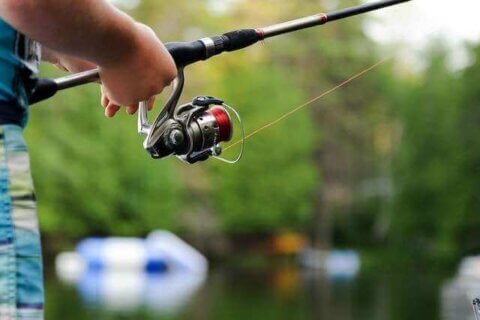
People love fishing for more reasons than you might expect. It’s not just about catching a fish—it’s about the experience that surrounds it. There’s something uniquely satisfying about casting a line into the water, whether you’re standing at the edge of a quiet stream, drifting on a foggy lake, or casting off a rocky coastal pier into the open Atlantic.
For many, fishing is both a hobby and a kind of personal ritual—a way to unplug from the noise of the world and connect with something timeless.
Fishing brings people outdoors, which in itself offers major benefits to well-being. When you fish, you’re surrounded by nature—whether it’s trees gently rustling along a riverbank or the crash of waves on the coast.
That connection to the natural world can lower stress, reduce anxiety, and improve mood. The focus and rhythm of fishing also promote mindfulness. You’re in tune with your surroundings, alert yet calm, and often lose track of time.
Add to that the sense of achievement when you reel in a catch—even a small one—and it’s easy to see why people say fishing gives them peace and purpose.
There’s also a physical component. Fishing involves walking, casting, rowing, sometimes hiking to a remote spot, or hauling in a heavy catch. It’s not always strenuous, but it gets your body moving.
For many, it’s also a way to bond with others—families, friends, even strangers on the shore who become fishing companions through shared stories and quiet patience.
Now, let’s head up to Maine—one of the best fishing destinations in the country, with its unspoiled wilderness, countless lakes and streams, and a stunningly rugged coastline.
HERE’S A BREAKDOWN OF THE BEST FRESHWATER AND SALTWATER PLACES TO FISH IN MAINE, AND WHAT MAKES EACH OF THEM WORTH THE TRIP:


MOOSEHEAD LAKE
Why it’s the best: Maine’s largest lake is a remote paradise with crystal-clear water and incredible mountain views. It’s quiet, vast, and perfect for both boat and shore fishing.
What you can catch: Landlocked salmon, brook trout, lake trout (togue), smallmouth bass.
How most fish it: Trolling is popular here for salmon and lake trout, especially in deeper waters. Fly fishing and spin casting near inlets and coves work well for brook trout and bass.


Other facts: Moosehead sits at an elevation of over 1,000 feet and is surrounded by deep forests, making it great for spotting moose and bald eagles while you fish.
KENNEBEC RIVER
Why it’s the best: This mighty river flows from Moosehead Lake all the way to the ocean, offering a diverse range of habitats and fishing opportunities along its course.
What you can catch: Brook trout, brown trout, landlocked salmon, smallmouth bass, striped bass (in the lower tidal areas).
How most fish it: Fly fishing is especially popular upstream in the cooler sections. Spin casting and live bait are commonly used in the lower, warmer stretches.


Other facts: The Kennebec is a historic river with a mix of fast-moving sections and deep pools. Some stretches are ideal for drift boats or wading, depending on the season.
RAPID RIVER
Why it’s the best: This short but legendary river near Umbagog Lake is often called the best wild brook trout river in the Lower 48.
What you can catch: Massive native brook trout and landlocked salmon.
How most fish it: Almost entirely fly fishing—anglers use streamers and dry flies in turbulent water.
Other facts: Access is limited and rugged, which preserves its pristine character. The river is strictly regulated with catch-and-release rules and fly-fishing-only stretches.
SEBAGO LAKE
Why it’s the best: Known for being the deepest lake in Maine, Sebago is famous for trophy-size landlocked salmon and lake trout.
What you can catch: Landlocked salmon, lake trout, smallmouth bass, white perch.
How most fish it: Trolling with downriggers or lead-core lines in deep water is standard for salmon and lake trout. Shore anglers do well in spring and fall.
Other facts: The lake is just a short drive from Portland, making it a convenient spot for locals and tourists alike. It has several public access points and boat launches.
ALLAGASH WILDERNESS WATERWAY
Why it’s the best: A remote network of rivers and lakes in the north woods of Maine that offers an unforgettable backcountry fishing experience.
What you can catch: Brook trout, lake trout, whitefish.
How most fish it: Canoe fishing is common, and many use fly rods or light spinning tackle. The isolation often means less pressure and more active fish.
Other facts: It’s best suited for experienced anglers and adventurers—there are few roads, and it’s often part of multi-day paddling trips.
PENOBSCOT RIVER (LOWER TIDAL SECTIONS)
Why it’s the best: In the lower tidal areas, especially near Bangor and southward, you’ll find some of the best striped bass fishing in the state.
What you can catch: Striped bass, smallmouth bass, shad, occasional Atlantic salmon (catch and release only).
How most fish it: Spin casting and fly fishing from shore or boat. Topwater lures are popular during summer.
Other facts: The Penobscot is a conservation success story. Dam removals have brought back several migratory species, and ongoing efforts continue to improve the fishery.
CASCO BAY (OCEAN FISHING)
Why it’s the best: A scenic, island-dotted bay near Portland with plentiful saltwater fishing opportunities, both from boat and shore.
What you can catch: Striped bass, mackerel, bluefish, pollock, haddock.
How most fish it: Shore fishing for stripers, charter boats for bottom fishing and trolling. Fly anglers also work the flats and estuaries for stripers.
Other facts: You’ll find plenty of bait shops and charters in Portland and surrounding towns. Early morning or dusk is ideal for topwater stripers near the rocky shoreline.
GULF OF MAINE (DEEP SEA FISHING)
Why it’s the best: Offers some of the best cold-water saltwater fishing in New England, with trips launching from coastal towns like Boothbay Harbor, Bar Harbor, and Kennebunkport.
What you can catch: Cod, haddock, halibut, bluefin tuna, shark, pollock.
How most fish it: Offshore fishing trips using bait rigs and jigs. Tuna fishing often involves chumming and heavy tackle.
Other facts: These trips can last a half day to multiple days. Summer and early fall are best for large species like tuna.
FISHING LICENSE IN MAINE – WHAT YOU NEED TO KNOW
Who Needs One?
Residents and nonresidents age 16 and older must have a fishing license to fish in freshwater (lakes, rivers, streams).
Saltwater fishing (like in the Gulf of Maine or Casco Bay) generally requires registration in Maine’s Saltwater Recreational Fishing Registry, though if you’re on a licensed charter, you may be covered under the boat’s license.
Where to Get a License or Register:
Online through the Maine Department of Inland Fisheries and Wildlife (IFW): www.maine.gov/ifw
In person at sporting goods stores, town offices, or bait shops.
Licenses are available for daily, 3-day, 7-day, or season-long durations.
BEST TIMES OF YEAR TO FISH EACH LOCATION IN MAINE
MOOSEHEAD LAKE
Best season: Late May through September.
Peak fishing: June and early July for salmon and brook trout.
Tips: Early mornings and evenings are best in summer; ice fishing in winter is also popular.
KENNEBEC RIVER
Upper River (freshwater): April to June is prime for trout and salmon.
Lower River (tidal areas): May through early October for striped bass.
Tips: Watch for spring runoff—high water levels can affect accessibility.
RAPID RIVER
Best season: Mid-May through June, and again in September.
Tips: This is a cold-water fishery. Fall offers beautiful foliage and less fishing pressure. Wading requires caution—it’s swift and rugged.
SEBAGO LAKE
Best season: May and June for salmon; fall (September to October) for lake trout.
Tips: In summer, fish deeper—use downriggers or lead-core line. Winter brings great ice fishing.
ALLAGASH WILDERNESS WATERWAY
Best season: Late May through mid-July, and September.
Tips: This is remote—bring what you need and expect little cell service. Bug spray is essential in spring and early summer.
PENOBSCOT RIVER (LOWER TIDAL SECTIONS)
Best season: Late May to early October for striped bass and shad.
Tips: Use topwater lures at dawn/dusk. Bring polarized sunglasses to spot stripers on the flats.
CASCO BAY (SALTWATER)
Best season: Late May through September.
Peak fishing: June and July for stripers and mackerel; late summer for bluefish.
Tips: Early morning incoming tide is best for shoreline striper fishing. Charters are great for families or beginners.
GULF OF MAINE (DEEP SEA FISHING)
Best season: June to October.
Peak fishing: July–September for cod, haddock, bluefin tuna, and sharks.
Tips: Book trips early in summer; wear layers—it’s colder offshore even in July. Motion sickness bands or meds are a good idea.
ADDITIONAL TIPS & NEED-TO-KNOWS FOR FISHING IN MAINE
Barbless hooks and catch-and-release: Many rivers (like Rapid River and sections of the Kennebec) have regulations for barbless hooks or fly-fishing only. Always check the IFW fishing lawbook before heading out.
Invasive species: Maine is strict about not transporting live baitfish or invasive aquatic species. Always clean your gear and boats.
Weather: Maine’s weather can change quickly, especially in the mountains or on the ocean. Dress in layers and always have rain gear.
Wildlife: You might encounter moose, loons, bald eagles—even black bears in the wilderness. Respect nature, and store food properly if you’re camping.
Tides matter for coastal fishing. Use a tide chart app or check with a local shop to plan your saltwater fishing for optimal times.
FISHING IN MAINE CAN BE ONE OF THE MOST REWARDING OUTDOOR EXPERIENCES YOU’LL EVER HAVE—BUT LIKE ANY OUTDOOR ACTIVITY, THERE ARE A FEW IMPORTANT THINGS TO BE AWARE OF. HERE’S A FULL RUNDOWN COVERING RISKS, DANGERS, SAFETY PRECAUTIONS, AND EVEN SOME MYTHS, LEGENDS, AND LOCAL LORE TIED TO FISHING IN MAINE.
RISKS AND DANGERS OF FISHING IN MAINE
COLD WATER TEMPERATURES
Even in the summer, many of Maine’s lakes, rivers, and ocean waters remain cold—sometimes dangerously so. Falling in, even in July, can lead to cold shock or hypothermia in a matter of minutes.
Precaution: Always wear a personal flotation device (PFD), especially when wading or boating. Dress in layers with moisture-wicking material if you’re fishing early or late in the season.
UNPREDICTABLE WEATHER
Weather in Maine can change fast, especially in the mountains or near the ocean. Sudden storms or fog can catch boaters and shoreline anglers off guard.
Precaution: Check the forecast before heading out. On coastal trips, keep an eye on tide charts and marine weather alerts. If you hear thunder, pack it up immediately.
WILDLIFE ENCOUNTERS
In remote areas like the Allagash or Moosehead region, moose are common, and while generally non-aggressive, they can be dangerous if startled or approached. Bears are shy but present in wilderness areas.
Precaution: Don’t approach wildlife. Make noise when hiking to fishing spots. Store food in sealed containers or hang it when camping.
BLACKFLIES, TICKS, AND MOSQUITOES
In spring and early summer, Maine’s infamous blackflies and mosquitoes can be relentless, especially near water. Ticks can also carry Lyme disease.
Precaution: Wear long sleeves, use DEET or natural insect repellent, and check for ticks after every outing—especially if hiking through grass or brush.
SLIPPERY ROCKS AND FAST CURRENTS
Rivers like the Rapid River and Kennebec have swift currents, and rocks can be mossy or slick. Even lake shores can be tricky after a rain.
Precaution: Wear wading boots with felt or rubber soles for grip. Never fish alone in remote or moving water locations without letting someone know your plan.
FISHING SAFETY TIPS SPECIFIC TO MAINE
Use a wading staff for balance in rivers.
Bring a first-aid kit—many great fishing spots are far from help.
Stay hydrated, especially if you’re fishing in sunny, exposed areas.
Know your limits if hiking into backcountry lakes or paddling long distances.
Respect private property—many good streams and ponds are surrounded by private land. Use public access points or get landowner permission.
FISHING MYTHS, LEGENDS, AND MYSTERIES IN MAINE
THE LEGEND OF “OLD SEBAGO”
Some locals whisper about a massive, elusive trout or togue (lake trout) said to haunt the depths of Sebago Lake. Supposedly the size of a small canoe, it’s become something of a cryptid among long-time anglers. No one’s caught it—but many claim to have seen the ripples.
THE GHOST CANOE OF THE ALLAGASH
Paddlers and fishermen in the Allagash Wilderness Waterway have occasionally reported seeing a canoe drifting silently in morning fog, only to vanish when approached. Some say it’s the spirit of a lost guide from the 1800s who never returned from a trip.
PHANTOM LIGHTS ON REMOTE LAKES
Some high-elevation lakes in western Maine, like those near the Bigelow Preserve, are known for mysterious floating lights seen hovering above the water at night. While some believe it’s just atmospheric effects, others attribute it to spirits or old campfire stories passed down through generations of guides.
THE CRY OF THE LOON
Though not a myth, the eerie, haunting call of the common loon—especially echoing over a quiet lake at dusk—has inspired countless stories and poems. In Wabanaki tradition, the loon is considered a messenger and a guide to those who live in harmony with nature.
OTHER THINGS TO KNOW ABOUT FISHING IN MAINE
Ice Fishing is huge in winter—popular spots include Sebago Lake, Moosehead Lake, and Rangeley Lake. But always check ice thickness before heading out. A minimum of 4 inches of clear ice is recommended for walking, more for snowmobiles.
Fly fishing culture is strong in Maine. Some rivers have fly-fishing-only stretches with special rules. If you’re new to fly fishing, local outfitters in Rangeley, Greenville, or Bethel offer lessons and guided trips.
Conservation is taken seriously. Maine promotes sustainable practices, and you’ll find plenty of catch-and-release zones and gear restrictions. Respecting these helps preserve the quality of fishing for future generations.
Fishing derbies and festivals are held throughout the state, especially during ice fishing season. These events can be fun and competitive ways to meet other anglers and learn from locals.
Fishing in Maine is far more than a pastime—it’s a gateway into the soul of the state itself. Whether you’re casting into the fog-draped waters of Moosehead Lake at dawn, navigating the remote Allagash by canoe, or feeling the pull of a striper along the rocky Atlantic coast, each outing offers its own sense of discovery, serenity, and reward.
The rhythms of nature, the challenge of the catch, and the quiet that surrounds you combine into an experience that’s hard to match anywhere else in the country.
But with the beauty comes responsibility. Knowing the seasons, following licensing laws, and respecting wildlife and waterways is part of what makes the fishing culture in Maine so special.
It’s about being a good steward of the land and water, not just an angler. Whether you’re a seasoned fly fisher or someone new looking to drop a line off a pier, the state welcomes all with open waters and endless possibilities.
Maine’s fishing experience offers more than fish—it offers restoration. The calm of still water, the thrill of a sudden tug, the stories told around a campfire or on a dock—all of these create a sense of connection.
Not just to the outdoors, but to something timeless. Fishing in Maine isn’t just about what you bring home in a cooler—it’s about what you bring home in your spirit.
YOU CAN FIND MORE DETAILED, UP-TO-DATE, AND LOCALLY SPECIFIC INFORMATION ON FISHING IN MAINE THROUGH THE FOLLOWING RELIABLE RESOURCES:
1. Maine Department of Inland Fisheries and Wildlife (MDIFW)
- Website: www.maine.gov/ifw
- What you’ll find:
- Fishing license purchase and requirements
- The Maine fishing lawbook (downloadable guide)
- Special regulations for lakes, rivers, streams
- Stocking reports and fish population data
- Season dates and legal fishing methods
- Interactive maps for boat launches and fishing access
2. Maine Office of Tourism – Fishing Guide
- Website: www.visitmaine.com/things-to-do/fishing
- What you’ll find:
- General overview of fishing experiences across Maine
- Regional highlights and featured destinations
- Information about guided trips and outfitters
- Seasonal tips and outdoor safety info
3. Local Fly Shops and Outfitters
These are excellent for on-the-ground conditions, local regulations, gear tips, and guides:
- Rangeley Region Sport Shop – Fly fishing and tackle for western Maine
- L.L. Bean Outdoor Discovery Schools (Freeport) – Lessons and guided trips
- Northwoods Outfitters (Greenville) – Moosehead Lake and Allagash specialists
- Orvis Retail Store (Kittery) – Saltwater and freshwater fly fishing help
4. NOAA Tides & Weather for Saltwater Fishing
- Website: tidesandcurrents.noaa.gov
- Find tide charts, coastal conditions, and marine weather alerts for Casco Bay, the Gulf of Maine, and beyond.
5. Maine Trail Finder
- Website: www.mainetrailfinder.com
- A great tool for discovering hiking trails that lead to remote fishing spots, especially around mountain lakes and rivers.
6. Books and Guides
Look for regional titles such as:
- “Flyfisher’s Guide to New England” by Zambello
- “Maine Fishing Map Guide” by Sportsman’s Connection
- “Fishing Maine” by Tom Seymour
These books are often available at Maine visitor centers, bookstores, or outdoor retailers like L.L. Bean.