




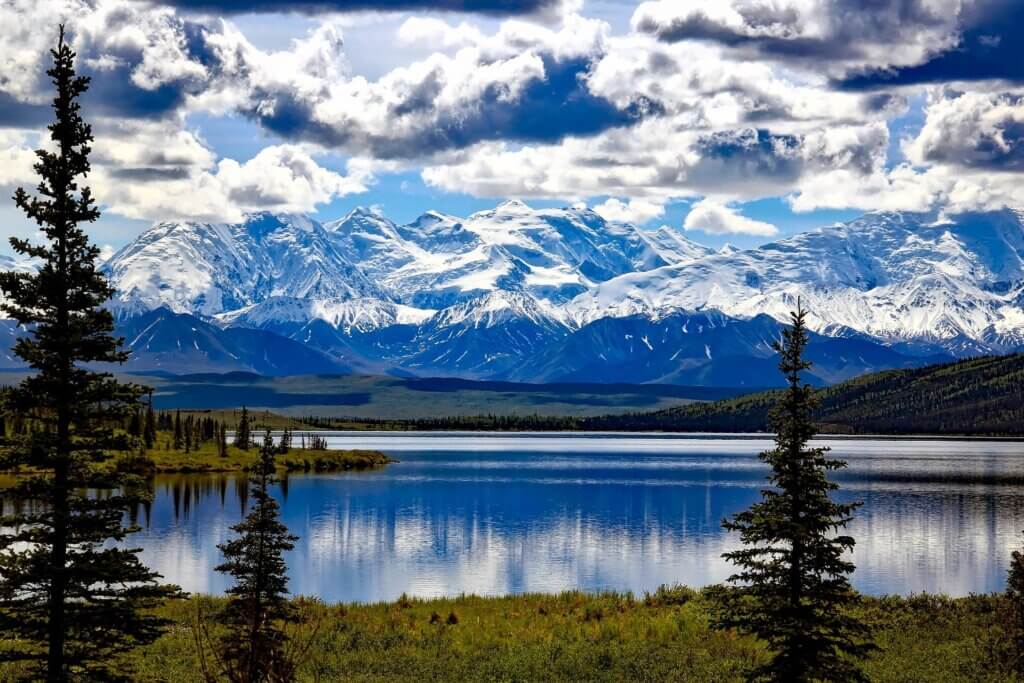
Denali National Park and Preserve holds a special place in people’s hearts because it offers something that has become increasingly rare in modern life: vast, untamed wilderness on a truly epic scale. People don’t just visit Denali to “see a park.” They go to experience a place that feels bigger than everyday concerns, where nature sets the rules and humans are clearly guests.
WHERE DENALI NATIONAL PARK IS LOCATED
Denali National Park is located in the interior of Alaska, roughly halfway between Anchorage and Fairbanks. It covers more than six million acres of land, making it larger than the state of New Hampshire.
At the heart of the park stands Denali itself, formerly known as Mount McKinley, the tallest mountain in North America at 20,310 feet. On clear days, the mountain dominates the skyline and can be seen from well outside the park, serving as both a literal and symbolic centerpiece of the region.
WHY PEOPLE LOVE VISITING DENALI
One of the biggest reasons people fall in love with Denali is its sense of true wildness. There are no scenic loops packed with overlooks every few miles. Much of the park is roadless, and wildlife moves freely without fences or artificial boundaries.
Visitors often talk about how small and grounded they feel when standing in a landscape that stretches endlessly in every direction, filled with tundra, braided rivers, glaciers, and jagged peaks.
Wildlife viewing is another major draw. Denali is one of the best places in North America to see large animals living as they have for thousands of years. Grizzly bears, wolves, moose, caribou, and Dall sheep are all part of the park’s ecosystem. Seeing these animals in their natural habitat, without enclosures or staged experiences, feels authentic and humbling. For many visitors, it’s the first time they truly understand what “wild” means.
People also love Denali for its quiet and simplicity. The park has only one main road, and private vehicles are restricted beyond a certain point. Most visitors travel by shuttle or tour bus, which slows everything down. This creates a shared rhythm where people observe the landscape together, often in silence, watching for wildlife and taking in the vastness. The lack of constant noise and distraction allows for deep reflection and mental clarity.
Another powerful appeal is Denali’s raw beauty and ever-changing conditions. The weather can shift quickly, the light can transform the mountains from soft pastels to dramatic contrasts, and no two days ever feel the same. Even experienced travelers find Denali humbling, because it resists being fully known or controlled. That unpredictability makes every visit feel like a genuine adventure.
Finally, people love Denali because it reconnects them to something elemental. Whether hiking, camping, photographing wildlife, or simply gazing at the landscape, visitors often leave with a renewed respect for nature and a deeper appreciation for resilience, patience, and humility. Denali doesn’t entertain in a flashy way. It inspires by reminding people how powerful, beautiful, and enduring the natural world truly is.
Denali attracts a wide range of outdoor lovers, from people who simply enjoy being immersed in nature to seasoned adventurers who deliberately seek challenge, uncertainty, and limits. What makes Denali special is that it satisfies both groups in different but equally powerful ways.
WHAT OUTDOOR ADVENTURE LOVERS LIKE MOST ABOUT DENALI
For general outdoor adventurers—hikers, wildlife watchers, photographers, backpackers, and nature enthusiasts—Denali offers an experience that feels pure and unfiltered.
One of the top things they love is the sense of vast, open wilderness. Denali is not heavily developed, and much of the park has no marked trails. This gives outdoor lovers the rare feeling of stepping into a landscape that hasn’t been shaped for convenience. It feels exploratory rather than curated, which makes even a simple hike feel meaningful.
Wildlife encounters are another major draw. Seeing grizzly bears, moose, caribou, or wolves roaming freely is deeply exciting, but also grounding. Outdoor adventurers appreciate that these encounters happen on nature’s terms, not on a schedule, which makes each sighting feel earned rather than staged.
Many people are drawn to Denali’s quiet and solitude. Even during peak season, the park never feels crowded in the way many national parks do. The limited road access and controlled visitor flow mean long stretches of silence, broken only by wind, water, or distant animal calls. For many outdoor lovers, this quiet is restorative.
The visual beauty and scale of Denali also play a huge role. Endless tundra, braided glacial rivers, sweeping valleys, and towering peaks create landscapes that constantly change with the light and weather. Outdoor enthusiasts often say Denali doesn’t just look beautiful—it feels alive.
WHAT EXTREME OUTDOOR ADVENTURERS LOVE ABOUT DENALI
For extreme outdoor adventurers—mountaineers, backcountry explorers, and endurance athletes—Denali represents one of the ultimate tests in North America.
At the top of the list is Denali itself, the mountain. Climbing it is considered one of the most demanding high-altitude ascents in the world. While it’s not the most technical climb, the combination of extreme cold, violent storms, crevasse-filled glaciers, and long load carries makes it brutally challenging.
Extreme adventurers are drawn to the mountain because success depends not just on strength, but on discipline, patience, teamwork, and judgment.
Another major attraction is the harsh and unpredictable environment. Denali’s weather can change in minutes, with whiteouts, high winds, and sudden temperature drops. Extreme adventurers value this unpredictability because it strips away comfort and forces complete presence and respect for the environment.
The park’s trail-less backcountry is also a huge draw. Navigating Denali often requires advanced skills in route finding, river crossings, glacier travel, and wilderness survival. There are no easy bailouts, and help can be far away. For extreme adventurers, this level of commitment is part of the appeal—it demands self-reliance and accountability.
Extreme outdoor enthusiasts also appreciate the mental challenge Denali presents. Long expeditions, isolation, physical exhaustion, and constant risk management push people to confront fear, ego, and limitations. Many climbers and backcountry travelers say Denali is as much a psychological test as a physical one.
Finally, there is the purity of the accomplishment. Denali does not hand out victories easily. Whether summiting the mountain or completing a deep backcountry expedition, success feels earned in the truest sense. For extreme adventurers, Denali represents one of the last places where nature still dictates the outcome—and that is exactly why it is so respected.
PARKING AND AMENITIES
When you first arrive at Denali, you’ll notice that the parking and facility setup reflects the character of the place: functional, straightforward, and focused on access to nature rather than entertainment complexes.
At the park entrance and visitor center area, you’ll find designated parking lots for personal vehicles. The Denali Visitor Center has its own parking with space for cars, and there’s also a large lot at the Denali Bus Depot, where most shuttles and tour buses begin their routes.
The Bus Depot parking area is fairly generous, with spaces for regular cars as well as oversized spots for RVs, but it can fill up on busy summer mornings, so many visitors arrive early or use hotel shuttles when available.
Once you’re parked, the amenities in the entrance area are clustered within a short walking distance. The main Denali Visitor Center itself is more than a building with bathrooms; it’s where you can talk to rangers, learn about the landscape and wildlife, watch interpretive displays, and get oriented for your visit.
Nearby is a small grill and café that operates in summer months, offering hot food, coffee, and snacks—convenient if you’re heading out on a long day in the park.
Right next to the campground and entrance zone is the Riley Creek Mercantile, which functions as a small campground store. In summer you can buy sandwiches, snacks, firewood, basic camping supplies, water, and other essentials.
If you’re camping, there are also showers, laundry facilities, and an RV dump station at Riley Creek, which can make a big difference after several days on the trail or on the bus.
Beyond the entrance area, amenities thin out quickly because that’s part of the park’s design: services are limited once you head into true wilderness. Along the Park Road there are restrooms at key shuttle stops, and bus trips pause regularly for bathroom breaks, but you won’t find gas stations, restaurants, or convenience stores inside the deeper parts of the park itself. If you want more substantial meals or supplies, there are options just outside the park entrance along Highway 3 or in the nearby town of Healy.
To help manage vehicle congestion and make it easier to get around the entrance area, free courtesy shuttles run in the summer between the visitor center, bus depot, campgrounds, and other spots like the sled dog kennels and outlooks. These are a practical way to get around without having to worry about parking at every trailhead or overlook.
In short, parking and amenities at Denali are built around practicality and access rather than luxury. You’ll have what you need to start hikes, take buses into the park, or settle into a campground, but beyond that the experience shifts quickly into the wild, where the landscape and wildlife are the main draws.
Denali National Park is designed to remain wild, so hotels and lodges are extremely limited within park boundaries. There are no large resorts, chains, or luxury hotels tucked into the landscape the way you might see in some other national parks.
WHAT LODGING EXISTS INSIDE THE PARK
Inside the park, lodging is mostly limited to:
Campgrounds (ranging from developed front-country sites to remote backcountry camping)
A few exceedingly small, rustic lodges or ranger facilities that are not typical tourist hotels and often cater to researchers, climbers, or guided expeditions
For most visitors, staying overnight inside the park means camping, either in a tent or an RV.
WHERE MOST VISITORS ACTUALLY STAY
The vast majority of people stay just outside the park entrance, particularly in:
Denali Park Village
Glitter Gulch
Healy, a nearby town a bit farther north
These areas have a wide range of options:
Hotels and lodges
Cabins and chalets
RV parks
Restaurants, gift shops, and tour operators
This setup allows visitors to sleep comfortably while keeping the park itself free from heavy development.
WHY PEOPLE OFTEN LIKE IT THIS WAY
Many visitors actually appreciate this arrangement. You get:
Quiet, dark skies, and wilderness preserved inside the park
Easy access to shuttles, tours, and trailheads during the day
A sense that once you pass the entrance, you’re truly leaving modern infrastructure behind
For outdoor lovers and especially extreme adventurers, the lack of hotels inside the park is part of Denali’s appeal. It reinforces the idea that this is not a place built around convenience—it’s a place built around respect for the land.
If someone is expecting to stay in a hotel inside Denali National Park, they’ll likely be surprised. Denali is less about stepping out of a lodge into a scenic overlook and more about traveling into the wilderness each day or fully committing through camping and backcountry travel.
There are events and activities related to Denali National Park, but they’re a bit different from the big music festivals or sporting events you might find in a city. Most are community-oriented, seasonal, and tied to the park’s culture, landscape, and small towns nearby.
Here’s what you might encounter:
Denali Winterfest – Each winter the park and local community host a celebration that includes activities like snowshoe hikes, youth ski races, snow block sculpture competitions, and other winter games. It’s scheduled in late February, and park entrance fees are waived for the event.
Moose Scat Scoot – This is a fun run and race event held inside the park area, typically offering a half marathon and 5K that start and finish near the Riley Creek Campground. It’s an event that mixes fitness with the natural setting of Denali.
Blueberry Festival at Otto Lake – Organized by the Denali Chamber of Commerce in early August, this local festival features music, games, activities, food vendors, and a relaxed community vibe near Denali.
Live Music and Concerts Nearby – While not inside the national park boundaries, nearby Talkeetna hosts a regular summer concert series called “Live at Five,” with free Friday evening performances during the summer months.
Dinner Theatre and Performances – In the Denali Park Village area and at resorts near the park entrance, there are seasonal dinner theatre shows and musical performances that mix storytelling, history, and entertainment for visitors.
Arts and Culture Events Nearby – The Denali Arts Council in Talkeetna organizes a range of cultural events year-round, including art festivals, performing arts seasons, ice festivals with competitions, and other community celebrations that visitors can attend when staying in the broader Denali region.
WHAT YOU WON’T FIND
Denali National Park itself is not a venue for large commercial music festivals, big sporting competitions, or big city-style events. Most activities are small, seasonal, and focused on local community, outdoor education, and the natural environment rather than large crowds or high-ticket concerts. The events that do happen are often tied to the rhythms of the seasons and the community around the park entrance and nearby towns like Healy and Talkeetna.
Denali’s rules and regulations are shaped by one core idea: protect the wilderness first, then fit visitors into it, not the other way around. For most people, the rules feel reasonable once they understand the “why” behind them.
GENERAL RULES AND REGULATIONS IN DENALI
One of the first things visitors notice is how vehicle access is limited. Private cars can only drive a short stretch of the Park Road, usually about 15 miles, depending on seasonal conditions. Beyond that, access is by shuttle or tour bus. This rule keeps traffic low, protects wildlife, and preserves the feeling of remoteness that Denali is known for.
Wildlife rules are taken very seriously. Animals always have the right of way, and approaching or disturbing wildlife is strictly prohibited. Visitors are expected to maintain safe distances, even if that means waiting in a bus while a bear or caribou crosses the road. Feeding wildlife is not allowed under any circumstances, as it can quickly turn dangerous for both animals and people.
Camping and hiking come with an emphasis on self-reliance and Leave No Trace ethics. Backcountry travelers must follow specific permit rules, pack out all trash, and store food properly to avoid attracting animals. Fires are restricted in many areas, and visitors are expected to respect fragile tundra and vegetation, which can take decades to recover from damage.
Drones are not allowed in the park. While this disappoints some visitors, the rule exists to protect wildlife, reduce noise, and preserve the natural soundscape that makes Denali special.
PET FRIENDLINESS IN DENALI
Denali is not very pet-friendly, especially compared to some other national parks. This often surprises people, but again, the reasoning is grounded in safety and wildlife protection.
Pets are only allowed in extremely limited areas, primarily:
Along the first short stretch of the Park Road near the entrance
In parking lots and developed areas
In campgrounds and picnic areas
Pets are not allowed on most trails, in the backcountry, or beyond the vehicle access zone. This restriction exists because dogs can stress wildlife, interfere with research animals, and be at serious risk from encounters with bears, moose, or wolves.
When pets are allowed, they must be on a leash at all times, typically no longer than six feet, and owners are expected to clean up after them. Leaving pets unattended is discouraged, as temperatures and wildlife risks can change quickly.
Because of these restrictions, many visitors traveling with pets choose to:
Use kennels or pet-sitting services in nearby communities like Healy
Stay outside the park and visit Denali during the day without their pets
THE OVERALL FEEL OF THE RULES
Denali’s regulations don’t feel like micromanagement—they feel like boundaries that protect something rare. The park isn’t designed to accommodate every convenience or lifestyle choice, and that’s exactly why it still feels wild.
For visitors without pets, the rules generally fade into the background once they’re immersed in the landscape. For those traveling with pets, Denali requires more planning, but many people still find the experience worthwhile by adjusting expectations and using nearby services.
There is a cost to enter Denali National Park, and it’s structured a bit differently than many other parks. Here’s how it works as of the latest information from the National Park Service:
ENTRANCE FEE BASICS
If you’re 16 years old or older, you must have a valid entrance pass to enter Denali.
A standard entrance pass costs $15 per person and is good for seven consecutive days.
Visitors 15 and younger enter free.
There is no per-vehicle fee; the fee is charged per person.
PASS OPTIONS
A Denali Annual Pass costs about $45 and lets you enter the park unlimited times for a full year, covering the pass holder plus up to three other adults.
You can also use an “America the Beautiful” Interagency Pass, which is accepted at Denali and many other federal public lands. These passes range from free (for certain seniors, military, disabled visitors, or fourth graders under special programs) up to $250 for non-resident annual passes.
HOW PASSES ARE USED
The standard seven-day pass lets you enter the park, visit the visitor center, drive the first portion of the Park Road in your own vehicle, take shuttle buses, and explore widely.
If you take a narrated tour bus deeper into the park, that ticket typically includes the entrance fee (but you’ll still need a pass or proof of purchase).
HOW TO PAY
Denali encourages cashless payments — credit or debit cards — at the entrance, visitor center, bus depot, and other pass-selling locations.
There is a cost to enter Denali National Park, but it’s relatively modest compared with some other parks, and there are different pass options depending on how long you plan to stay or how often you visit. If you’re a U.S. resident who visits national parks frequently, an interagency annual pass can be a good value.
Denali National Park is one of the wildest and most beautiful places in North America, but that beauty comes with real dangers and risks that visitors need to be prepared for. The park’s vastness, wildlife, unpredictable weather, and remote conditions mean safety requires planning and respect for the environment.
WILDLIFE RISKS AND SAFETY
Wild animals are abundant and powerful. Denali is home to grizzly bears, black bears, wolves, moose, caribou, and more — and even if you’re careful, you can still encounter them in hiking areas, around campsites, or near roads. You must never approach, feed, or try to interact with wildlife. Stay at least 300 yards (275 meters) from bears and 25 yards (23 meters) from other animals; if your presence alters an animal’s behavior, you’re too close.
Moose may look calm but are unpredictable and can charge without warning, especially females with calves or males in rutting season. If a moose charges, put obstacles between you and the animal and retreat quickly.
Hikers are strongly encouraged to carry bear spray and know how to use it; it can be a crucial tool if you accidentally startle a bear.
WEATHER AND ENVIRONMENTAL HAZARDS
Denali sits in the Alaskan interior, where weather can change suddenly. Snow, rain, wind, fog, and cold temperatures can occur even in summer, and hypothermia is a real risk if you’re not dressed for conditions or if a storm rolls in unexpectedly.
Stay prepared with warm, layered clothing, waterproof gear, and extra food and water. Cell phone service is extremely limited outside the park entrance area, so you must plan for communication gaps.
TERRAIN AND HIKING HAZARDS
Denali’s terrain is mostly trail-less beyond the few maintained paths at the park entrance area. Hikers create their own routes, which can mean uneven ground, hidden obstacles, and increased risk of falls — and more injuries come from falls than any other cause in the park.
If you’re planning backcountry travel or long hikes:
Always let someone know where you’re going and when you expect to return.
Never hike alone if possible, or at least hike with a partner.
Rivers and streams can be hazardous to cross during snowmelt or after rain — and there are no bridges in many places — so assess water levels carefully or delay crossings if conditions are unsafe.
BACKCOUNTRY AND MOUNTAINEERING DANGERS
For those venturing well beyond the park road or attempting climbs like Denali’s summit, hazards increase dramatically. Glaciers have hidden crevasses, and ice or snow conditions can be severe. Specialized equipment, training, and experience in glacier travel are essential.
Climbing Denali itself — the tallest mountain in North America — is a serious mountaineering undertaking. There are documented fatalities from falls, accidents, and harsh conditions on the mountain. These risks are magnified for climbers who are inexperienced, unprepared, or attempting routes alone.
GENERAL SAFETY TIPS
Here are the key precautions that can make your visit safer:
Plan ahead and prepare. Study the park layout, expected weather, route conditions, and know what supplies you need. Carry maps and know how to use them.
Dress for changeable weather. Layers, waterproof clothing, warm hats, and gloves are essential even in summer.
Follow Leave No Trace principles. Pack out all trash and minimize your impact on fragile terrain.
Keep wildlife wild. Don’t leave food out, use bear-resistant containers when camping, make noise while hiking, and respect animals’ space.
Know emergency procedures. There is extremely limited cell service in most of the park. If you need help, you may have to reach a ranger, bus driver, or other official.
TRANSPORTATION RISKS
Driving in Alaska has its own hazards. Large animals like moose frequently cross roads, and collisions — especially at dawn, dusk, or night — can be fatal. Drive cautiously, scan sides of the road, and use high beams when safe to increase visibility.
Denali is awe-inspiring, but it’s not the place for casual expectations about safety. Wild animals, unpredictable weather, rugged terrain, and isolation require respect and preparation. If you take the right precautions — planning ahead, respecting wildlife, dressing for conditions, and understanding the environment — your visit can be both safe and deeply rewarding.
CLEAR, PRACTICAL GEAR LIST FOR DENALI, BROKEN DOWN BY HOW MOST PEOPLE ACTUALLY EXPERIENCE THE PARK. EVEN SHORT OUTINGS BENEFIT FROM PREPARATION HERE, BECAUSE DENALI’S CONDITIONS CAN CHANGE QUICKLY AND HELP CAN BE FAR AWAY
DAY VISITOR & SHUTTLE BUS EXPLORER GEAR
This is for people riding shuttle buses, walking short trails near the entrance, wildlife viewing, and light exploring.
Clothing
Layered clothing system (base layer, insulating layer, outer shell)
Waterproof or water-resistant jacket
Long pants (even in summer)
Warm hat and lightweight gloves
Sturdy walking or hiking shoes (not sandals)
Essentials
Small backpack or daypack
Refillable water bottle
Snacks or lunch (food options inside the park are limited)
Sunscreen and sunglasses (long daylight hours can be intense)
Bug repellent (mosquitoes can be serious)
Camera or binoculars for wildlife viewing
Safety Basics
Paper map or park guide (don’t rely solely on your phone)
Basic first-aid kit
Portable phone charger (cold drains batteries faster)
DAY HIKERS & OFF-TRAIL EXPLORERS
Denali has very few marked trails, so even short hikes feel more remote than in most parks.
Footwear & Clothing
Waterproof hiking boots with good ankle support
Wool or synthetic socks (avoid cotton)
Rain pants or water-resistant outer layer
Extra insulating layer, even on warm days
Navigation & Safety
Topographic map and compass (and know how to use them)
GPS device or offline maps (as backup, not primary)
Bear spray (strongly recommended)
Whistle or signaling device
Other Must-Haves
Trekking poles (helpful for uneven tundra and river crossings)
Extra food and water
Emergency bivy or space blanket
Headlamp (weather and fog can darken conditions unexpectedly)
BACKPACKERS & BACKCOUNTRY TRAVELERS
This is where Denali demands serious respect. Backcountry travel is route-finding, not trail-following.
Core Gear
High-quality backpack
Four-season or strong three-season tent
Cold-rated sleeping bag and insulated sleeping pad
Backpacking stove and fuel
Bear-resistant food container (required)
Clothing
Full layering system, including down or synthetic insulation
Waterproof jacket and pants
Extra socks and gloves
Camp shoes (optional but appreciated)
Safety & Survival
Bear spray (essential)
Satellite communicator or personal locator beacon
Water filtration system
Repair kit (tent, stove, pack)
Comprehensive first-aid kit
Emergency food buffer (at least one extra day)
Skills Matter
Gear alone isn’t enough—navigation, weather judgment, river crossing skills, and wildlife awareness are critical.
EXTREME ADVENTURERS & MOUNTAINEERS (DENALI SUMMIT OR GLACIERS)
This is specialized territory and requires experience, training, and permits.
Technical Equipment
Mountaineering boots rated for extreme cold
Crampons and ice axe
Ropes, harness, carabiners, crevasse rescue gear
Glacier travel equipment
High-altitude clothing system
Expedition Essentials
Extreme cold-rated sleeping system
Multi-week food planning
Sleds for hauling gear
Redundant navigation and communication devices
This level of travel should only be attempted by those with prior alpine and glacier experience or with certified guides.
WHAT MANY FIRST-TIME VISITORS UNDERESTIMATE
Cold: Summer temperatures can still drop suddenly.
Rain and wind: Wet + wind = hypothermia risk.
Mosquitoes: Often worse than expected.
Distance: Once you leave the entrance area, help is not nearby.
Footwear: Inadequate shoes ruin trips quickly.
A Simple Rule for Denali
Pack as if you’ll be outside longer than planned, in worse weather than forecast, with fewer services than expected—because that’s often exactly what happens.
GOOD, BAD, AND UGLY
THE GOOD
Raw, untamed wilderness
Denali is one of the largest and most wild national parks in the U.S., and that’s precisely its appeal. There are huge sweeping landscapes, dramatic mountain vistas, and miles of tundra and rivers that feel untouched by modern life. Many visitors say walking even a short distance off the bus feels like you’ve entered a different world.
Outstanding wildlife viewing
The park is essentially a wildlife safari. Grizzly bears, moose, caribou, wolves, and Dall sheep live here, and wildlife sightings from the shuttle buses or trails are common and memorable — especially for people who love nature.
Quiet, solitude, and scale
Once you’re past the immediate entrance area, the park is vast. People often talk about how small and quiet they feel when they step off the bus or hike off-trail. That sense of scale and solitude is rare and deeply meaningful to many visitors.
Seasonal variety
Summer brings wildflowers, long days, and full access to buses and services. Later in the year, autumn paints the tundra in gold and red and can bring northern lights. Winter offers its own stark beauty with snowshoeing and aurora viewing.
THE BAD
Weather can hide the best views
Denali itself is famous for being partly invisible. Cloud cover hides the summit much more often than it’s seen — sometimes only about 30 percent of the time — meaning your big mountain photo might not happen.
Limited services and food options
Inside the park, amenities are basic and expensive. Reviews from visitors note limited and pricey food options, minimal facilities, and some campground frustrations with layout and resources.
Road access can be restrictive
Most visitors can only drive the first section of the park road. To go deeper, you take a shuttle or tour bus, which some people love for the wildlife viewing but others find frustrating because buses can fill up or schedules can feel rigid. Some even report long waits for return shuttles.
Cramped or poorly managed interpretation activities
Some park programs — like guided “Discovery Hikes” — are first-come, first-served and can feel poorly organized, which has disappointed visitors trying to plan ahead.
THE UGLY
Real wildlife and road dangers
Denali’s animals are powerful and unpredictable. Collisions with moose near the park entrance have led to serious and even fatal highway accidents. You must drive cautiously and be constantly alert for large animals on or near roads.
Serious wilderness risks
Beyond animal encounters, the park’s wildness brings hazards like unpredictable weather, sudden temperature drops, snow even in summer, river crossings, and rough terrain. Falls are one of the leading causes of injury in backcountry areas.
Mountaineering danger
For those attempting Denali’s summit or glacier travel, the risks are extreme. There have been recent fatalities from falls, and the mountain’s climbing conditions — high altitude, severe winds, snow, hidden crevasses — are unforgiving even to experienced climbers.
Remoteness can complicate emergencies
If something goes wrong — an injury, illness, lost hikers — help can be far away, and limited cell service means communication is often unreliable. Search-and-rescue operations can be slow because of distance and weather.
A BALANCED VIEW
What’s amazing:
Denali feels like one of the last great wilderness experiences in the U.S., packed with wildlife and landscapes that turn ordinary visitors into nature lovers.
What’s frustrating:
Planning your time — food, activities, transportation, and weather — often requires flexibility, patience, and realistic expectations.
What’s dangerous:
The wilderness here isn’t just “pretty.” It can be unpredictable and unforgiving, and respecting that reality is key to staying safe.
If you’re prepared for the challenges and go with respect for the land and wildlife, Denali can be unforgettable. Let me know if you’d like a packing checklist or travel strategy tailored to the way you want to experience it.
DENALI NATIONAL PARK ISN’T JUST FAMOUS FOR ITS TOWERING WILD LANDSCAPES AND SERIOUS MOUNTAINEERING HISTORY — IT HAS ALSO INSPIRED LEGENDS, MYSTERIES, AND STORIES THAT TAP INTO THE DARKER SIDE OF WILDERNESS LORE. SOME ARE GROUNDED IN CULTURE AND HISTORY, OTHERS ARE FRINGE THEORIES OR INTERNET‑AGE TALES
INDIGENOUS LEGENDS AND SPIRITUAL SIGNIFICANCE
Long before it was a national park, the mountain now called Denali was revered by the local Athabascan people. They passed down stories about the mountain’s origins and spiritual meaning.
These traditional accounts don’t typically focus on horror or hauntings, but they do speak to the deep respect and sacred nature the land holds for Indigenous cultures. The National Park Service preserves one such Athabascan legend about Denali’s beginnings, which connects the landscape to ancestral stories and cultural identity.
One figure often connected with Alaska wilderness folklore is the Keelut (also called Qiqirn in some accounts) — a creature from Inuit and Athabascan stories described as a large, fearsome black dog‑like being that exists on the edge between the physical and spirit worlds. According to legend, the Keelut hunts travelers who wander alone. These tales are part of wider Indigenous mythology about the balance between humans and the wild, and while intriguing, they’re not documented historical accounts.
DISAPPEARANCES AND THE “ALASKA TRIANGLE”
Because Denali is remote and conditions can change quickly, the park — like much of Alaska — has real cases of people going missing over the years. These events have sometimes been tied into broader popular culture notions like the so‑called “Alaska Triangle,” a loosely defined area where unexplained disappearances occur.
Fringe and conspiracy forums often speculate about reasons for these vanishings, ranging from supernatural forces to government cover‑ups, but there’s no credible evidence supporting anything beyond the harsh realities of wilderness survival and environmental risk.
One well‑known disappearance that gets woven into mystery stories is the tale of adventurers and climbers lost on Denali’s slopes, including a serious mountaineering disaster in 1967 where several climbers perished amid a severe blizzard. That event is tragic and dramatic, but it has a well‑documented explanation involving weather and climbing risk, not paranormal forces.
INTERNET‑STYLE MYSTERIES AND UNVERIFIED STORIES
On the internet and in urban legend collections, you’ll find a host of “spooky” Denali stories that mix truth, rumor, and exaggeration:
Stories about ghost towns or abandoned settlements deep in the wilderness, where travelers have reported eerie sensations or sightings.
Tales of “Igloo City,” a supposed abandoned development deep inside wilderness that feels like a ghostly outpost.
Claims of cryptic footprints, strange tracks, or unexplained EMF phenomena tied to missing persons. These types of accounts often circulate on paranormal websites, but they’re not part of official park records and typically lack verification.
Large‑scale conspiracy ideas like hidden pyramids under Alaska or secret test sites tied to wartime experiments. These usually come from fringe or sensational sources and should be viewed skeptically.
Some of these stories take real features — like abandoned cabins or the stark, isolated terrain — and layer on creative interpretation. Others borrow from wider Alaska legends about shape‑shifting figures (like the Kushtaka in Tlingit lore) or epic wilderness narratives.
WHAT’S REAL VS. WHAT’S FOLKLORE
Real: Denali has a long tradition of Indigenous spiritual stories that explain the natural world and give deeper cultural meaning to the land.
Real: People have died or gone missing in the park’s harsh conditions, and those events sometimes inspire storytelling.
Legend: Folkloric creatures like the Keelut reflect traditional mythologies rather than verified encounters.
Conspiracy/Mystery: Tales of paranormal activity, hidden structures, or unexplained phenomena are generally unverified and often stem from internet or sensational sources rather than documented evidence.
WHY THESE STORIES PERSIST
The wilderness environment itself plays a big role. Denali’s massive scale, frequent cloud cover hiding the peak, unpredictable weather, and frequent isolation create a setting that naturally fuels imagination. For many people, mystery and a sense of the unknown are part of what makes remote wilderness so compelling — whether it’s Indigenous lore about guardians of the land or modern speculative tales.
If you ever visit Denali, you’ll probably run into bits of this folklore in local conversation or visitor center talks — but it’s worth knowing what’s rooted in culture and history versus what’s simply imaginative storytelling.
Denali National Park is a place that inspires awe, reflection, and a deep respect for the natural world. From its towering peaks and expansive tundra to its free-roaming wildlife, the park offers experiences that are hard to find anywhere else.
Visitors leave with a sense of scale, solitude, and perspective that can linger long after they’ve returned to daily life. It’s a reminder that wilderness, in its purest form, demands attention, patience, and humility.
At the same time, Denali is not without its challenges. Harsh weather, rugged terrain, and unpredictable wildlife make preparation and caution essential. Whether you’re hiking, camping, or simply riding a shuttle through the park, understanding the rules, respecting the land, and carrying the right gear can mean the difference between a memorable adventure and unnecessary risk. These realities are part of what makes the park so special — the beauty comes with responsibility.
The mystique of Denali also extends beyond its landscapes. Indigenous legends, mountaineering history, and even the fringe stories and modern mysteries that swirl around the park add layers to its character.
They remind us that humans have long looked to these mountains not just for adventure, but for meaning, challenge, and inspiration. For anyone seeking to experience something extraordinary, Denali stands as both a playground and a teacher, showing what it means to connect deeply with the wild.
Ultimately, visiting Denali is more than a trip — it’s an encounter with raw, untamed nature that leaves a lasting impression. Whether it’s the thrill of spotting a bear, the quiet of a tundra sunrise, or the stories of climbers and Indigenous peoples that echo through the mountains, Denali is a place that stays with you, urging both respect and wonder at the incredible world we share.
HERE’S A CURATED LIST OF OFFICIAL AND REPUTABLE RESOURCES WHERE YOU CAN DIVE DEEPER INTO EVERYTHING WE DISCUSSED ABOUT DENALI NATIONAL PARK — FROM PRACTICAL TRAVEL INFO TO HISTORY, WILDLIFE, REGULATIONS, AND EVEN LEGENDS:
Official National Park Resources
- Denali National Park & Preserve – Official NPS Website
Comprehensive info on visiting, rules, safety, shuttles, camping, wildlife, and ranger programs.
https://www.nps.gov/dena/index.htm - Visitor Center & Wilderness Access
Details on shuttles, tours, entrance fees, maps, and planning tools.
https://www.nps.gov/dena/planyourvisit/index.htm - Safety and Wildlife Guidance
Critical tips for staying safe in bear country, avoiding hazards, and proper wildlife etiquette.
https://www.nps.gov/dena/planyourvisit/wildlife-safety.htm - Fees and Passes
All entrance fees, annual passes, and interagency passes explained.
https://www.nps.gov/dena/planyourvisit/fees.htm - Leave No Trace / Backcountry Guidance
How to minimize your impact and safely explore Denali’s backcountry.
https://www.nps.gov/dena/planyourvisit/leavenotrace.htm
Travel, Lodging, and Amenities
- Denali Park Village – Lodging, dining, and activities near the park entrance.
https://www.denaliparkvillage.com - Riley Creek Campground & Services – Campground details, showers, RV facilities, and supplies.
https://www.nps.gov/dena/planyourvisit/camping.htm - Denali Shuttle & Tour Information – Bus schedules, tours, and tips for deep park access.
https://www.nps.gov/dena/planyourvisit/transportation.htm
Events, Festivals, and Local Culture
- Denali Winterfest – Annual winter celebration with races, hikes, and family activities.
https://www.nps.gov/dena/planyourvisit/winterfest.htm - Denali Arts Council (Talkeetna) – Cultural events, concerts, and local performances near the park.
https://denaliartscouncil.org - Blueberry Festival & Local Community Events – Summer festivities near the park entrance.
https://denalirvpark.com/experience-denali
History, Legends, and Mountaineering
- Denali History & Indigenous Culture – Stories, legends, and cultural background of the mountain.
https://www.nps.gov/dena/learn/historyculture/index.htm - 1967 Mount McKinley Disaster – Historic climbing tragedy.
https://en.wikipedia.org/wiki/1967_Mount_McKinley_disaster - Wilderness Mysteries & Folklore – Exploration of legends and folklore associated with Denali.
https://www.andersondesigngroupstore.com/blogs/news/scary-urban-legends-of-the-national-parks
Travel Planning Guides
- Matador Network – Travel Stories & Guides
Insider tips for wildlife, hiking, and exploring Denali.
https://matadornetwork.com/read/4-reasons-need-visit-denali-national-park - TripAdvisor – Reviews & Visitor Experiences
Real experiences on lodging, amenities, trails, and more.
https://www.tripadvisor.com/Attraction_Review-g143022-d613605-Reviews-Denali_Visitor_Center-Denali_National_Park_and_Preserve_Alaska.html