




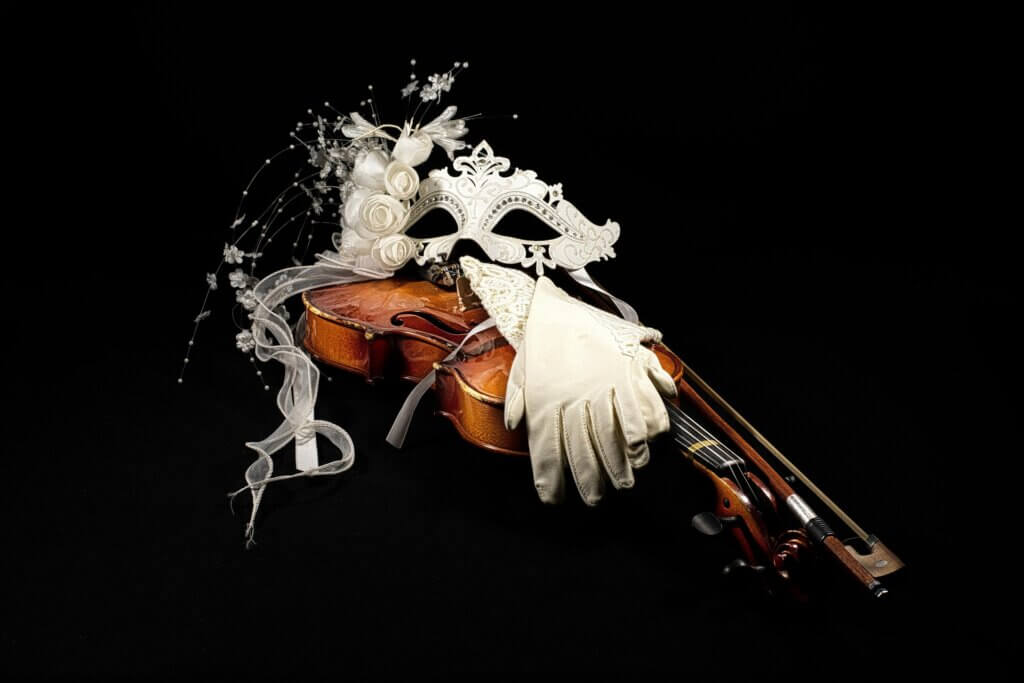
Opera is a unique art form that blends music, drama, and spectacle into a single theatrical experience.
Originating in Italy around the turn of the 17th century, opera was born out of a desire to revive the emotional power of ancient Greek drama through music. Early experiments by composers like Jacopo Peri and Giulio Caccini in Florence led to the very first operas, but it was Claudio Monteverdi’s groundbreaking work L’Orfeo (1607) that truly established the form and set the template for generations to follow.
At its heart, an opera is a staged drama set to continuous or nearly continuous music, featuring solo singers, a chorus, an orchestra, costumes, and often elaborate scenery.
Unlike musical theater, which typically intersperses songs with spoken dialogue, opera tells its story almost entirely through music—arias, duets, ensembles, and recitative passages that move the plot forward.
People are drawn to the opera for a variety of reasons. The power of the human voice—capable of soaring over an orchestra without amplification—can be breathtaking. The emotional immediacy of an aria can move audiences to tears, laughter, or wonder.
Visually, operas often feature stunning period costumes, intricate set designs, and dramatic lighting that transport viewers to another time and place.
And for many, simply being part of the shared ritual of an evening at a grand opera house—dressing up, reading a libretto, and applauding in unison—adds to the magic.
Some of the world’s most popular and frequently performed operas include:
Giuseppe Verdi’s La Traviata, a poignant tale of love and sacrifice set in mid‑19th‑century Paris.
Georges Bizet’s Carmen, the fiery story of a free‑spirited gypsy whose love affairs end in tragedy.
Wolfgang Amadeus Mozart’s The Magic Flute, a fantastical singspiel blending fairy‑tale elements with Masonic symbolism.
Giacomo Puccini’s La bohème, which follows a group of impoverished artists in Paris and the doomed romance of Mimì and Rodolfo.
Puccini’s Madama Butterfly, the heartbreaking story of a Japanese geisha and her American naval officer husband.
These works endure because they combine unforgettable melodies with universally resonant stories.
As for what it takes to sing on the operatic stage, the path is famously rigorous. Most professional opera singers begin with formal training at a conservatory or through private vocal coaches, often studying languages, acting, and stagecraft alongside voice technique.
After years of building repertoire and auditioning—often hundreds of times for small roles, young artist programs, or chorus positions—a singer may land a principal part at a smaller house or in a regional company.
Competition is fierce: voice types are always in demand for particular roles, but budgets and season programming limit how many singers can be hired. Even the most established singers continue to audition and maintain their skills rigorously; it’s a lifelong discipline.
Beyond the major works and star singers, opera offers a vast universe to explore: lesser‑known baroque operas, modern and contemporary compositions that experiment with tonality and staging, chamber operas in intimate spaces, and immersive productions that break the fourth wall.
Opera festivals around the world—from Salzburg to Glyndebourne to the Saito Kinen Festival in Japan—often spotlight rare gems alongside blockbuster titles.
Whether you’re captivated by the spine‑tingling power of a Wagner chorus, the soaring bel canto lines of Donizetti, or the biting humor of Rossini’s comic operas, there’s always something new to discover.
Attending live performances at historic houses like La Scala in Milan or the Metropolitan Opera in New York can feel like stepping into an ongoing dialogue between the past and present, where every note carries centuries of tradition—and where each new generation writes its own chapter in the grand story of opera.
There’s a lot more to opera than just the music and the drama—it’s a full cultural experience with deep roots and fascinating details that often surprise newcomers.
Here are several more things you should know about opera to deepen your understanding and appreciation:
OPERA IS CLOSELY TIED TO LANGUAGE AND CULTURE
Most classic operas are written in Italian, German, French, or Russian, though English-language opera is more common today than it used to be. When you attend a performance, especially in major opera houses, supertitles (translations projected above the stage) are provided so you can follow the plot even if the libretto (the script) is in a foreign language. The original language often adds to the musicality, rhythm, and color of the piece.
THE ORCHESTRA IS A CHARACTER, TOO
Opera is not just about the singers—the orchestra plays a huge role in shaping the emotional tone of every scene. In fact, in many operas by Wagner or Strauss, the orchestra provides layers of meaning beyond the sung text. You’ll hear motifs, or leitmotifs, that represent characters, ideas, or themes. These little musical phrases can reveal a character’s fate, hint at betrayal, or underscore love—all without a word being sung.
THERE ARE DIFFERENT STYLES OF OPERA
Opera has evolved through many stylistic periods. Here’s a quick breakdown:
Baroque opera (1600s–1700s): Elaborate ornamentation and grand tales, such as Handel’s Giulio Cesare.
Classical opera (late 1700s–early 1800s): Clean structure, elegance, and balance—Mozart is the master here.
Romantic opera (1800s): Deep emotion, rich harmonies, and larger orchestras—Verdi, Puccini, and Wagner lead this era.
Verismo opera (late 1800s): Realistic, gritty stories often about working-class people—like Cavalleria Rusticana or Pagliacci.
Modern and contemporary opera (20th century and beyond): More experimentation with harmony, language, and staging—like Philip Glass’s minimalist Einstein on the Beach.
OPERA IS OFTEN A FUSION OF ARTS
In many productions, you’re seeing a total art form (Wagner even had a term for it: Gesamtkunstwerk, or “total work of art”). Opera combines:
Vocal and instrumental music
Acting and direction
Costume and set design
Lighting and sometimes even dance or multimedia effects
This makes it a rich and layered form of expression, and no two productions of the same opera are ever quite alike.
NOT ALL OPERAS ARE TRAGIC
Opera has a reputation for high drama and tragic endings, but there are plenty of comic operas too—Rossini’s The Barber of Seville is full of hilarious twists and witty banter. Mozart’s The Marriage of Figaro is both political and comedic, full of mistaken identities and clever plots.
OPERA AUDIENCES COME FROM ALL BACKGROUNDS
It’s a myth that opera is only for the elite or the wealthy. While tickets to big houses like the Met or Covent Garden can be expensive, many companies offer student discounts, standing room tickets, or free performances in the park. Opera is for anyone who loves music, drama, and stories told on a grand scale. Many new opera fans are drawn in by curiosity and stay for the emotional depth and theatrical artistry.
TRAINING AND VOCAL TECHNIQUE ARE EXTREMELY DEMANDING
Opera singers train for years—often decades—to master the vocal power and control needed to perform. They must project without microphones, sing for long stretches at a time, and maintain the health of their voice carefully. There are distinct voice types like soprano, mezzo-soprano, tenor, baritone, bass, and more nuanced subcategories like dramatic soprano or lyric tenor, which determine what roles a singer can perform.
THERE’S AN ETIQUETTE TO OPERA—BUT IT’S NOT AS INTIMIDATING AS IT SOUNDS
Traditionally, audiences don’t clap during arias unless there’s a long pause and the singer is clearly done. Enthusiastic applause or bravos after a big moment is fine. It’s also respectful to arrive on time and stay quiet during the performance, but most modern audiences are friendly and welcoming, especially to newcomers.
OPERA HAS INFLUENCED POP CULTURE AND FILM
Even if you’ve never seen an opera, you’ve probably heard opera music in movies, commercials, or cartoons:
“Nessun dorma” from Puccini’s Turandot is frequently used in sports and movies.
The Barber of Seville’s famous overture has been used in Looney Tunes (The Rabbit of Seville).
Wagner’s Ride of the Valkyries shows up in everything from Apocalypse Now to Bugs Bunny.
Opera has always had a dramatic flair that makes it appealing to other art forms.
OPERA IS VERY MUCH ALIVE STILL
Modern opera companies are constantly commissioning new works that tackle today’s themes—politics, identity, technology, war, climate change.
Some are even experimenting with virtual reality, immersive sets, or intimate “pop-up” operas in unusual locations like warehouses, boats, or old churches. Opera continues to evolve and find new audiences.
If you ever get the chance to attend an opera live, take it. Even if you’re not familiar with the story or the music, just let yourself experience it.
Bring a program or read a short synopsis beforehand. Go in with curiosity. You don’t need to “understand” opera to be moved by it—you just need to listen and feel. Like all great storytelling, opera connects us to universal emotions—love, loss, joy, revenge, hope.
If you’re looking for a good “first opera,” something like La Traviata, Carmen, or The Magic Flute is usually a good place to begin. You might be surprised by how deeply it stays with you.
IS THERE A “TYPE” OF PERSON WHO ENJOYS OPERA?
Traditionally, opera was associated with wealthy, upper-class, and highly educated circles. In Europe, it was once a royal pastime, and in the 19th and early 20th centuries, attending the opera was seen as part of a refined cultural life.
Because of this, the stereotype of the opera lover as someone older, affluent, perhaps wearing a tuxedo or gown, sipping champagne during intermission, stuck around for a long time.
But in reality, and especially in today’s world, opera audiences are becoming increasingly diverse—both in terms of background and why they attend.
Many people today enjoy opera simply because they:
Love music—especially live, powerful vocal music
Are drawn to drama, history, or storytelling
Have an interest in theater, design, or costume
Are students or professionals of music, voice, or performance arts
Grew up in households that valued classical music
Are curious and open to new cultural experiences
Opera companies now make a real effort to broaden their appeal—offering school outreach, pay-what-you-can nights, performances in local parks, and even streaming options online.
You’ll find people of all ages, professions, and social classes attending today. Hip-hop artists, rock musicians, and filmmakers have cited opera as inspiration, and younger audiences especially are growing more interested in modern or experimental opera.
SOME PEOPLE GO TO THE OPERA TO “APPEAR CULTURED” RATHER THAN ENJOY IT
Some people attend operas not because they love the music, but because it looks or feels elite or cultured. This was more common in the past, when attending the opera was a visible marker of status or refinement.
For some, it might still be about image—dressing up, being seen, associating with wealth or intellect, or impressing others with an “educated” taste in the arts.
In fact, that very stereotype has turned others away from opera over the years—making it seem intimidating, elitist, or snobbish, which has been a challenge for opera companies trying to attract new, sincere audiences.
But here’s the interesting part: many people who start out going just to “look the part” or out of obligation sometimes end up falling in love with the art form once they experience its depth, emotion, and grandeur firsthand. Opera can be unexpected like that—it can pierce right through all the posturing and leave someone genuinely moved.
TODAY’S OPERA SCENE IS MORE INCLUSIVE THAN EVER
Modern opera companies are actively breaking down old stereotypes:
Casting is more diverse—you see singers of all races, nationalities, and backgrounds.
New operas tell contemporary stories about immigration, social justice, identity, and war.
Performances are more casual and accessible, with outdoor venues, lower ticket prices, and relaxed dress codes.
There’s a rise in “crossover operas” that blend genres—jazz opera, rock opera, even operatic hip-hop.
People now come to the opera as music lovers, students, couples on a date, families, curious travelers, or long-time fans. The “opera snob” image still exists in some minds, but it’s far less dominant than it once was.
Opera is now more of an open invitation than an exclusive club. You don’t have to speak Italian or wear pearls. You just have to be open to letting powerful voices, beautiful music, and timeless stories wash over you.
Whether someone comes out of genuine interest or curiosity—or even for image—they’re welcome. The hope is that once inside the opera house, the music does the rest.
And the truth is, if you enjoy feeling something deeply, you might just be an opera person after all.
HERE ARE SOME ADDITIONAL THINGS ABOUT OPERA YOU MIGHT FIND INTERESTING OR SURPRISING:
OPERA HOUSES THEMSELVES ARE OFTEN WORKS OF ART
Many famous opera houses—like La Scala in Milan, The Royal Opera House in London, and The Vienna State Opera—are historic buildings known for their architectural beauty and acoustics.
These places aren’t just performance venues—they’re landmarks, often featuring gilded balconies, intricate frescoes, and crystal chandeliers. Some were built in the 18th or 19th century and are part of the cultural fabric of their cities.
That said, modern opera houses—like Oslo’s Opera House or the Santa Fe Opera—are known for innovative design and natural backdrops, combining tradition with forward-thinking aesthetics.
THE ROLE OF THE DIRECTOR AND STAGING CAN RADICALLY CHANGE THE EXPERIENCE
Not all opera productions are traditional. Some are highly experimental, reinterpreting classic stories in modern dress or in unexpected settings:
La Bohème set in a refugee camp.
Don Giovanni staged in a corporate boardroom.
A minimalist black-box production with no set, just pure focus on voice and character.
This sometimes divides audiences, with traditionalists wanting opulent period costumes and others loving the bold, interpretive choices. These interpretations can breathe new life into centuries-old works—or stir controversy.
OPERA CAN BE PHYSICALLY DEMANDING
Opera singers aren’t just standing and singing—they often act, climb, fall, dance, and interact with large sets or moving parts while still projecting vocally without a mic. Singing a full opera—sometimes three to five hours—is an incredible physical and emotional task. That’s why singers often rest their voices for days before a major performance.
REHEARSALS AND PRODUCTION ARE INTENSE AND LONG
A single opera production can take weeks or months to rehearse, with hours of coordination between:
Singers
Orchestra
Stage director
Choreographers
Set and costume designers
Lighting and sound techs
This makes opera one of the most collaborative art forms. Everyone must be perfectly in sync, and even a small misstep can impact a live performance.
THE CHORUS IS A BIG DEAL
While the lead roles (called principals) get the spotlight, opera choruses are often huge and powerful, adding mass emotion and drama. In works like Nabucco or Carmen, the chorus can be just as memorable as the leads, delivering stirring, crowd-moving passages.
OPERA HAS GIVEN RISE TO “OPERA STARS”
Just as pop music has its celebrities, opera has its own stars:
Maria Callas, known for her fiery personality and expressive voice.
Luciano Pavarotti, whose version of Nessun Dorma made opera accessible to the masses.
Renée Fleming, known for bridging classical and popular music.
Jonas Kaufmann, one of the most sought-after tenors today.
Some opera singers become icons not just for their singing, but for their personal lives, fashion, and influence on culture.
OPERAS OFTEN BLEND FACT AND FICTION
Many operas are based on real historical figures or events but are heavily dramatized. For example:
Tosca is set during Napoleon’s invasion of Italy.
Don Carlos involves Spanish royalty and the Inquisition.
Aida is supposedly ancient Egypt—but it was composed by Verdi for the opening of the Suez Canal.
Don’t expect historical accuracy. Opera exaggerates emotion for effect—and it’s better for it.
THERE’S A GENRE CALLED “OPERA BUFFA”
While many think of opera as tragic or heavy, opera buffa (comic opera) is a legitimate and beloved genre. These operas are often fast-paced, humorous, and satirical, poking fun at love, class, and society. Mozart’s The Marriage of Figaro and Rossini’s The Barber of Seville are perfect examples. They can be a great way to introduce new audiences to opera.
THE LIBRETTO HAS ITS OWN IMPORTANCE
The libretto is the text or script of the opera. Some are written by famous poets or playwrights and have literary value on their own. In some cases, multiple composers used the same libretto to create entirely different operas—proof of how music shapes meaning.
OPERA COLLECTORS AND SUPERFANS ARE A REAL THING
There are people who travel the world to see rare operas or specific performers. Some know dozens of versions of the same aria and compare nuances between singers, orchestras, or conductors. It can be an incredibly deep and passionate hobby, not unlike being a devoted sports fan or film buff.
Opera is like a living museum of emotion and sound—old yet constantly evolving, intimidating to some but deeply moving to others. It offers something for everyone, from the casual listener to the lifelong connoisseur. Whether you’re watching for the music, the story, the production, or just the atmosphere, opera has a way of meeting you where you are—and taking you somewhere unforgettable.
If you’re ever curious, you don’t have to know everything before you go. Just go with an open heart, and let the music carry you. That’s how many people fall in love with opera—one aria at a time.
Opera is much more than an elite tradition or a night at the theater—it’s a deeply human form of expression that brings together music, emotion, and storytelling in a way few other art forms can.
While it may seem intimidating from the outside, stepping into the world of opera reveals a rich, emotional experience that resonates across cultures and generations.
Whether it’s the raw power of a soprano’s voice, the sweeping strings of a Verdi overture, or the sheer scale of the production, opera has a way of stirring something within us.
Today’s opera world is more diverse, more creative, and more welcoming than ever. Modern productions experiment with form and content, reaching new audiences while honoring the traditions that gave opera its depth and grandeur.
No longer reserved for a specific crowd, opera has opened its doors to anyone curious enough to enter—and it rewards that curiosity with beauty, intensity, and connection.
So whether you’re a lifelong fan or someone just beginning to explore the genre, opera offers endless discoveries. It’s a place where art and emotion collide in the most dramatic of ways. And the best part? You don’t need to know everything to appreciate it. You only need to listen, watch, and feel. That’s where opera begins.
TO DIVE DEEPER INTO OPERA AND EVERYTHING WE’VE DISCUSSED, HERE ARE SOME GREAT RESOURCES—BOTH ONLINE AND OFFLINE—THAT ARE ACCESSIBLE, INFORMATIVE, AND DESIGNED FOR EVERYONE FROM NEWCOMERS TO SERIOUS ENTHUSIASTS:
Websites & Online Resources
- Metropolitan Opera (The Met) – New York
One of the most prestigious opera companies in the world. Their site offers:- Live performance schedules
- Behind-the-scenes videos
- Free and subscription-based streams of past productions
- Introductory guides for newcomers
- Royal Opera House – London
Rich in educational content, interviews with performers, and multimedia coverage of current and past productions. - OperaVision
A European project that streams full-length operas for free, often with subtitles. Great for exploring international productions. - [YouTube Channels]
- The Met Opera and Royal Opera House have their own official channels.
- Classical Nerd, Opera Explained, and others break down complex operas in short, fun videos.
- Search for performances of specific arias like “Nessun Dorma” or “Habanera” to hear legendary voices in action.
Books to Explore
- Opera 101: A Complete Guide to Learning and Loving Opera by Fred Plotkin
A beginner-friendly guide full of useful info, background, and practical tips. - The Rough Guide to Opera by Matthew Boyden
Offers summaries, composer bios, and commentary on over 150 operas. - A History of Opera by Carolyn Abbate and Roger Parker
For a more scholarly take on opera’s development and cultural significance.
Podcasts
- Aria Code (WQXR & The Metropolitan Opera)
Each episode explores one famous aria, featuring singers, writers, and historians. - Opera After Dark
A casual, fun podcast that dives into quirky stories and overlooked gems in opera. - The Metropolitan Opera Guild Podcast
Insightful lectures and interviews for a deeper look at specific operas and productions.
Streaming Platforms
- Met Opera on Demand (subscription service)
Watch hundreds of operas from past seasons in HD. - YouTube, Medici.tv, Operabase
Offer live streams or archives of performances from around the world.
Local Opportunities
- Local opera companies or symphony orchestras
Many cities, even smaller ones, have local opera companies or seasonal performances. Try searching:
“[Your city] opera company” or “live opera near me” - University music departments
Many colleges offer student productions or lectures open to the public. - Public libraries
Libraries often carry DVDs, CDs, or books about opera, and some offer free access to services like Kanopy or Medici.tv.
Museums or Tours
- If you ever travel to cities like Vienna, Milan, Paris, or New York, consider tours of historic opera houses. They often include behind-the-scenes access and exhibits on opera history and famous performances.
With these resources, you can begin to explore opera from many angles—whether you’re listening, reading, watching, or attending live. It’s a world that keeps opening up the deeper you go.