







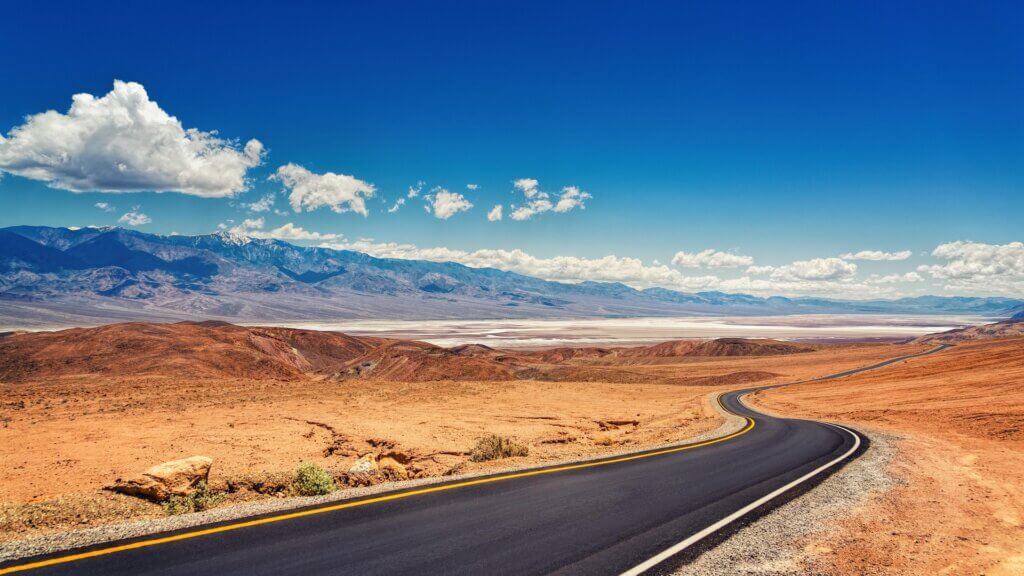
Death Valley National Park is one of those places that feels almost unreal the first time you encounter it. Stark, beautiful, intimidating, and deeply quiet, it challenges many assumptions people have about deserts and wilderness. Rather than being empty or lifeless, Death Valley is layered with history, geology, human stories, and a kind of beauty that reveals itself slowly.
WHERE DEATH VALLEY NATIONAL PARK IS LOCATED
Death Valley National Park sits primarily in eastern California, right along the Nevada border. It spans parts of Inyo County, California, and Nye County, Nevada, making it the largest national park in the contiguous United States.
The park lies east of the Sierra Nevada mountain range and west of Las Vegas, which is about a two-hour drive away. Its vast size surprises many first-time visitors, covering more than 3.4 million acres of desert, mountains, salt flats, and canyons.
HISTORY AND ORIGINS
Death Valley’s history stretches back thousands of years. Indigenous peoples, including the Timbisha Shoshone Tribe, lived in and around the valley for generations, adapting ingeniously to the extreme environment. Their presence is still honored today, and tribal members continue to live within the park.
The name “Death Valley” came later, during the California Gold Rush of 1849, when a group of pioneers became lost while trying to cross the desert. While most survived, the name stuck and added to the park’s mystique. Ironically, significant mining activity followed in the late 1800s and early 1900s, especially for borax, which was famously hauled out by massive mule teams. Death Valley became a national monument in 1933 and was later designated a national park in 1994.
WHY PEOPLE LOVE VISITING DEATH VALLEY
People are drawn to Death Valley because it feels raw and untouched. The silence, the vast open spaces, and the dramatic contrasts between salt flats, colorful rock formations, and rugged mountains create a sense of perspective that’s hard to find elsewhere.
Many visitors say it’s a place that humbles them. You don’t come here for comfort or convenience alone; you come to feel something deeper, whether that’s awe, reflection, or simply the thrill of standing in one of the most extreme environments on Earth.
WHY ADVENTURERS ARE ESPECIALLY DRAWN TO IT
For adventurers, Death Valley is a proving ground. It is home to the lowest point in North America at Badwater Basin, sits near sea level, and reaches extreme temperatures that regularly set global records.
The terrain ranges from smooth salt flats to jagged mountain trails, offering challenges for hikers, backpackers, climbers, photographers, and endurance athletes. The sheer scale and isolation appeal to those who crave self-reliance, exploration, and the feeling of being far from modern life.
TOP ACTIVITIES IN DEATH VALLEY NATIONAL PARK
There is no shortage of things to do, even though the park can feel minimalistic at first glance. Popular activities include hiking through canyons like Golden Canyon and Mosaic Canyon, exploring the salt flats at Badwater Basin, and watching sunrise or sunset at Zabriskie Point.
Stargazing is exceptional due to minimal light pollution. Scenic driving is also a major draw, with routes that showcase colorful badlands, sand dunes, and sweeping desert vistas. In cooler months, backcountry exploration and camping are especially popular.
PARKING AND AMENITIES
Death Valley has parking areas at major viewpoints, trailheads, and visitor centers, though distances between them can be significant. Amenities are limited but thoughtfully placed.
Visitor centers offer restrooms, water, maps, and educational exhibits. There are campgrounds, a few lodges, and small stores within the park, but services are sparse compared to more developed parks. Visitors are encouraged to arrive prepared and not rely on finding supplies once inside.
RULES AND REGULATIONS
The park emphasizes preservation and safety. Staying on designated roads, respecting wildlife, and not removing rocks, plants, or artifacts are strictly enforced. Off-road driving is prohibited, and camping is regulated to protect the fragile desert ecosystem. Drones are not allowed, and fires are restricted to designated areas. These rules exist not only to protect the land, but also to keep visitors safe in a harsh environment.
PET FRIENDLINESS
Death Valley is more pet-friendly than many national parks, but with limitations. Pets are allowed on paved roads, in campgrounds, and in developed areas, but not on trails, in the backcountry, or inside park buildings. Because of extreme heat and sharp terrain, the park strongly advises against bringing pets during warmer months, as conditions can be dangerous very quickly.
CONCERTS, FESTIVALS, AND COMPETITIONS
While Death Valley does not host traditional concerts or festivals due to its protected status, it has been associated with endurance events and extreme challenges in nearby areas. The most famous is the Badwater 135 ultramarathon, one of the toughest foot races in the world, which runs through the region. Educational programs, ranger talks, and occasional cultural events are held within the park, focusing on natural history and Indigenous heritage.
DANGERS, RISKS, AND SAFETY PRECAUTIONS
Death Valley’s beauty comes with serious risks. Extreme heat is the most well-known danger, especially in summer when temperatures can exceed 120°F. Dehydration, heat exhaustion, and heat stroke are real threats.
Cell service is limited, distances are vast, and mechanical breakdowns can become life-threatening if unprepared. Visitors are urged to carry plenty of water, fuel, sun protection, and to inform others of their plans. Traveling during cooler months and early mornings is strongly recommended.
THE GOOD, THE BAD, AND THE UGLY
The good is undeniable: unmatched landscapes, solitude, and a powerful connection to nature. The bad is that the park can feel unforgiving, especially for those who underestimate it. Services are limited, and mistakes can have serious consequences. The ugly side appears when visitors ignore safety rules or environmental protections, putting themselves and the ecosystem at risk. Death Valley demands respect, not shortcuts.
MYTHS, LEGENDS, AND MYSTERIES
Death Valley has inspired its share of myths and legends. Stories of lost mines, ghost towns, and hidden treasure still circulate. The “sailing stones” at Racetrack Playa, which appear to move on their own, puzzled scientists for decades before the phenomenon was explained by a combination of ice, wind, and water. These mysteries add to the park’s mystique, reminding visitors that nature still holds secrets.
Death Valley National Park is not a place you casually visit; it’s a place you experience with intention. It strips away distractions and reminds you how powerful and indifferent nature can be, yet how beautiful it remains. The park rewards patience, preparation, and humility.
For many, a visit to Death Valley becomes a quiet turning point, a reminder that extremes exist not only to test us, but to teach us. Whether you go for adventure, photography, solitude, or curiosity, Death Valley leaves an impression that lingers long after the desert dust has settled.
In the end, Death Valley is less about death and more about endurance, adaptation, and perspective. It is a landscape that asks you to slow down, look closer, and respect the forces that shaped it.
HERE ARE SOME EXCELLENT PLACES WHERE YOU CAN FIND MORE DETAILED INFORMATION ABOUT EVERYTHING WE TALKED ABOUT REGARDING DEATH VALLEY NATIONAL PARK — FROM OFFICIAL GUIDELINES TO HISTORY, TRAVEL TIPS, RULES, AND DEEPER EXPLORATIONS:
Official & Authoritative Sources
These are the best starting points if you want trustworthy, accurate, up-to-date information directly from park management:
National Park Service (NPS) Official Site
This is the most comprehensive official resource. You can find details on planning your visit, current conditions, things to do, safety tips, maps, and alerts.
• https://www.nps.gov/deva — official park homepage with planning, activities, and visitor info National Park Service
• https://home.nps.gov/deva/planyourvisit/index.htm — trip planning, lodging, directions, campground info National Park Service
• https://www.nps.gov/deva/learn/management/rules-and-regulations.htm — official rules and regulations for the park National Park Service
These pages are regularly updated and should be your primary sources for accurate guidelines and changes.
Pet Policy & Visitor Guidelines
If you want specifics about pets, leash rules, where they can go, and safety considerations, check this NPS page:
• https://www.nps.gov/deva/planyourvisit/pets.htm — official pet rules and best practices in the park National Park Service
This explains what areas are pet-friendly, leash requirements, and why certain restrictions exist.
Books and Guidebooks
For deeper reading — history, geology, routes, and rich narrative context — guidebooks and printed guides are incredibly helpful:
Traveler and Guide Books (Death Valley Natural History Association)
• A Traveler’s Guide to Death Valley National Park — condensed park guide with photos and maps DVNHA Store
• Hiking Death Valley / Hiking Western Death Valley National Park — focused hiking guides DVNHA Store
Comprehensive Guidebook
• The Explorer’s Guide to Death Valley National Park (Third Edition) — covers cultural history, botany, trails, and deeper insight into nearly every aspect of the park Apple
Historical & Research Documents
If you want historic, archival, or interpretive material:
Park Archives and Publications
• https://www.npshistory.com/publications/deva/ — historical documents, park newspapers, maps, and interpretive pieces from NPS archives NPS History
These often include past park newspapers, history of conservation efforts, and older management plans.
External Travel & Trip Planning Resources
For practical travel planning like maps, camping info, or conditions outside the official NPS site:
Death Valley Visitor Guides
• PDF visitor guides and maps from independent tourism sites can be good quick references (e.g., Death Valley Visitor Guide PDFs you can find online) Visit USA
Travel Planning Sites
• Travel and parks planning sites like National Park Reservations or NationalParkTraveler offer curated FAQ sections and planning tips beyond raw official info National Park Reservations+1
Books on Geology and Natural History
If you’re curious about the deep natural story of Death Valley — how it formed and why the landscapes are so dramatic — look for geology-focused books such as:
Death Valley Rocks! — a visual and explanatory geology guide showing key geological sites. Mountain Press
You may also find Geology Underfoot in Death Valley and Eastern California or Basin and Range by John McPhee useful for broader earth science context.
Specialized Historical Accounts and Narratives
For stories, tragedies, and lore related to human history in Death Valley (including old mining tales or desert survival stories), some independently published or classic books may be available (e.g., Death Valley’s Victims: 1849–1966 as discussed by travelers online).
While these aren’t official sources, they offer narrative perspectives that add depth to the place’s lore.
Tips for Best Use
- Bookmark the NPS official pages before your trip for updates on closures, weather, and alerts.
- Use guidebooks and specialty books for in-depth historical or geological context.
- Reach out to park visitor centers or rangers directly if you have specific questions — they are excellent resources.